Cinematic Resilience: Amartei Armar’s ‘Our Time Will Come’ and the New Wave of Ghanaian Social Realism

Main Facts: A Bold Debut at the Intersection of Dickens and Accra
The global cinematic landscape has recently turned its gaze toward West Africa, not merely as a backdrop for international productions, but as a powerhouse of indigenous storytelling. At the forefront of this movement is Amartei Armar, whose feature film debut, Our Time Will Come (originally titled Vagabonds), has emerged as a poignant, atmospheric, and emotionally resonant exploration of kinship in the face of systemic collapse.
Premiering to critical acclaim at the Locarno Film Festival and developed through the prestigious Atlas Workshops at the Marrakech International Film Festival, the film serves as a modern, West African reimagining of Charles Dickens’ Oliver Twist. However, Armar eschews the "poverty porn" or unrelenting miserabilism often associated with stories of orphaned youth. Instead, he crafts a narrative centered on the "irrevocable bonds" forged in the crucible of shared adversity.
Anchored by a powerhouse performance from teenage actor Idrissu Tontie Jr. and captured through the evocative lens of cinematographer John Kwame Markin, Our Time Will Come is more than a survival story; it is a scathing critique of a fractured society where traditional safety nets have been replaced by the cold machinery of "catch-up capitalism."
Chronology: From Rural Despair to the Labyrinth of Accra
The narrative structure of Our Time Will Come follows a classic journey of displacement and discovery, divided into two distinct tonal halves: the rural odyssey and the urban struggle.
The Departure and the Road
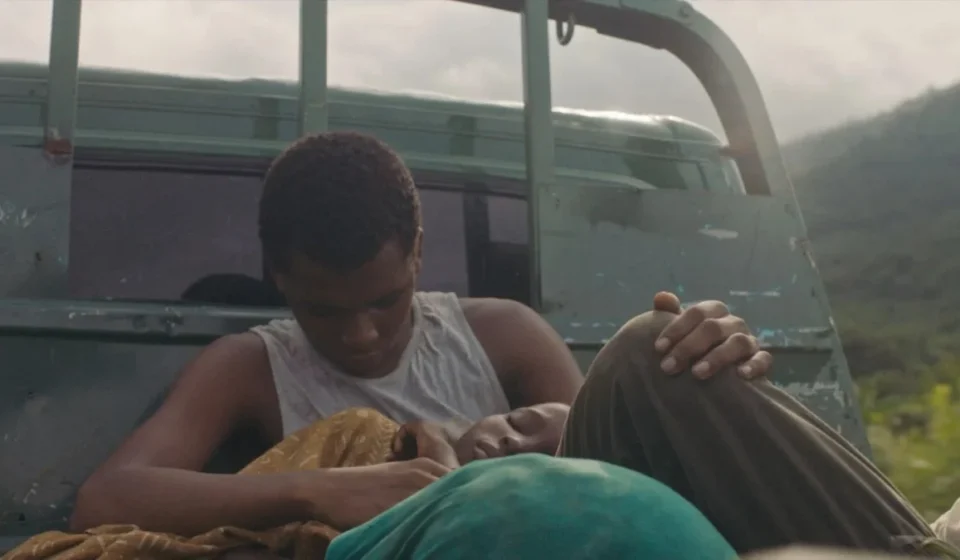
The story begins with 15-year-old Owusu (Tontie Jr.) and seven-year-old Adobea (Dorothy Adobea Tandoh) fleeing an orphanage. Their history is one of abandonment and loss; Owusu’s mother vanished years prior, leaving him with a friend who subsequently died giving birth to Adobea. Though not biological siblings, their bond is absolute.
The early sequences are characterized by a "road trip" aesthetic. Armar uses the vast, sun-drenched landscapes of the Ghanaian countryside to create a sense of deceptive openness. Here, the cinematography is bright and expansive, yet the threat of survival remains. The duo’s motivation is singular: reach the capital city of Accra to find Owusu’s mother, armed only with a faded photograph and an intuitive drive for water, shelter, and kindness.
The Urban Descent
The transition to Accra marks a jarring shift in the film’s visual and emotional temperature. As the children enter the city, the "light-filled openness" of the country is replaced by a "dark, crowded, and disorienting" urban sprawl.
Their arrival in an open-air market quickly exposes their vulnerability. As "weary, dirty provincials" speaking a different dialect, they become immediate targets. After their meager possessions are stolen by Obolo (O’Bryan Nana Kwame Enyan), a street-hardened youth with an eye patch, Owusu is forced to navigate the labyrinthine slums to reclaim their life.
The "Family" Found
The search leads Owusu to an abandoned building housing a syndicate of youths led by the charismatic Ziggy (Emmanuel Wilberforce). Functioning as a modern-day Artful Dodger, Ziggy tests Owusu’s mettle before welcoming the pair into his "family." This turning point shifts the film from a story of flight to one of community. Under Ziggy’s protection, and the developing maternal care of Suga (Barbara Yong-Jin), the children find a way to survive through the collective "hawking and transporting" of goods, turning the harsh reality of street life into a structured, albeit precarious, existence.
Supporting Data: Production Values and Performance Analysis
The success of Our Time Will Come rests heavily on its technical execution and the chemistry of its young cast.
A Career-Defining Performance
Idrissu Tontie Jr., who previously collaborated with Armar on short films, delivers what critics describe as an "adult-sized performance." His portrayal of Owusu requires a complex emotional range: the "tense, driven protector" of the first half must evolve into the "relaxed, swaggering urban denizen" of the second. His ability to carry the film’s emotional weight ensures that the audience remains invested in the characters’ survival rather than just their suffering.
Visual Contrast as Narrative
Cinematographer John Kwame Markin utilizes location to mirror the internal states of the characters. The use of natural light in rural scenes emphasizes the children’s hope and the "wisdom of their escape," while the high-contrast, claustrophobic framing of Accra highlights the "dog-eat-dog world" they must now navigate.
Directorial Choices
While the film is largely praised for its pacing, critics have noted Armar’s reliance on music montages. The director utilizes three distinct musical sequences to maintain energy and bridge narrative gaps; however, some reviewers suggest that "one would have sufficed," indicating a minor over-reliance on stylistic flourishes in an otherwise grounded drama.
Official Responses and Political Context: The "#ReadTheBill" Critique
Perhaps the most significant aspect of Our Time Will Come is its sharp political undercurrent. Armar does not merely tell a story of orphans; he uses their plight to comment on the current state of Ghanaian governance and social policy.
The "Family Values" Bill
A pivotal moment in the film features a billboard emblazoned with #ReadTheBill. This is a direct reference to the controversial 2024 Human Sexual Rights and Family Values Bill passed by the Ghanaian parliament. The bill, which sought to criminalize the LGBTQ+ community and its allies, was framed by proponents as a defense of "traditional family values."
The Director’s Counter-Narrative
Through this inclusion, Armar offers a "poignant assessment" of the disconnect between government rhetoric and social reality. The film argues that while the state focuses on "red flag issues" like criminalizing alternative lifestyles, it ignores the "cavernous" disconnect in actual kinship units—where poverty and rural flight have already "rent asunder" the traditional family safety nets the bill claims to protect.
By showcasing a "family" made of orphans and street thieves, Armar redefines kinship for the modern world, suggesting that affinity and shared survival are more vital than the rigid, blood-based definitions promoted by political actors. This "quietly inserted political angle" elevates the film from a standard drama to a work of activist cinema intended for both domestic and international audiences.
Implications: A New Direction for Ghanaian Cinema
The release and reception of Our Time Will Come have several far-reaching implications for the industry and the region.
1. The Global Viability of West African Stories
The film’s success at Locarno and its development through the Atlas Workshops signal a growing infrastructure for African filmmakers to reach global audiences without compromising their cultural specificity. Armar’s ability to "play with narrative conventions" (like the Dickensian tropes) while rooting them in Ghanaian "ethnic identity" provides a blueprint for other directors in the region.
2. Redefining "African Cinema"
For decades, international perceptions of African cinema were dominated by either ethnographic documentaries or Nollywood’s high-output, low-budget melodramas. Our Time Will Come represents a "Third Way"—high-production-value social realism that is aesthetically sophisticated and politically engaged. It moves away from the "unending miserabilism" of the past, offering instead a vision of "resilience and irrevocable bonds."
3. A Call for Social Reflection
Domestically, the film serves as a mirror for Ghana. By highlighting the "punishing vision of hardscrabble life" in Accra and the failure of national solidarity, Armar challenges his home country to address the "real problems" of poverty and child welfare rather than focusing on divisive social legislation.
4. The Rise of Amartei Armar
As a feature debut, Our Time Will Come establishes Amartei Armar as a significant new voice in world cinema. His "deeply effective working relationship" with his actors and his "atmospheric" storytelling suggest a director capable of handling complex social themes with a delicate, humanistic touch.
In conclusion, Our Time Will Come is a landmark achievement that transcends its "Oliver Twist" inspirations. It is a haunting, beautifully shot testament to the power of chosen families and a fierce indictment of a society that has forgotten its most vulnerable members. As it continues its festival run, it is likely to find a "welcoming home" among audiences who value cinema that is as intellectually challenging as it is emotionally absorbing.