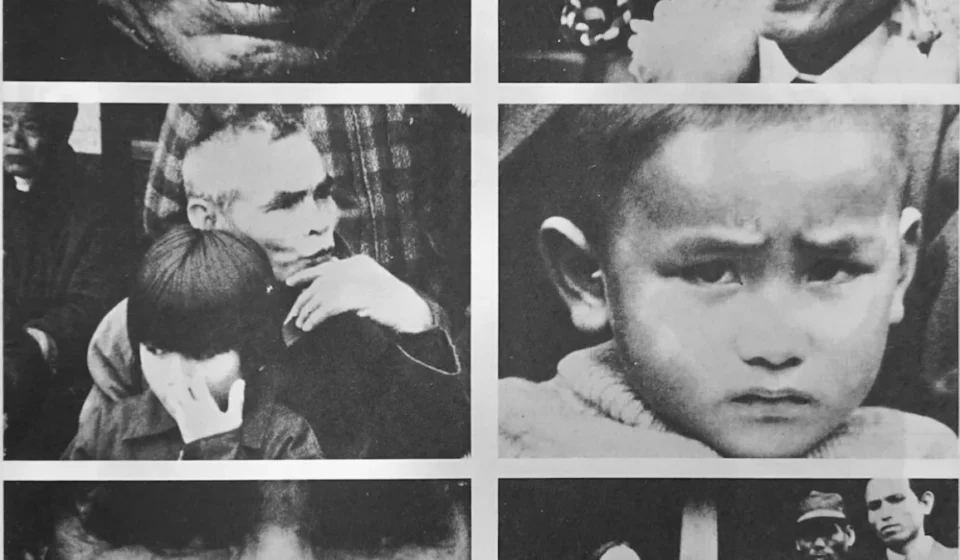
The Archive as Resistance: Dispatches from the 15th Taiwan International Documentary Festival

The 15th edition of the Taiwan International Documentary Festival (TIDF), held this May, served as more than a mere showcase for nonfiction cinema. It acted as a profound meditation on memory, the ethics of the archive, and the persistent, often quiet, struggle of the individual against the monoliths of state power and urban displacement. Since its inception in 1998—a decade after the lifting of martial law in Taiwan—the TIDF has carved out a unique space as a hub for politically engaged Asian cinema. In an era where regional identity is increasingly contested, the festival offered a prismatic view of a world caught between the competing imperial interests of global superpowers and the enduring resilience of local communities.
The Archival Ghost: Unearthing Li Guang-hui
The most revelatory entry in this year’s program was Archive: Li Guang-hui (1979/2024), a 30-minute documentary work compiled from long-dormant television newsreel outtakes by the late, renowned photographer Chang Chao-tang.
The Subject and the Myth
The film documents the life and return of Suniuo (Teruo Nakamura), an Indigenous Amis Taiwanese soldier who was conscripted into the Japanese Imperial Army during World War II. Dispatched to the Indonesian island of Morotai, Suniuo lived in complete isolation for 30 years, unaware that the war had concluded. Upon his discovery and subsequent return to Taiwan in the 1970s, the Kuomintang (KMT) nationalist government immediately seized upon his story. He was rebranded as "Li Guang-hui," a national hero who had allegedly resisted the Japanese.
Chang’s film provides a chilling critique of this state-sponsored myth-making. By chronologically assembling footage—from the pre-reunion press interviews to his eventual death from lung cancer in 1979—Chang reveals the machinery of propaganda. Notably, the filmmaker chose to remove all original reporter voiceovers, leaving the audience to observe Suniuo’s public appearances in silence.
The Power of Incomprehension
The film’s emotional anchor is a sequence featuring Taiwanese folk singer Chen Da. As Chen sings a "Ulyssean" epic of return and national pride, the camera lingers on Suniuo’s face. What initially seems to be deep contemplation gradually registers as profound, hollow incomprehension. Suniuo is listening to a Mandarin folk song in a tradition and language entirely alien to his experience. By refusing to narrate the footage, Chang exposes the trauma of a man whose personal reality was systematically subsumed by a historical narrative he had no hand in writing. The film remained in private archives for decades, only surfacing after being donated to the Taiwan Film and Audiovisual Institute (TFAI) by Chang’s son following the photographer’s 2024 death.
Chronology of Resistance: From Martial Law to Modernity
The TIDF has historically functioned as a barometer for Taiwanese political consciousness. The festival’s archival programs, specifically "Reel Taiwan" and "War Memories, Shifting Identities," trace the evolution of the island’s self-conception.
- 1987-1998: The post-martial law era saw a surge in independent video activism. Filmmakers moved away from state-sanctioned narratives toward community-based media, seeking to reclaim Indigenous histories that had been suppressed by decades of Sinocentric focus.
- 1973 (Retrospective): The inclusion of NDU’s Asia Is One (1973) provided critical context, stitching together testimonies from Taiwanese fishermen, Okinawan miners, and Tayal villagers. The film highlights the heterogeneity of East Asia, illustrating how individuals were pulled between multiple territorializing nationalisms.
- Present Day: Modern entries, such as those documenting the aftermath of Hong Kong’s political unrest, show a shift from the idealism of the 90s to a more disillusioned, yet resilient, form of observation.
Supporting Data: The Cost of Urban "Development"
While archival work explored the past, contemporary selections interrogated the present, specifically the confrontation between the individual and the state-sanctioned bulldozer.
Hu Sanshou’s Xiangzidian Village: The Stage (2026) stands as a monumental 150-minute study of this tension. Filmed over six years, the work eschews the typical cinéma vérité approach favored by international circuits, opting instead for a patient, mournful gaze.
The Mechanics of Displacement
- The Landscape: The film documents the transformation of rural land into a gray expanse of highway.
- The Methodology: Hu avoids direct interviews, instead using his own voiceover to contextualize the villagers. By framing his subjects through their familial relationships—the aunt, the uncle, the cousin—he creates a sense of intimacy that contrasts sharply with the vast, looming presence of the machinery destroying their homes.
- The Coda: The final act, which captures the villagers watching a previous film during a funeral, serves as a testament to the power of cinema to act as a communal mirror, even in the face of forced erasure.
Official Responses and Theoretical Frameworks
The festival also hosted critical dialogues regarding the ethics of representation. Anocha Suwichakornpong’s Narrative (2026) is perhaps the most pointed critique of how political trauma is commodified for legal and therapeutic consumption.
In a series of theatrical workshops with families of victims from the 2010 Bangkok massacre, Suwichakornpong exposes the "codified narrative structure" of trauma. She argues that society demands a neat three-act structure: suffering, legal pursuit, and gratitude. By inserting Eiko Ishibashi’s score to drown out the dialogue at the exact moment participants are asked to express gratitude, the filmmaker highlights the impossibility of individual healing without systemic, collective restitution.
"The inquests treat deaths as isolated cases," Suwichakornpong noted during the festival discussions, emphasizing that the military state fragments violence to avoid a reckoning with the whole. Her work serves as a warning against the "sterile brightness" of legal and filmic frameworks that seek to pathologize or "solve" political tragedy without addressing the power structures that created it.
Implications: The Exhaustion of the Present
The closing note of the festival was perhaps the most unsettling. Luo Li’s Air Base (2025), set in a post-pandemic Wuhan, portrays a society characterized by "limp time."
A City of Performative Apathy
The film features a collection of residents engaged in seemingly futile, Sisyphean tasks:
- The Traffic Operator: A man mimicking official authority where none exists.
- The Sigh-Collector: A woman attempting to record the "pessimistic" exhalations of passersby, only to be met with suspicion and fear of being "ungrateful."
- The Broom on the Escalator: A recurring motif where a broom constantly falls down an escalator, with pedestrians simply stepping over it, refusing to intervene.
The implication is stark: in the modern metropolis, reality is not just tired—it is exhausted. The lack of narrative propulsion in Air Base reflects a broader societal fatigue where individuals have relinquished responsibility for one another, acquiescing to authority through shrugs of apathy.
Conclusion: Defiant Prisms
The 15th TIDF proved that documentary, when practiced with enough patience and distance, can be an act of defiance. Whether it is the reclamation of a soldier’s identity from the grip of KMT propaganda, or the quiet observation of a village’s final days before it is paved over, these films refuse to offer easy resolutions.
As Taiwan’s own political status remains precarious, framed by the competing interests of global powers, the festival’s focus on local, often overlooked histories feels vital. The works presented do not promise to "change the world" in the traditional sense. Instead, they perform a more essential task: they document the persistence of the human spirit in the margins, creating "prickly forms" of art that bend around the edges of the possible. In doing so, they remind us that even when the world seems exhausted, the act of witnessing remains a radical, necessary, and unending labor.