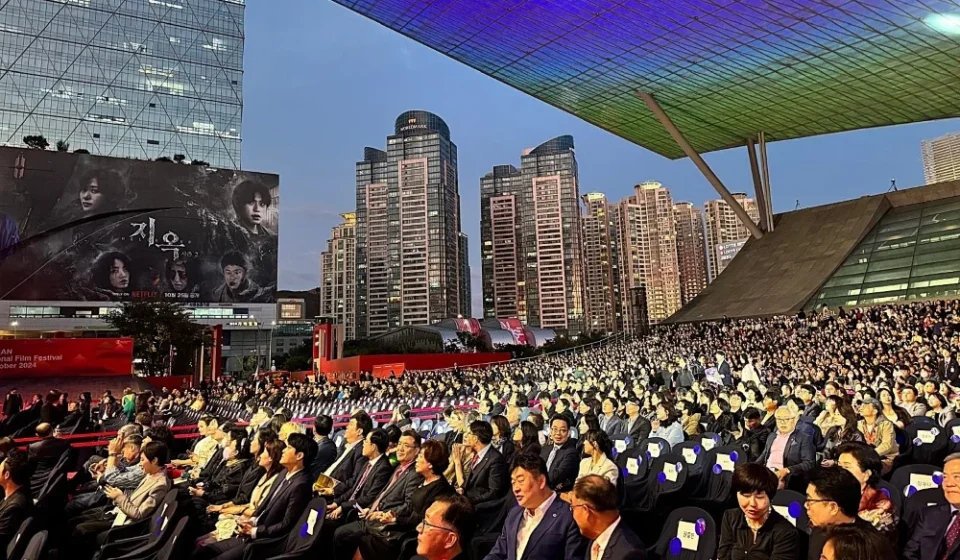

The Busan International Film Festival (BIFF), Asia’s most influential cinematic gathering, has officially finalized its jury roster for the 31st edition of the festival. As the industry prepares for the annual pilgrimage to South Korea’s coastal cultural hub, the announcement of these distinguished panels marks a pivotal milestone in the festival’s preparations. The jury members will preside over four of the festival’s most critical competitive categories: the BIFF Mecenat Award, the Sonje Award, the NETPAC Award, and the FIPRESCI Award.
With the festival set to take place from October 6 to October 15, 2024, at the iconic Busan Cinema Center and various auxiliary venues, the selection of these jurors underscores BIFF’s unwavering commitment to fostering emerging voices, championing documentary excellence, and recognizing the critical discourse surrounding Asian cinema.
The BIFF Mecenat Award: Celebrating Documentary Prowess
The BIFF Mecenat Award remains one of the most coveted honors for non-fiction filmmakers in the region. Dedicated to recognizing a standout Korean or Asian documentary within the Wide Angle Competition, the award carries a significant cash prize of KRW 10 million ($7,300). This year, the festival has curated a trio of jurors whose combined experience spans the globe, from the observational lens of Chinese urbanism to the socially conscious narratives of India and Korea.
The Jury
- Rintu Thomas: An internationally acclaimed filmmaker, Thomas is best known for her Oscar-nominated and Peabody-winning documentary Writing With Fire (2021). Her presence on the jury brings a global perspective on how documentary filmmaking can mobilize social change and challenge power structures.
- Kim Taeil: A stalwart of the Korean documentary scene, Kim is currently engaged in his ambitious "People’s World History" project. His deep familiarity with the festival is evidenced by his past victories, having secured the BIFF Mecenat Award for Annyong, Sayonara (2005) and Raining Dust (2025). His career, spanning from No Name Stars (2010) to his most recent works, reflects a lifelong dedication to capturing the peripheral histories of ordinary people.
- Zhou Hao: A former journalist turned documentarian, Zhou is renowned for his patient, observational style. His films, including Cotton (2014) and the multi-award-winning The Chinese Mayor (2015), exemplify the gold standard of contemporary Chinese documentary filmmaking. His ability to distill complex urban transformations into intimate human stories makes him a formidable arbiter for this year’s competition.
The Sonje Award: Honoring the Future of Short Cinema
Short film competition at BIFF serves as a vital incubator for the next generation of auteur directors. The Sonje Award, which also carries a KRW 10 million prize, focuses on the structural and creative ingenuity of Korean and Asian shorts. The jury tasked with this selection represents a bridge between high-art festival sensibilities and ground-level social storytelling.
The Jury
- Anuparna Roy: A rising star in the international circuit, Roy’s recent works, Songs of Forgotten Trees (2025) and Lovers in the Blue Night (2026), have garnered significant acclaim at the Venice Film Festival. Her aesthetic sensibility, often rooted in atmosphere and subtext, will be essential in evaluating the technical and narrative risks taken by the short film competitors.
- Abinash Bikram Shah: An alumnus of the prestigious Chanel x BIFF Asian Film Academy, Shah’s rapid ascent to the international stage—highlighted by his Cannes Jury Prize for Elephants in the Fog (2026)—makes him a prime example of the success stories BIFF aims to nurture.
- Lee Ranhee: Bringing a background in theater acting and production to her directorial work, Lee has crafted a distinct career trajectory. With films like A Perm (2009), A Leave (2020), and The Final Semester (2024), she has established herself as a vital chronicler of the marginalized—specifically workers and youth caught in the gears of modern economic instability.
The NETPAC and FIPRESCI Awards: Critical and Industry Anchors
Beyond the competitive categories, the NETPAC (Network for the Promotion of Asian Cinema) and FIPRESCI (International Federation of Film Critics) awards serve as vital validation for films within the "Vision" section. These awards provide a seal of critical approval that often dictates the global distribution and festival life of independent Asian films.
NETPAC Jury: Bridging Policy and Production
The NETPAC jury includes Nina Kochelyaeva, a scholar from the Gerasimov Institute of Cinematography (VGIK); Matthew Poon, a senior project manager at HKIFF Industry; and Lee Dongha, the powerhouse producer behind Train to Busan (2016) and Poetry (2010). Lee’s involvement is particularly notable; as the CEO of Redpeter Films and chairperson of the Producers Guild of Korea, he brings a pragmatic, industry-focused perspective that balances Kochelyaeva’s academic rigor and Poon’s festival market expertise.
FIPRESCI Jury: The Critic’s Eye
The FIPRESCI award for artistic achievement will be determined by Ma Xingxu, a critic known for his deep-dive interviews with contemporary auteurs; Teresa Vena, a multi-hyphenate journalist and curator based in Berlin; and Roh Chul-hwan, an academic at Inha University specializing in film policy and visual storytelling. This panel ensures that the award reflects both artistic innovation and the broader sociological impact of cinema.
Supporting Data and Historical Context
The BIFF Mecenat and Sonje awards have long acted as career catalysts. Since its inception, the festival has awarded millions of Korean Won in grants and prizes, directly stimulating the production of independent content across Asia. The inclusion of figures like Kim Taeil and Lee Dongha signals a conscious effort by the festival to maintain a "generational dialogue," where veterans of the Korean industry evaluate the work of emerging filmmakers, ensuring that the legacy of Asian cinema is preserved while simultaneously pushing boundaries.
The "Vision" section, which houses the films eligible for the NETPAC and FIPRESCI awards, has become the festival’s most competitive space for new directors. By inviting jurors who specialize in both market distribution and film theory, BIFF ensures that the "Vision" label carries significant weight for buyers and distributors attending the concurrent Asian Contents & Film Market (ACFM).
Official Perspectives and Festival Implications
In recent years, BIFF has faced the challenges of a changing global market, where streaming platforms compete with traditional theatrical releases. The festival’s decision to emphasize documentary (Mecenat) and short-form (Sonje) storytelling suggests a strategic pivot toward content that favors creative authenticity over commercial spectacle.
"The jury selection is not merely about judging films; it is about setting the agenda for the future of Asian storytelling," noted a festival spokesperson. "By bringing together critics, producers, and active filmmakers, we are creating a closed-loop system of feedback that empowers the next wave of creators."
The implications of this year’s jury composition are clear: BIFF is doubling down on its identity as a "filmmaker’s festival." As the Asian Contents & Film Market returns from October 10–13, the decisions made by these jurors will ripple through the market, influencing which titles gain traction for global acquisition.
Looking Ahead: The 31st Edition
As the festival dates approach, the industry is watching closely to see how the selected films interact with the diverse expertise of the juries. With 10 days of screenings, panels, and networking, the 31st Busan International Film Festival remains the most significant barometer for the health and vitality of the Asian film industry.
For filmmakers and audiences alike, the event represents more than just a series of screenings—it is a nexus point where the past, present, and future of cinema collide. With the juries finalized, the stage is set for a celebration of vision, craft, and the enduring power of the moving image. Whether through the lens of a social-issue documentary or the sharp, concise framing of a short film, the stories showcased in Busan this October are poised to define the cinematic discourse for the year to come.