
The post-apocalyptic genre has long been defined by its extremes: the high-octane vehicular mayhem of Mad Max, the harrowing emotional devastation of The Road, or the fungal-horror tension of The Last of Us. However, in his latest cinematic endeavor, legendary director Ridley Scott opts for a different frequency. Adapted from Peter Heller’s celebrated 2012 novel, The Dog Stars presents a vision of the end of the world that is neither explosive nor particularly frantic. Instead, it is a world characterized by a "shrugging, slightly bereft air of just-getting-by."
Released at the conclusion of a high-decibel summer movie season, The Dog Stars stands as a curious anomaly: a "low-energy, low-incident blockbuster." While the film boasts the pedigree of an A-list cast and a world-renowned director, its execution challenges the traditional expectations of the survivalist thriller, choosing instead to focus on the mundane, melancholy rhythms of life after the collapse of civilization.
Main Facts: The Foundation of a New Dystopia
At its core, The Dog Stars is a character study set against the backdrop of a global catastrophe. The story takes place roughly nine years after a virulent flu pandemic decimated the majority of the human population. Unlike other cinematic plagues that turn the infected into monsters, this virus simply emptied the world, leaving behind a vast, quiet wilderness and a handful of survivors struggling to find meaning in the silence.
The Creative Powerhouse
The film marks a collaboration between some of the industry’s most prominent figures:
- Director: Ridley Scott, a filmmaker whose career has spanned from the sci-fi horror of Alien to the historical grandeur of Gladiator.
- Screenwriter: Mark L. Smith, who has carved out a niche as a specialist in survivalist drama with credits including The Revenant and The Midnight Sky.
- Leading Cast: Jacob Elordi (Saltburn, Euphoria) stars as Hig, supported by Josh Brolin (No Country for Old Men), Guy Pearce (Memento), and Margaret Qualley (Maid).
Setting the Scene
While the novel is famously rooted in the rugged landscapes of rural Colorado, the film production took an unexpected geographical turn. Though the story is still set in the "Centennial State," Scott chose to film in Northern Italy. Under the lens of cinematographer Erik Messerschmidt, the Italian vistas are transformed into a "charcoal-washed" version of the American West, emphasizing a world where the "magic hour" has been replaced by a persistent, unforgiving gloom.
Chronology: From Literary Sensation to Cinematic Experiment
The journey of The Dog Stars began over a decade ago with the publication of Peter Heller’s novel. To understand the film’s evolution, one must look at the timeline of its development and the narrative structure of the world it depicts.
2012: The Source Material
Peter Heller’s novel arrived to critical acclaim, praised for its unique voice. Written in a terse, lyrical style reminiscent of Jack London or Ernest Hemingway, the book utilized a first-person perspective to explore the internal life of Hig. It was a story of gallows humor and profound loneliness, grounded in the technical details of aviation and the preservation of a waning natural world.
The Development Phase
When Mark L. Smith took on the adaptation, he faced a significant creative hurdle: how to translate Hig’s internal monologue—the "soul" of the book—to the screen. The decision was made to forgo narration entirely. This shifted the burden of character development onto the shoulders of the lead actor and the visual storytelling, a gamble that has become a central point of discussion among critics.
2035: The Film’s Timeline
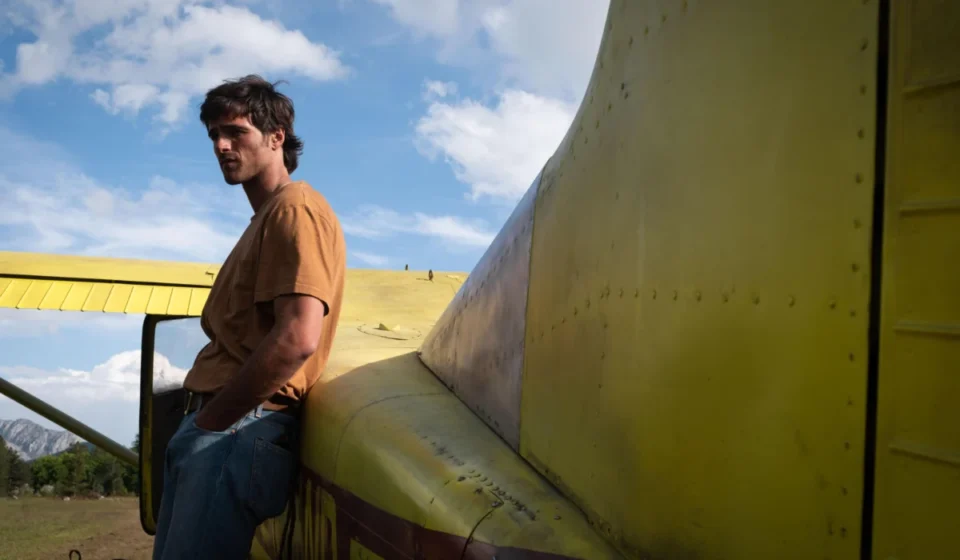
The film updates the setting to the year 2035. The narrative follows Hig, a pilot and mechanic living on an abandoned airstrip. His life is defined by a rigid, joyless routine shared with Bangley (Josh Brolin), a misanthropic survivalist. Their uneasy partnership is the only thing keeping them alive as they defend their compound from "intruders" and scavenge for supplies in the ruins of Denver.
The Turning Point
The story’s second act begins when Hig, driven by a desperate need for connection and a "glimmer of something more," flies his battered Cessna beyond the point of no return. This leads to a crash-landing on a remote farm owned by Jack (Guy Pearce) and his daughter Cima (Margaret Qualley), shifting the film’s focus from survivalist isolation to a tentative, fragile domesticity.
Supporting Data: Production Insights and Aesthetic Choices
To achieve the specific "mellow" tone Ridley Scott desired, the production leaned heavily on technical precision and atmospheric world-building. However, these choices have led to a polarizing reception regarding the film’s pacing and engagement.
Cinematography and Tone
Erik Messerschmidt, known for his work on Mank and The Killer, employs a visual palette that avoids the "prettified" post-apocalypse seen in recent media. There are no lush, green overgrowths reclaiming the cities. Instead, the film maintains a "stubbornly un-fun" demeanor. The color grading is muted, dominated by grays and deep shadows, reflecting the "eat-your-greens" philosophy of the script.
Action Setpieces
Despite its slow burn, the film features two distinct action sequences that serve as homages to the classic Western:
- The Buffalo Stampede: A briefly spectacular moment that showcases Scott’s command of scale, though critics note it lacks a sense of true peril.
- The Feral Confrontation: A face-off with a marauding group of men on horseback. This sequence has drawn scrutiny for its "cowboys-and-Indians" dynamic, raising questions about the film’s racial subtext and the "heroic" framing of its white protagonists in a "dog-eat-dog" world.
Performance Analytics
Jacob Elordi’s performance is the linchpin of the film. Known for playing complex or unlikable characters, Elordi here plays a man who is "admirably practical and resourceful." However, without the novel’s internal narration, some observers feel the character remains a "blank," despite the inclusion of silent flashbacks to his deceased wife and the presence of a loyal German shepherd sidekick.
Official Responses: Critical Reception and Industry Context
The industry response to The Dog Stars has been a mixture of respect for its craftsmanship and frustration with its lethargy. While major studios often push for high stakes and constant momentum, Scott’s film appears to have been granted the leeway to exist as a "mood piece."
Critical Consensus
Variety and other trade publications have highlighted the film’s "lackadaisical" opening act. The general sentiment is that while the film is "expertly made," it suffers from a lack of "gruff friction." Josh Brolin’s performance is frequently cited as the highlight, providing the necessary spark of conflict to an otherwise somber narrative.
The Tonal Departure
One of the most discussed aspects of the film is a significant departure from the novel that occurs late in the story. This "whopper of a departure" reportedly shifts the tone from a rugged wilderness drama to something akin to "macabre, borderline-camp horror-comedy." This abrupt change has been described by early viewers as a "fever-dream" that temporarily yanks the audience’s attention before reverting to the film’s original, lolloping rhythm.
Studio Positioning
The film is being marketed as a "prestige survival drama." By positioning it at the end of the summer, the studio is clearly aiming for an audience that is fatigued by CGI-heavy spectacles and looking for a "character-oriented" experience. However, the "low-incident" nature of the plot may challenge its commercial viability in a market dominated by fast-paced content.
Implications: The Future of the Post-Apocalyptic Genre
The release of The Dog Stars raises several questions about the current state of cinema and the trajectory of Ridley Scott’s late-career filmography.
Is Dystopia Exhausted?
After decades of "end-of-the-world" stories, The Dog Stars suggests that the genre may be reaching a point of saturation where "survival" is no longer enough to sustain an audience’s interest. The film’s struggle to make its characters "thrive" rather than just "survive" mirrors the challenge facing screenwriters: how do you find new stakes in a world that has already ended?
Ridley Scott’s "Autopilot Proficiency"
At this stage in his career, Ridley Scott is known for his incredible productivity. The Dog Stars is viewed by some as a project where the director is on "autopilot." While his "muscular command of scale" remains intact, the film suggests a certain impatience with the material. If a director as prolific as Scott cannot find a way to make these "sturdy, morose" characters pop, it may indicate a mismatch between the source material’s literary soul and the requirements of a big-budget adaptation.
The Evolution of the "Slow Blockbuster"
The Dog Stars represents an experiment in the "slow blockbuster"—a high-budget film that refuses to adhere to traditional pacing. While this approach allows for greater atmospheric immersion, it risks alienating the very audience it seeks to attract. The film’s legacy will likely be determined by whether viewers embrace its "mellow" soul or reject its "drab" execution.
In conclusion, The Dog Stars is a film of undeniable technical skill and thematic ambition. It captures the quiet, hollowed-out feeling of a world after the end, but in doing so, it risks becoming as empty as the landscapes it depicts. As Hig flies his Cessna over the charcoal-washed remains of Colorado, the film asks us to find beauty in the endurance of the human spirit—even if that spirit is, like the world around it, just barely hanging on.