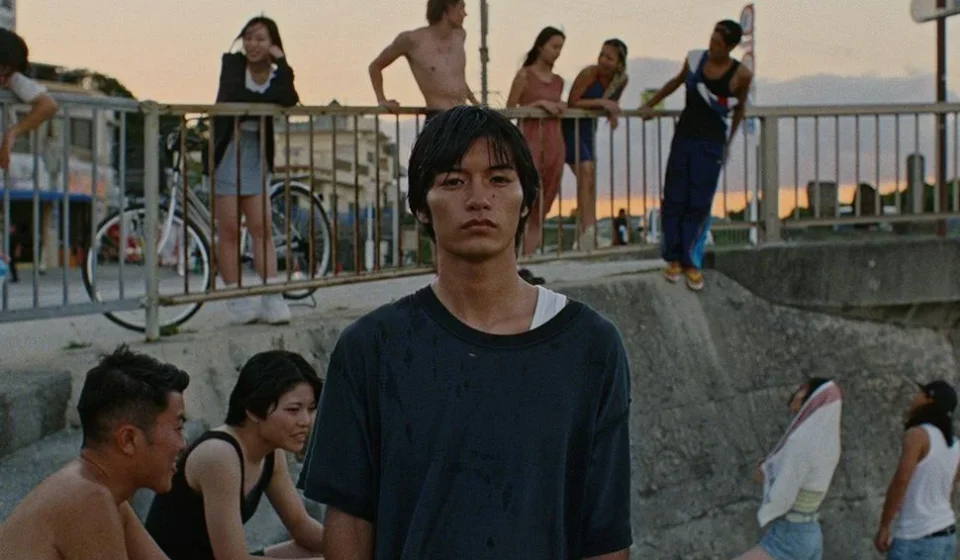
A Global Vision from Okinawa: Inside the Making of ‘The Color of the Sun’

At the 2026 Venice Film Festival, a quiet revolution took place within the Orizzonti section. The Color of the Sun, a poignant and visually arresting coming-of-age drama directed by Xavier Tera, walked away with the FIPRESCI International Critics’ Prize for Best Film. While the film is geographically anchored in the subtropical landscape of Okinawa, its thematic resonance is undeniably global.
Directed by photographer-turned-filmmaker Xavier Tera, the film is a delicate examination of identity, colonization, and the search for selfhood in a world dominated by hyper-masculinity. Through the eyes of his young protagonist, Kamei, played by newcomer Naoto Shimajiri, Tera explores the complexities of living in a post-colonial space—specifically Okinawa—while weaving in the threads of his own personal journey as a Québécois artist living in East Asia.
The Genesis of an Outsider’s Perspective
To understand the soul of The Color of the Sun, one must first understand the man behind the camera. Xavier Tera’s upbringing in a strictly French-speaking household in Canada, a country predominantly English-speaking, instilled in him a lifelong fascination with the nuances of identity.
"I grew up always questioning this idea of identity and what French represented within North America," Tera remarked during an interview at the Residenza d’Epoca Albergo Quattro Fontane in Venice. "But I also had to grapple with the reality that we were colonizers first, and that we, too, occupied the lands of Indigenous people."

This intellectual curiosity regarding the power dynamics of colonial history serves as the backbone of his film. In Okinawa, where the local Ryukyu people have long maintained a distinct cultural identity separate from mainland Japan, Tera found a mirror for his own experiences. The presence of U.S. military bases on the island since World War II adds a layer of geopolitical tension that frames the protagonist’s quiet, internal struggle. Tera acknowledges that being an outsider—neither Japanese, American, nor Okinawan—gave him the objective distance necessary to document the lived realities of his subjects without imposing a simplistic narrative.
A Partnership Forged in Creative Trust
The journey of The Color of the Sun was not without its trials. The production faced a shoestring budget and the mid-shoot departure of key local production personnel. Yet, the film found a guardian in producer Jeremy O. Harris, the Tony-nominated playwright who recently launched his own production company, bb2, alongside Josh Godfrey.
For Harris, producing is an act of translation. Having navigated his own early career frustrations where his creative vision often failed to manifest due to a lack of professional advocacy, Harris positioned himself as the bridge between Tera’s artistic instincts and the cold, pragmatic world of film finance.
"Most people would have told Xavier, ‘You’re white, you’re Canadian, so this is basically American. Flip the script and make the main character the white boy,’" Harris noted. "That would have been the financially viable route. But I knew the story he wanted to tell, and I knew that the emotions he was trying to capture were tied to the character of Kamei. My role was to protect that."

This creative protection allowed Tera to lean into the silence. The film is characterized by what is not said, utilizing the "emotive image-making" style that defined the collaboration. As Harris observed, the film functions as a masterclass in visual storytelling, bypassing the need for heavy exposition to dive deep into the protagonist’s psyche.
The Cinematographic Monk: Sayombhu Mukdeeprom
A pivotal moment for the production was securing the services of legendary cinematographer Sayombhu Mukdeeprom. Known for his work with Apichatpong Weerasethakul and his collaborations with Luca Guadagnino on Call Me by Your Name and Challengers, Mukdeeprom brought a meditative, monk-like presence to the Okinawan set.
The acquisition of such a high-caliber cinematographer was, in part, the work of producer Stella Savino. Her existing relationship with the industry elite paved the way for a partnership that Tera describes as "humbling."
"He was in between projects—a Frank Ocean film and a new Apichatpong movie—and there I was, this random dude, and he just jumped on a call with me," Tera recalled. Their onset conversations often bypassed the technical aspects of filmmaking, focusing instead on energy, Buddhism, and the shared communal experience of eating meals prepared by Mukdeeprom’s wife. The result is a film that breathes with a unique aesthetic, balancing the raw, harsh reality of the American military presence with the lyrical, sun-drenched beauty of the island.

Chronology of a Passion Project
The road to the screen was a decade-long endeavor, defined by the evolving professional and personal relationship between Tera and his producing partner, Janie Chartier. The two, who lived and worked together in Japan for ten years, cut their teeth in the commercial industry before committing to the, at times, grueling process of independent filmmaking.
- 2016-2024: Tera and Chartier work as partners in the Japanese commercial sector, building a visual language and a business foundation.
- 2025: Pre-production on The Color of the Sun begins. The project faces significant budget constraints and staff turnover.
- Early 2026: Principal photography commences in Okinawa. Despite personal shifts in their relationship, Tera and Chartier maintain a unified, unwavering commitment to the film’s artistic integrity.
- September 2026: The film premieres at the Venice Film Festival, receiving critical acclaim and the FIPRESCI prize.
"There were times I was ready to give up," Tera admitted. "I’d be in bed, crying, and Janie would be there, also crying, but telling me, ‘No, we are going to make this.’ To have that kind of partnership is the dream."
The Implications of a "Dangerous" Film
The success of The Color of the Sun in Venice sends a clear signal to the industry: there is a hunger for stories that subvert traditional, hyper-masculine narratives. The film’s exploration of what it means to be a man in a world of aggressive power dynamics—and the accompanying question of identity—has resonated with audiences and critics alike.
Jeremy O. Harris argues that the film’s critique of American influence is "ripe" for contemporary discourse. By embedding these political realities into a coming-of-age story, Tera avoids the didacticism that often plagues political cinema, opting instead for a humanistic approach that feels immediate and necessary.

While the film has secured distribution in Canada, Italy, and Japan, it currently awaits a U.S. home. Harris remains optimistic, noting that American distributors interested in international voices and "discovering the next one" will see the immense value in Tera’s work.
Looking Ahead: From Roppongi to ‘Earthlings’
The creative momentum generated by the success of this film shows no signs of slowing down. Tera is already deep in the writing process for his next project, a Tokyo-based narrative that he describes as a "raw, intense" look at the nightlife in Roppongi. Unlike the quiet, contemplative nature of The Color of the Sun, this upcoming project promises a faster, more chaotic pace, featuring a diverse cast of international characters.
Beyond his solo directorial work, Tera and his partners are heavily invested in an adaptation of Sayaka Murata’s acclaimed novel, Earthlings. The project, which has long been a passion of both Tera and Harris, represents the type of bold, unconventional storytelling that they hope will define the next phase of their careers.
"I’m constantly sending that book to people like Ayo Edebiri and Zendaya," Harris said. "There is no female character as interesting as the protagonist of Earthlings. It’s a story that needs to be told."

For now, the team behind The Color of the Sun can take a moment to celebrate. They have proven that with enough resilience, a clear vision, and a refusal to compromise, even the most "dangerous" of stories can find a home on the world stage. The film is not just a triumph of independent cinema; it is a testament to the power of collaboration and the enduring, transformative nature of the artistic process.