From Internet Provocateur to Auteur: How Jordan Firstman’s ‘Club Kid’ Redefines the Queer Coming-of-Age Genre

By Film Critic Desk
Editor’s note: This review was originally published on May 15, 2026, during the 2026 Cannes Film Festival. A24 will release "Club Kid" in theaters on Friday, November 6, 2026.
In the digital age, few figures have polarized the queer cultural discourse quite like Jordan Firstman. To his followers, he is an incisive, hyper-observant satirist of millennial neuroses; to his detractors, he is a confrontational provocateur whose commentary often teeters on the edge of performative outrage. Whether he is dissecting the sexual politics of fan fiction or appearing in the ketamine-soaked, nihilistic landscapes of Sebastian Silva’s Rotting in the Sun, Firstman has built a brand on being chronically online and aggressively self-aware.
However, with his feature writing and directorial debut, Club Kid, Firstman has achieved the unthinkable: he has transcended his internet-based persona to deliver a work of profound vulnerability, cinematic maturity, and devastating wit. It is a film that demands to be taken seriously, proving that the distance between a viral sketch artist and a bona fide auteur is far shorter than many critics dared to imagine.

The Genesis of a Modern Odyssey
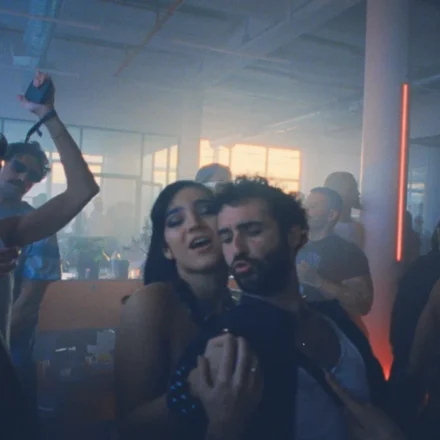
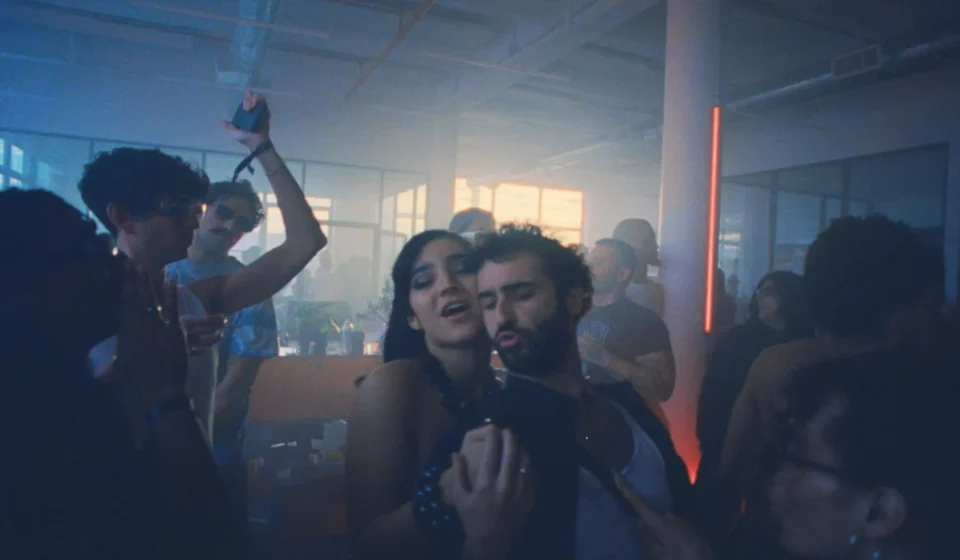
Club Kid is, at its core, a deeply autobiographical project that functions as a Rorschach test for its audience. Those familiar with Firstman’s public persona will be tempted to read the film as a direct confession, and in many ways, they would be correct. The film follows Peter, a thirty-something party promoter who, after a decade of MDMA-fueled revelry in the bowels of Berlin and the neon-lit clubs of Brooklyn, finds himself staring down the barrel of his own expiration date.
The film opens in 2016, capturing a fleeting moment of hedonism where the nights are endless and the mornings are nonexistent. Peter, played with a frantic, twitchy charisma by Firstman himself, is the quintessential "angel of Berghain"—a man whose life is a blur of chemical enhancements and social climbing. But the brilliance of the film lies in its refusal to let the party continue indefinitely. Through a jarring, effective smash-cut, we are transported a decade forward, where the party is technically still raging, but the sparkle has faded into a desperate, sweaty, and hollow exhaustion.
A Chronology of Chaos and Care
The narrative structure of Club Kid mirrors the physiological trajectory of a substance-induced high—the euphoric rise, the plateau of numbness, and the inevitable, crushing comedown.
The Setup (2016): Peter’s life is defined by the ephemeral. He lives in a rent-controlled Manhattan apartment—a relic of his late mother’s legacy—and runs a successful, if morally bankrupt, party empire with his business partner, Sophie (played with a manic, high-wire brilliance by Cara Delevingne). During a typical bender, Peter engages in a rare heterosexual encounter with two British tourists. He believes it to be a one-off footnote in his wild youth.

The Interruption (2026): A decade later, the past comes knocking in the form of Edison (Kirby Howell-Baptiste), one of the women from that night. She arrives with a devastating revelation: Peter is a father. The woman he slept with has passed away, leaving eight-year-old Arlo (breakout star Reggie Absalom) in Peter’s care.
The Comedown: The middle act of the film is a masterclass in tonal shifting. We watch Peter struggle to reconcile his life of drug-addled indulgence with the reality of a child who requires snacks, school enrollment, and emotional stability. The transition from negligent party boy to reluctant caregiver is rendered with a startling lack of sentimentality; Firstman knows that parenting isn’t an overnight epiphany, but a grueling, messy negotiation.
Supporting Data: Crafting the Aesthetic
The technical execution of Club Kid is perhaps its most surprising achievement. Shot on 35mm film, the cinematography by Adam Newport-Berra provides the project with a tactile, gritty texture that feels distinct from the polished, digital look of many contemporary indie films. By grounding the film in the physical reality of New York City—using it as a living, breathing character rather than a mere backdrop—Firstman anchors the abstract concepts of "found family" and "arrested development" in concrete imagery.
The production was bolstered by an impressive pedigree, featuring backing from Anora producer Alex Coco and filmmaker Olmo Schnabel. Their influence is felt in the film’s refusal to shy away from the darker corners of its premise. Furthermore, the sonic landscape of the film—featuring an original score by The White Lotus composer Cristobal Tapia de Veer and a curated selection of tracks including the melancholic sounds of Arthur Russell—functions as the emotional tether that holds the chaotic narrative together.

The Intersection of Comedy and Trauma
While Club Kid is consistently "excruciatingly funny," it is the film’s willingness to pivot into high-stakes drama that distinguishes it from other "party" movies. As Peter begins to date Oscar (Diego Calva), a child psychologist, the film moves into a space of genuine, tender exploration. The scene in which they discuss Gregg Araki’s Mysterious Skin serves as a bridge between their shared queer history and their budding, tentative future.
The film’s climax, a courtroom sequence that recalls the emotional weight of Kramer vs. Kramer, is a bold directorial choice. By forcing Peter to face the legal and personal ramifications of his lifestyle, Firstman brings the film to a cathartic resolution that feels both earned and inevitable. It is a moment where the "ironic pose" of the internet personality is entirely abandoned, replaced by a raw, naked sincerity that is as shocking as it is welcome.
Implications: A New Voice in Queer Cinema
The implications of Club Kid extend far beyond the borders of the film festival circuit. It marks the arrival of a storyteller who understands the specific, nuanced anxieties of a generation raised on the internet but starving for tangible, human connection. By tackling the "shameover" of the modern queer experience—the feeling that we are perpetually running from the consequences of our own joy—Firstman has tapped into a collective pulse.
Industry analysts have noted that the film’s aesthetic—loud, queer, and unapologetically stylized—is a perfect fit for the current independent market, specifically citing the "A24 sensibility" that permeates its opening credits. However, the film is more than just a stylistic exercise. It is a rejection of the idea that queer narratives must be "prestige" dramas or tragic biopics to matter. It is a messy, vibrant, and ultimately hopeful document of what happens when we stop performing for the screen and start showing up for one another.

As the film prepares for its November theatrical release, the conversation surrounding Jordan Firstman is destined to shift. He has successfully proven that one can be an internet provocateur while still possessing a soul. Club Kid is not just a triumph of personal growth; it is a vital addition to the canon of contemporary American film, one that suggests the party doesn’t have to end for us to find our way home.
Grade: A-