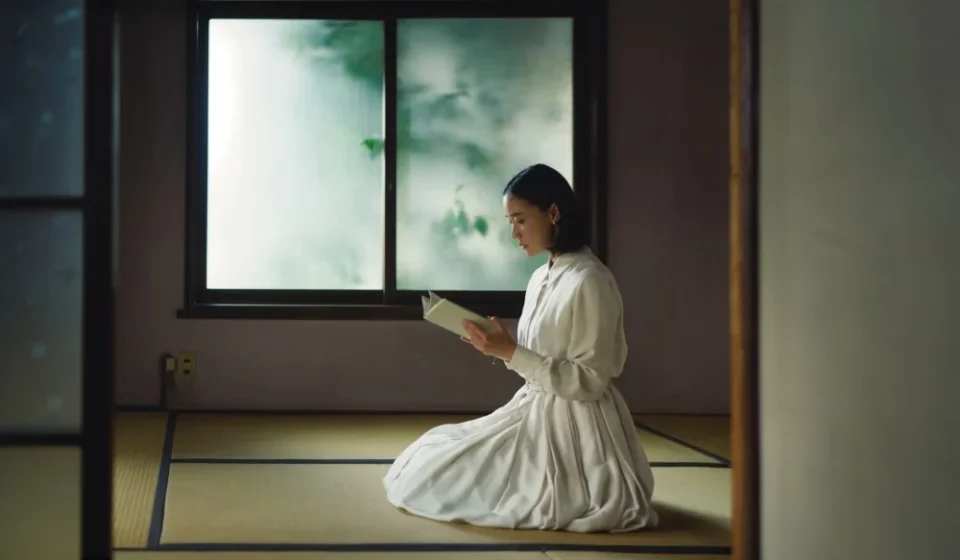
From Literary Icon to Cinematic Auteur: Maha Harada’s "In My Father’s Room" Joins Bitters End Slate

The Intersection of Literature and Lens
In a significant development for the international festival circuit, the San Sebastian Film Festival competition title In My Father’s Room has been officially acquired for the fall sales slate by the prestigious Japanese distributor Bitters End. The film, known in its domestic market as Muyou no Hito, marks the highly anticipated feature directorial debut of Maha Harada, one of Japan’s most prolific and widely read contemporary authors.
The project represents a bridge between two worlds: Harada’s established literary mastery—with over 10 million copies of her novels sold since her 2006 debut—and the delicate, observational visual language of Japanese auteur cinema. Adapted from her own short story, An Unnecessary Man, the film has already generated significant buzz for its meditative exploration of grief, family legacy, and the hidden grace found in a life society deemed marginal.
A Chronology of Artistic Evolution
The genesis of In My Father’s Room is rooted in the personal and professional trajectory of Maha Harada. Before she became a literary powerhouse, Harada built a formidable foundation in the arts. Trained in Japanese literature and art history, she navigated a diverse professional landscape that included stints at major trading firms and prestigious institutions, most notably the Museum of Modern Art (MoMA) in New York.
This background, characterized by a deep engagement with curatorial work and cultural analysis, informs the narrative structure of her debut feature. Her literary bibliography is heavily populated with art-themed narratives, such as Canvas of Paradise and Guernica Cover-Up, which display her knack for synthesizing historical context with intimate human drama.
When she transitioned to the director’s chair, Harada brought this curatorial eye to the screen. The production journey for In My Father’s Room was carefully curated to mirror the high standards of the literary works she is known for. By casting veteran performers like Aoi Yu (Wife of a Spy) and Ogata Issey (Onoda, Silence, Yi Yi), alongside Nagayama Eita (Monster) and Watanabe Eri (Shall We Dance?), Harada secured a cast capable of conveying the subtle, unspoken nuances of her screenplay. The visual identity of the film was further solidified by the inclusion of cinematographer Kitagawa Yoshio, whose work on Evil Doesn’t Exist and Lost Land proves his capacity for capturing the quiet, atmospheric beauty required for such a poignant story.
The Narrative: A Journey Through Memory
At the heart of the film is Satomi, a dedicated art museum employee. The catalyst for the story is a mundane object—an envelope containing an unfamiliar key. This key opens a room belonging to her father, who had passed away alone just a month prior.
As Satomi begins to piece together the final days of her father’s life, the film evolves into a poignant detective story of the soul. She discovers a man whom society had largely written off, yet who found profound solace in the ritual of the tea ceremony, the rhythm of language, and the appreciation of small, overlooked aesthetic details. The narrative arc moves from the cold, clinical reality of a lonely death to a warmer, more profound recognition of the grace inherent in her father’s solitary existence. It is a story designed to resonate with global audiences, challenging perceptions of what constitutes a "successful" life.
Supporting Data and Production Pedigree
The inclusion of In My Father’s Room in the Bitters End catalog is a testament to the distributor’s rigorous curation process. Bitters End has operated for over three decades as a gatekeeper of international auteur cinema within Japan. Their portfolio is a "who’s who" of world cinema, having facilitated the distribution of works by Bong Joon-ho, the Dardenne brothers, Jia Zhangke, Roy Anderson, Gianfranco Rosi, and Japan’s own Hamaguchi Ryusuke.
Beyond distribution, Bitters End has cemented its reputation as a producer of world-class cinema. Their production credits include the Oscar-winning Drive My Car, the Locarno Golden Leopard winner Two Seasons, Two Strangers, and Cannes-selected titles such as All of a Sudden and All the Lovers in the Night. By backing Harada’s debut, Bitters End is signaling its confidence in her transition from novelist to filmmaker, effectively betting that her narrative sensibility will translate into the same critical success that has defined their previous partnerships.
Official Stance and Market Implications
While official statements from the production team emphasize the personal nature of the film, industry analysts view the acquisition as a strategic move. The film is scheduled for a local release in Japan in January 2027, with international sales being handled simultaneously.
For the Japanese film industry, the rise of a director like Harada—who brings an existing, loyal readership to the cinema—is a vital development. The "literary-to-film" pipeline is a well-established tradition in Japan, but Harada’s personal involvement as writer and director adds a layer of authenticity that is rare. By keeping the project within the Bitters End ecosystem, the producers ensure that the film’s delicate tone will be preserved through a marketing campaign that leans into the prestige of its origins.
The Broader Implications for Japanese Cinema
The success of In My Father’s Room could mark a pivot in how major Japanese production houses view the role of the author. In an era where IP (intellectual property) is king, having an author who can shepherd their own work from the page to the screen is an invaluable asset.
Furthermore, the film’s focus on themes of "unnecessary" lives and the importance of overlooked beauty taps into a growing global trend of "slow cinema" and humanistic storytelling. After a decade of high-octane genre films dominating the box office, audiences are increasingly showing an appetite for stories that prioritize emotional resonance and philosophical inquiry.
The San Sebastian Film Festival has historically been a launchpad for films that defy easy categorization, and the presence of In My Father’s Room in the competition section suggests a work that is both intellectually challenging and emotionally accessible. If the film performs as well as industry insiders expect, it could solidify Maha Harada’s reputation as a multi-hyphenate talent, opening the door for more literary figures to take control of their cinematic adaptations.
Looking Ahead: A New Standard
As the industry turns its gaze toward the January 2027 release, the anticipation is not merely for a new film, but for the arrival of a new voice in Japanese cinema. Bitters End has built its reputation on the "auteur" label—directors who possess a distinct, uncompromised vision. By adding Harada to this roster, they are effectively declaring her an auteur in her own right.
The film serves as a reminder that the most compelling stories are often those that look inward. In the quiet of a room left behind, in the memory of a father, and in the careful lens of a debutant director, lies the potential for a cinematic experience that transcends language and borders. For Bitters End, the objective is clear: to continue their legacy of championing films that matter, ensuring that stories like that of Satomi and her father find the audience they deserve, both in the theaters of Tokyo and on the screens of the world.
As the fall sales slate moves forward, In My Father’s Room stands as the crown jewel of the collection, a testament to the enduring power of the written word and its infinite capacity to be reborn through the lens of a camera. The journey of Maha Harada has only just begun, and the world is watching to see how her prose will continue to illuminate the dark corners of the human experience.