Artistic Integrity vs. Political Pressure: The Cairo Film Festival Censorship Controversy

The 47th edition of the Cairo Film Festival (CIFF), historically a beacon of Middle Eastern cinema and a bridge between global artistic communities, finds itself embroiled in a significant scandal. What began as a routine selection for the festival’s prestigious Critics’ Week competition has devolved into an international diplomatic row regarding creative freedom, political retaliation, and the boundaries of artistic autonomy.
At the center of this firestorm is Turkish director Ferit Kılıç, whose feature film Dancing Angels was abruptly pulled from the festival’s lineup by organizers, only to be reinstated following intense pressure from international film organizations—a reversal that ultimately came too late to save the film’s premiere.
A Chronology of Exclusion and Reinstatement
The conflict trajectory began on October 12, when the Cairo Film Festival held a high-profile press conference to unveil the official selection for the 47th edition, scheduled to run from November 11 to November 20. Among the notable inclusions was Dancing Angels, selected for the competitive Critics’ Week sidebar. The announcement was met with enthusiasm, and the festival’s official social media channels amplified the news, signaling that the film was a core component of the year’s programming.
However, the celebratory atmosphere was short-lived. Shortly after the announcement, the film’s production team received an abrupt, email-based notification from festival management stating that the film had been removed from the lineup. This sudden revocation—conducted without prior consultation or a transparent explanation—sent shockwaves through the production team, leading to an immediate investigation into the motivations behind the decision.
The Political Pretext: The "Eagles" Controversy
The reasoning behind the festival’s decision, as outlined in internal communications obtained by Variety, reveals a deeply political motivation. The festival’s management justified the expulsion by pointing to the professional history of the film’s producers, Diloy Gülün and Beste Yamalıoğlu.
The producers had previously collaborated on Tarik Saleh’s political thriller Eagles of the Republic, which competed at the Cannes Film Festival in 2025. The film, which explores the harrowing realities of an Egyptian star coerced into creating state-sponsored propaganda, was viewed by the Cairo Film Festival’s board as "hostile" to the Egyptian state and the national audience. By punishing the producers for their past creative choices—specifically a film that critiqued political mechanisms—the festival engaged in a form of administrative blacklisting that prioritized political sensitivity over artistic merit.
The International Backlash
The decision to exclude Dancing Angels triggered a swift and organized backlash. Recognizing that the move constituted a direct threat to the principle of independent filmmaking, the producers of Dancing Angels took the battle to the international stage. They reached out to a coalition of global trade organizations, including the International Federation of Film Producers Associations (FIAPF), the European Audiovisual Entrepreneurs (EAVE), and Turkey’s prestigious "Meetings on the Bridge" co-production platform.
These organizations, acting as the bedrock of the global film industry, exerted immediate and significant pressure on the Cairo Film Festival. The demand for an explanation—and the implied threat of future sanctions—forced the festival’s hand. Caught between a desire to appease local political sensibilities and the risk of total isolation from the global film circuit, the festival management backtracked. They sent a follow-up communication to the team behind Dancing Angels, offering to reinstate the film into the competition.
The Director’s Stance: Standing by Artistic Autonomy
Despite the invitation to return to the program, Ferit Kılıç and his team declined. For Kılıç, the incident had irreparably damaged the trust required for a successful partnership. By withdrawing from the festival entirely, the director sought to protect the integrity of his work, signaling that his film would not be used as a political bargaining chip or subjected to the whims of an institution that engages in retrospective censorship.
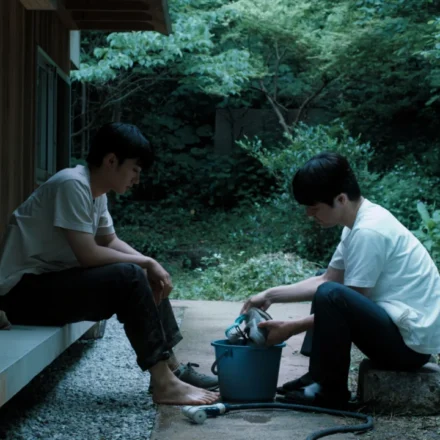
Dancing Angels itself is a poignant, youth-centric narrative. The film follows the life of Ali, a 15-year-old boy grappling with the pervasive violence of his environment. The synopsis highlights the "invisible burdens and pressures" that society forces upon the young and old alike—a thematic focus that ironically mirrors the very pressures the director faced when his work was excluded by the festival.

Official Responses and the CIFF Defense
In response to inquiries regarding the controversy, the Cairo Film Festival released an official statement that attempted to strike a balance between institutional defense and an acknowledgment of the "miscommunication."
"Since its inception, the Critics Week competition has been a place for feature filmmakers—all standing at the beginning of their career, but coming from various different cultural, religious, and political backgrounds," the statement read. "CIFF is proud to be a platform for all these filmmakers, to provide them with an opportunity to showcase their artistic vision."
Regarding the incident with Kılıç, the festival expressed regret: "We are saddened that it is one of these young directors, Ferit Kılıç, who is now subjected to this situation. On more than one occasion, the CIFF management apologized for the miscommunication, reaffirming the festival’s commitment to the presentation of exceptional works of art and its support of young artists."
The festival further clarified its final position, noting that the decision to re-invite the film was made once the full circumstances were understood. "Unfortunately, the producers, as well as the filmmaker, were not inclined to accept it. We respect their decision to withdraw the film, as CIFF is committed to being a space of artistic freedom and open dialogue."
Implications for Global Film Festivals
The Dancing Angels incident raises profound questions about the future of film festivals in politically sensitive regions. The incident serves as a case study for several emerging challenges:
1. The Weaponization of Selection Committees
When festival selection committees begin to filter films based on the political history of the producers rather than the content of the film itself, it creates a "chilling effect" on the industry. Producers may become hesitant to work on projects that challenge the status quo, fearing that their future professional opportunities will be compromised by state-aligned institutions.
2. The Role of International Trade Organizations
The rapid intervention by FIAPF, EAVE, and other bodies demonstrated the efficacy of international solidarity. By forcing the Cairo Film Festival to acknowledge its error, these organizations proved that the global film community has the power to hold individual festivals accountable. However, this raises the question of whether such pressure is sustainable or if it risks alienating festivals from their home governments.
3. The Definition of "Artistic Freedom"
The festival’s claim to be a "space of artistic freedom" is now under intense scrutiny. True artistic freedom implies that the festival environment is insulated from the immediate political directives of the host state. The Cairo Film Festival’s initial attempt to block a film based on the producers’ past work suggests a lack of institutional independence, which may discourage international directors from premiering their work in Cairo in the coming years.
Conclusion: A Precedent of Caution
As the 47th Cairo Film Festival moves forward, the shadow of this controversy remains. While the festival has publicly apologized and claimed a commitment to dialogue, the loss of Dancing Angels—a film that explores the very themes of societal pressure and survival—is a loss for the audience as much as it is for the director.
For emerging filmmakers, the message is clear: the path to the screen is often paved with political landmines. The case of Ferit Kılıç is not merely a bureaucratic dispute; it is a fundamental test of whether international film festivals can maintain their status as neutral, safe harbors for provocative and essential cinema in an increasingly polarized world. Whether the Cairo Film Festival can regain the trust of the international filmmaking community will depend on its future transparency and its willingness to prioritize the film over the politics of the producer.