
The lead-up to an interview with Ed Helms at this year’s Toronto International Film Festival (TIFF) was, to put it mildly, an exercise in absurdity. It began at a high-end hotel restaurant where the maître d’ attempted to levy a $75-per-person “sitting fee” for the privilege of conducting an interview—this in a room that was cavernous, empty, and well past the lunch rush. When the logic of a quiet, non-intrusive workspace was presented, the staff remained unmoved, clearly eyeing a $150 windfall for the hotel’s coffers.
The location was quickly abandoned in favor of a quiet, desolate corner on a lower floor. It was there, amidst the frantic scheduling of a major festival, that the real comedy of errors began. While guarding a small table for the arrival of the Hangover star, a stranger attempted to commandeer the space. After a series of awkward, silent shrugs and an incredulous face-off, the man finally yielded—just as a smiling Ed Helms rounded the corner. When informed of the struggle, Helms simply quipped, “That’s bold, this is a really small table,” before laughing off the entire ordeal as a classic festival mishap.
A Career Pivot: From Chaos to Competence
Helms is currently navigating the "bonkers" reality of having three films featured at TIFF. Amidst the whirlwind, his focus is firmly set on The Stunt Driver, a compelling, fact-based drama directed by Michael Dowse. The film tells the story of Ken Carter (played by Jay Baruchel), a Canadian daredevil whose fierce, irrational rivalry with American icon Evel Knievel led him to attempt the unthinkable: jumping a car a full mile over the Saint-Laurent river.
In The Stunt Driver, based on the documentary The Devil at Your Heels, Helms steps into the shoes of Dick Keller, an engineer and the voice of reason amidst a sea of reckless ambition. For an actor historically known for playing characters who are either the butt of the joke or entirely out of their depth, the role represents a significant, conscious departure.
"I’m usually the guy who has no idea what’s going on," Helms admits. "Dick Keller is the guy who knows what he’s talking about, the guy who gets things done. Approaching that character with a sense of, ‘he just doesn’t fuck around,’ was an interesting dynamic. Ken [Carter] needs a grounding force, and Dick is that force."

The Psychology of Performance
Helms speaks about the role with a level of introspection rarely seen in high-profile press junkets. He describes the experience of playing a character as “aspirational practice.” In a pivotal scene where he shuts down a dangerous stunt despite the intense pressure from his colleagues, his character calmly asserts, "I won’t be spoken to that way."
"I loved performing that because it was a bit of aspirational behavior for me," Helms explains. "I’m not that composed in a conflict. I’m not that thoughtful in a conflict. But Dick Keller is, and I loved being that. It’s almost like training. It’s cool to see yourself on camera being a way that you think is actually healthy and cool and smart."
This pivot toward "grounded" roles reflects Helms’s own evolution. As he moves through his career, he finds himself gravitating toward characters who possess the internal structure he is cultivating in his own life. "It feels like my career is meeting me where I am," he says, noting that while he may not be as stoic as Keller, he is striving to move through the world with more intention.
The Resurrection of Vacation
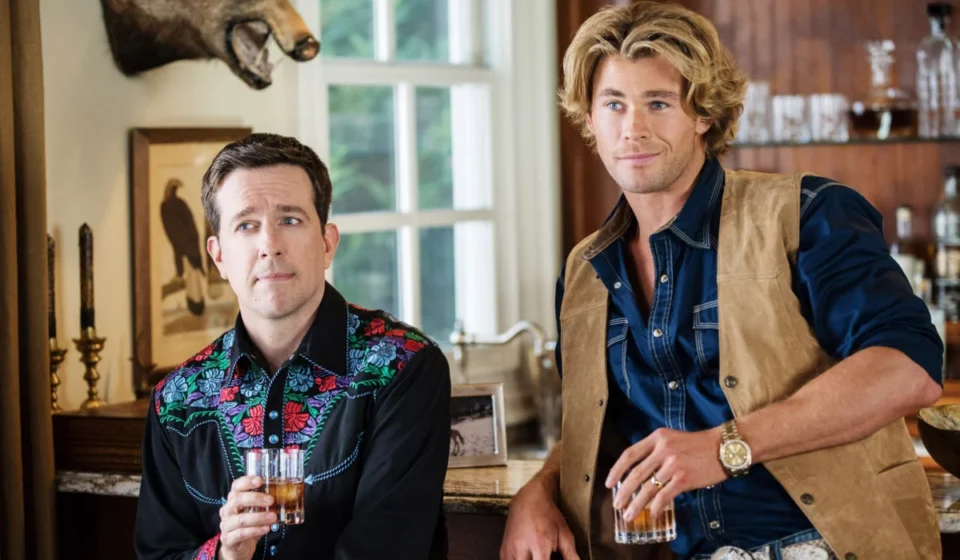
The conversation naturally veers toward Vacation (2015), the reboot of the legendary Chevy Chase franchise. Upon its release, the film was met with scathing critical reception. However, in the years since, thanks in part to the critical and commercial success of directors John Francis Daley and Jonathan Goldstein’s later works—like Game Night and Dungeons & Dragons: Honor Among Thieves—the film has cultivated a fervent, dedicated cult following.
Helms, who was skeptical when told in 2020 that the film had gained a second life, is now fully aware of its status. "Every once in a while, it will ratchet up on Netflix to number two or three," he says. "It’s honestly so gratifying."

He recalls the period following the film’s initial, disappointing rollout with a sense of professional pride that has only sharpened with time. "We were very sad, but not broken," he notes. "None of us questioned the movie we made. I told John and Jonathan that I wouldn’t have changed a thing. I’m so proud of every part of it."
He cites scenes like the infamous Chris Hemsworth "faucet" monologue and the chaotic pet rat sequence as high-water marks of the comedy. More importantly, Helms expresses a genuine desire to revisit the world of the Griswolds. "I need to get to a point where Warner Bros. or New Line is saying, ‘Guys, it’s time for a sequel.’ If there’s any franchise I’ve just wanted to keep going, it’s the Griswolds. Let’s build on it."
Cultural Friction and Hero Worship
The film The Stunt Driver is not without its thematic provocations. The movie leans into the inherent friction between Canadian and American identities, most notably through a blistering monologue where the protagonist claims to "eat Americans for breakfast."
Helms, a quintessential American performer, laughs when asked about the intensity of the Canadian reception. "The crowd reaction in downtown Toronto was psyched," he says. The film taps into the raw, nostalgic nerve of the Evel Knievel era—a time when, as Helms puts it, "his name was an adjective."
For Helms, the character of the daredevil isn’t just a trope; it’s a reflection of his own youth. "The kid culture on the street where I grew up was all about jumping dirt bikes, racing, and listening to Van Halen trying to get pumped up to do big jumps. It’s pre-Red Bull, pre-X Games. Evel Knievel was part of that hero worship."

Implications for the Future
As The Stunt Driver prepares for its theatrical release on September 25 via The Independent Film Company, the industry is taking notice of this new, more mature iteration of Ed Helms. He is no longer just the chaotic, lovable fool; he is an actor finding his footing in roles that demand gravity and poise.
The success of this transition suggests a new chapter for the veteran actor. By balancing his desire to return to the broad, slapstick comedy of the Vacation franchise with the grounded, dramatic weight of The Stunt Driver, Helms is positioning himself as a more versatile performer capable of anchoring complex narratives.
Whether it is the emotional resonance of a final stunt scene that left him "bowled over" at the premiere, or the quiet, firm resolve of an engineer in a crisis, Helms is clearly finding that the most interesting roles are the ones that challenge his own perceptions of self-control. As the TIFF festival crowds continue to praise his latest work, it is clear that the industry—and the audience—are ready for this new version of Ed Helms. The "guy who gets it done" has finally arrived.