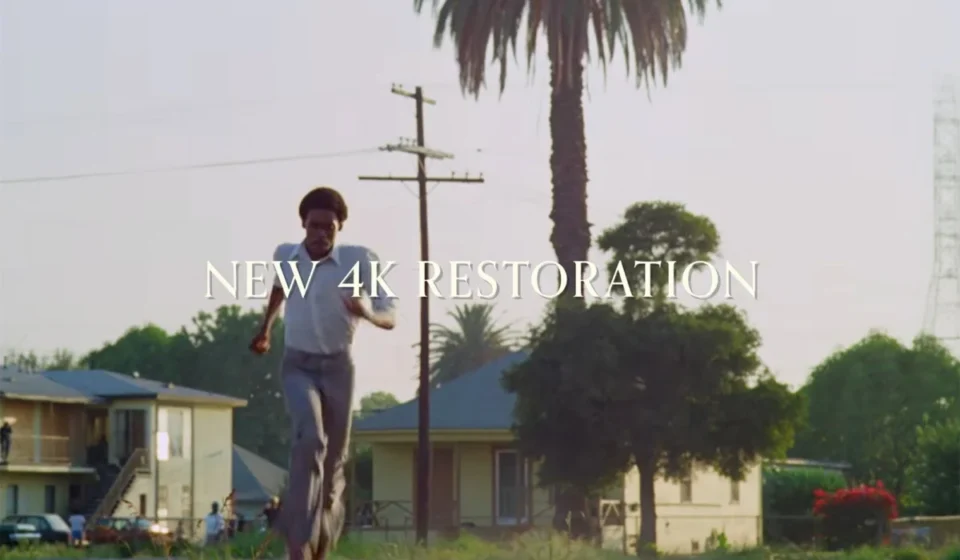
A Resurrected Masterpiece: Charles Burnett’s ‘My Brother’s Wedding’ Returns in Stunning 4K

By Alex Billington | August 21, 2026
For the dedicated cinephile, the name Charles Burnett is synonymous with the bedrock of American independent cinema. Following the highly successful 4K restoration and theatrical re-release of his seminal 1978 masterpiece Killer of Sheep last year, Kino Lorber and Milestone Films have turned their attention to another essential, yet often overlooked, chapter of his filmography.
This week, distributors officially unveiled the trailer for a pristine 4K digital restoration of My Brother’s Wedding, Burnett’s poignant, tragicomic second feature. Originally premiering at the 1983 Toronto Film Festival, the film serves as a vital bridge between the raw, neorealist power of his debut and the more polished, narrative-driven work that would define his later career. As it prepares for a theatrical run beginning at New York City’s Film Forum this September, the release offers a long-overdue opportunity to reassess a film that captures the complexities of South Central, Los Angeles, with a level of intimacy rarely seen in American cinema.
The Core Narrative: A Portrait of Stagnation and Choice
Set in the early 1980s, My Brother’s Wedding centers on Pierce Mundy, portrayed with a weary, magnetic realism by Everett Silas. Pierce is a man drifting through the periphery of his own life. He is tethered to his family’s modest dry-cleaning business and the routine demands of his parents and neighbors, yet he possesses a palpable lack of ambition that frustrates his deeply religious mother (Jessie Holmes).
The film’s conflict is crystallized through the arrival of two milestone events. Pierce’s brother, Wendell (Monte Easter), represents the "upwardly mobile" ideal—a successful lawyer preparing to marry into a refined, upper-middle-class family. In stark contrast, Pierce’s childhood friends are either deceased or incarcerated, a reality brought into sharp focus when his closest friend, Soldier (Ronnie Bell), is released from prison, only to be killed shortly thereafter in a tragic car accident.

The narrative reaches its crescendo through a cruel twist of fate: the funeral of his best friend and the wedding of his brother fall on the same day. This collision of events forces Pierce to confront his conflicting loyalties to his past, his community, and the expectations of his future. Burnett uses this tension not merely as a plot device, but as a lens to explore the lived realities of South Central—a landscape defined by a delicate balance of stagnation, resignation, resistance, and an enduring joie de vivre.
Chronology: From the Toronto Film Festival to the Digital Age
To understand the significance of this 4K restoration, one must look at the film’s arduous path through history. My Brother’s Wedding premiered in 1983, a time when the landscape for Black independent filmmakers was drastically different than it is today. Following its debut in Toronto, the film was screened at the 1984 US Film Festival—an early iteration of what would eventually become the Sundance Film Festival.
Despite its critical acclaim at the time, the film suffered from limited distribution, a fate shared by many independent works of the era. For decades, it existed primarily on aging prints, often inaccessible to the broader public.
- 1983: World premiere at the Toronto Film Festival.
- 1984: Screening at the US Film Festival (the precursor to Sundance).
- 2025: The 4K restoration of Burnett’s Killer of Sheep revitalizes public interest in his oeuvre, setting the stage for a retrospective movement.
- 2026: Kino Lorber and Milestone Films announce the official 4K digital restoration of My Brother’s Wedding.
- September 2026: Official theatrical re-release begins at the Film Forum in NYC, with a subsequent national expansion.
This restoration process is not merely a technical cleanup; it is an act of cultural preservation. By digitizing the original negatives in 4K, the team has managed to restore the film’s grainy, atmospheric texture, allowing modern audiences to experience the visual language of South Central as Burnett intended.
Supporting Data: The Burnett Signature
Charles Burnett is widely regarded as one of the most significant filmmakers of the 20th century, though his influence often permeated the industry through a "slow burn" rather than immediate commercial explosion. His body of work—comprising Killer of Sheep (1978), My Brother’s Wedding (1983), and To Sleep with Anger (1990)—forms a cohesive, if unofficial, trilogy of Black American life.

Production Credits
- Director/Producer/Screenwriter: Charles Burnett
- Co-Producer: Gaye Shannon-Burnett
- Cast: Everett Silas (Pierce), Jessie Holmes (Mother), Gaye Shannon-Burnett (Fiancée), Ronnie Bell (Soldier), Monte Easter (Wendell).
Burnett’s approach to filmmaking was famously artisanal. On My Brother’s Wedding, he served not only as the director and writer but also as the director of photography and producer. This level of total control resulted in a film that feels deeply personal and unmediated. Unlike the Hollywood productions of the 1980s that often utilized South Central as a backdrop for crime dramas, Burnett’s lens focuses on the interior lives of the residents. His characters are not archetypes; they are people defined by their contradictions—the "Bible-thumping" mother, the disillusioned brother, and the wandering soul of Pierce.
Official Responses and Industry Reception
The announcement of the restoration has been met with significant enthusiasm from the film community. Kino Lorber, a distributor known for its dedication to world cinema and historical preservation, has championed this project as a milestone in American indie history.
"Charles Burnett’s work is essential viewing," noted a representative for the distribution team. "We aren’t just releasing an old movie; we are restoring a piece of American history that was, for too long, relegated to the margins."
The response from critics who caught early previews of the restoration has been overwhelmingly positive. Many have pointed to the film’s "tragicomic" tone as a precursor to modern independent dramas that eschew traditional three-act structures in favor of character studies. The film’s ability to find humor within the bleakest of circumstances is a testament to Burnett’s humanistic perspective.
Implications: Why This Matters Today
The release of My Brother’s Wedding in 2026 is more than a nostalgic exercise. It serves as a pedagogical tool for a new generation of filmmakers and scholars who are increasingly looking back at the "New Black Cinema" movement of the 1970s and 80s to understand the roots of modern representation.

The Preservation of Lived Reality
Burnett’s work is a masterclass in "lived reality." In My Brother’s Wedding, the background characters—the neighbors, the passersby, the parents—are all fully realized. There is a weight to every frame that suggests a world existing well beyond the edges of the camera lens. This approach challenges the superficiality often found in contemporary cinema, reminding audiences that the most compelling stories are often the ones found in the mundane rhythms of daily existence.
Influencing the Future
By bringing this film back to the big screen, the industry is validating the importance of independent film archives. As streaming platforms continue to dominate the consumption of media, the theatrical experience of a restored classic provides a communal space to engage with challenging, complex narratives. The success of this release will likely influence future decisions by distributors to invest in the restoration of other "lost" films from the independent boom of the late 20th century.
A Call to Action for Cinephiles
For the casual viewer, My Brother’s Wedding might seem like an artifact of a different time. However, its themes—the struggle for upward mobility, the tension between personal integrity and societal expectations, and the weight of familial duty—are as relevant today as they were in 1983. As we navigate an era of rapid technological change and social fragmentation, Burnett’s quiet, observant, and deeply compassionate storytelling offers a necessary anchor.
Whether you are a longtime admirer of Charles Burnett or a newcomer to his work, the 4K restoration of My Brother’s Wedding is an unmissable event. It is a reminder that cinema has the power not just to entertain, but to document, preserve, and illuminate the human condition in all its messy, beautiful, and complex glory.
My Brother’s Wedding opens at the Film Forum on September 18th, 2026. For local listings and information on the national expansion, visit the official Kino Lorber website. Do not miss the chance to see a master at work.