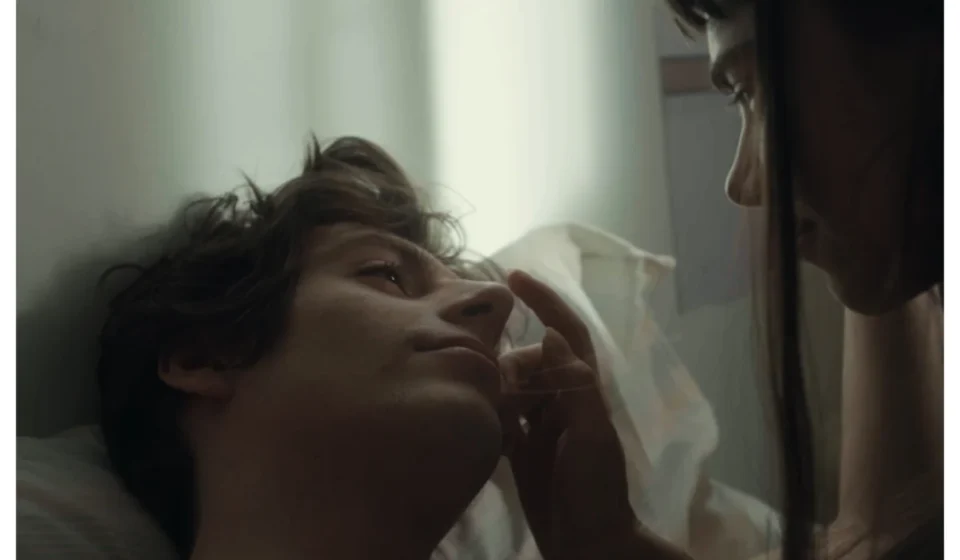
Cinematic Portraits of a Drifting Generation: Martina Buchelová’s “Lover, Not a Fighter”

The landscape of contemporary Eastern European cinema has long been associated with austere realism and somber historical reflections. However, a new wave of filmmakers is emerging to challenge these tropes, trading grim aesthetics for deadpan wit and generational introspection. At the forefront of this shift is Slovakian writer-director Martina Buchelová, whose debut feature, Lover, Not a Fighter, has recently emerged as a significant cultural touchstone. A Slovakian-Czech co-production, the film offers a rhythmic, "shaggy," and deeply empathetic look at Gen Z life, navigating the complexities of stalled adulthood with a charm that resonates far beyond its regional origins.
Main Facts: A Breakthrough in the Proxima Competition
Lover, Not a Fighter arrived on the international stage with considerable momentum, premiering at the Karlovy Vary International Film Festival (KVIFF). In a surprising and widely celebrated turn, the film secured the top prize in the festival’s Proxima competition. This specific category is traditionally reserved for adventurous, discovery-oriented, and often experimental works that push the boundaries of conventional narrative. For Buchelová’s film to win—a work that is as much a crowd-pleasing romantic comedy as it is an indie character study—signals a shift in how major festivals are valuing accessible yet stylistically distinct storytelling.
The film centers on Andrej, portrayed with a "goofball physicality" by newcomer Adam Kubala. Andrej is a 20-year-old whose life has effectively hit a standstill. Neither a teenager nor a fully functioning adult, he exists in a state of "shambling" uncertainty. The narrative follows his attempts to restart his life after a period of binge-drinking and parental neglect, moving into his grandmother’s home in a bid for stability. What follows is a series of loosely connected, inconsistently chronological episodes that capture the "insecurities, anxieties, and liberties" of a generation raised in an era of constant political and environmental pessimism.
Chronology: From Stagnation to Haphazard Recovery
The narrative structure of Lover, Not a Fighter intentionally mirrors the disjointed nature of its protagonist’s psyche. Rather than a traditional three-act structure, the film unfolds as a patchwork of experiences.
The Stalled Start
The film introduces Andrej not through a dramatic inciting incident, but through a series of "precious affectations"—longwinded, ironic chapter headings that describe his mundane reality. One such title introduces him as someone who "doesn’t hang out at tram stops anymore, but sits in a tree and lives with his grandma." This introduction sets the tone: Andrej is semi-estranged from his divorced parents, who are more concerned with their new partners than their son’s lack of direction. His coping mechanisms—binge-drinking and a peculiar habit of climbing trees in public—highlight a young man desperately seeking a perspective from which the world makes sense.
The Grandmother’s Intervention
In an effort to "save himself from himself," Andrej moves in with his grandmother, played by Jaroslava Pokorná. Her character provides a "no-nonsense" grounding for Andrej’s flighty tendencies. He commits to quitting alcohol "cold turkey," though his social awkwardness remains. The peace of this domestic arrangement is soon disrupted by the arrival of his cousin, Pet’o (František Beleš). Pet’o is similarly adrift, leading to a "turf war" over the grandmother’s living room floor. This conflict between two socially inept young men serves as a comedic engine, revealing that their frustrations are rooted in a shared inability to navigate the world.
The Romantic Catalyst
The trajectory of the film shifts when Andrej meets Miša (Michaela Kostková), a shy but sharp-witted young woman who sees potential in his "hangdog slacker energy." The relationship is not a smooth ascent; Andrej’s social gauche leads him to scupper their initial connection. The latter half of the film focuses on a "halting" romantic repair job. This journey is complicated by various sidebars, including Miša’s doomsday-fixated father and her romantically naïve sister, further delaying Andrej’s path to maturity but enriching the film’s world with eccentric, human detail.
Supporting Data: The Craft of Deadpan Realism
The success of Lover, Not a Fighter is largely attributed to its technical and structural choices, which deviate from "meme-style" humor in favor of well-written, uncomfortable conversations.
Cinematography and Visual Language
Cinematographer Adam Mach utilizes a "limber, unpolished" camerawork that evokes the roaming spontaneity of smartphone shooting. This visual style is not merely a gimmick; it reflects the way Gen Z perceives and records their reality—fragmented, immediate, and often lacking a formal frame. By mimicking the aesthetic of social media without the superficiality, Mach creates a sense of "truthful and empathetic" intimacy.
The Script and Dialogue
Martina Buchelová’s script is noted for its resistance to "banal generational generalizations." While many modern comedies rely on front-facing, "TikTok-style" punchlines, Lover, Not a Fighter invests in the "squirmingly uncomfortable" nuances of face-to-face interaction. The dialogue captures a specific kind of "behind-the-beat" delivery, particularly in Kubala’s performance.
One of the film’s most poignant lines comes from Pet’o: "I don’t think that you’re a bad person, but you are very sad, and that’s why you’re so stupid." This line encapsulates the film’s philosophy—that the "stupidity" or social failures of the youth are often a byproduct of a profound, unaddressed sadness stemming from the world they inherited.
Casting and Characterization
The ensemble cast brings a layer of authenticity to the "variously angry, eccentric, or unmoored" characters:
- Adam Kubala (Andrej): Maintains the character’s dignity even when he is at his most pathetic, such as eating preserved cherries from a jar while watching anemic morning TV.
- Michaela Kostková (Miša): Avoids "sitcom type" tropes, portraying an intelligent, messy person who is a genuine match for Andrej’s idiosyncrasies.
- Jaroslava Pokorná (Grandmother): Acts as the bridge between the chaotic youth and a more stable, albeit vanishing, past.
Official Responses: A "Word-of-Mouth" Sensation
The reception at Karlovy Vary was overwhelmingly positive, with local audiences responding with "gales of laughter." Critics have hailed the film as an "unusually crowd-pleasing winner," noting that while its Eastern European humor is specific, its themes of drift and discovery are universal.
The Proxima jury’s decision to award Buchelová was seen as a validation of "freewheeling construction" over rigid formalism. Industry analysts suggest that Lover, Not a Fighter has the potential to become a "word-of-mouth charmer" on the international festival circuit, potentially following in the footsteps of other indie darlings that bridge the gap between art-house and mainstream accessibility.
The film has also been praised by cultural commentators for its portrayal of the "drifting generation." By refusing to patronize its characters, Buchelová has created a work that is being discussed in academic and social circles as a rare, authentic representation of Gen Z’s "behavioral quirks and blind spots."
Implications: A New Voice for Eastern Europe
The implications of Lover, Not a Fighter extend beyond its box office or festival potential. It represents a significant evolution in Slovakian and Czech cinema.
Redefining the Slacker Genre
Historically, the "slacker" film is a Western trope, popularized by American directors like Richard Linklater or Kevin Smith. Buchelová successfully transplants this genre into the socio-economic context of Eastern Europe. Here, the "slacking" isn’t just about laziness; it’s a response to a world where traditional paths to success—stable careers, homeownership, environmental stability—feel increasingly out of reach.
The Generational Gap
The film serves as a critique of the "elders" who "could have set a less chaotic and self-involved example for living." By highlighting the parental neglect and the doomsday fixations of the older characters, Buchelová suggests that the "drifting" of the youth is a logical reaction to the instability provided by their predecessors.
Future Outlook for Martina Buchelová
With her first feature, Buchelová has established herself as a director capable of balancing "whimsy" with "blunt candor." Her ability to find humanity in "aggravating" situations suggests a long career ahead. Lover, Not a Fighter is not just a film about a 20-year-old climbing trees; it is a testament to the fact that even in a state of haphazard recovery, there is room for compassion, humor, and a strange kind of sweetness.
As the film continues its journey through global cinemas, it stands as a reminder that being "sad and stupid" is a universal human condition—one that, when viewed through the right lens, can be both profoundly funny and deeply moving. Martina Buchelová has not just made a movie for Gen Z; she has made a movie for anyone who has ever felt like a "loser" trying to find their way home.