The Devil in the Details: Re-evaluating John Boorman’s ‘Exorcist II’ Through a New Lens

Editor’s note: This review was originally published on October 24, 2025, following the Brooklyn Horror Film Festival. Yellow Veil Pictures will release the film at NYC’s Quad Cinema on Friday, August 28, with a wider expansion to follow.
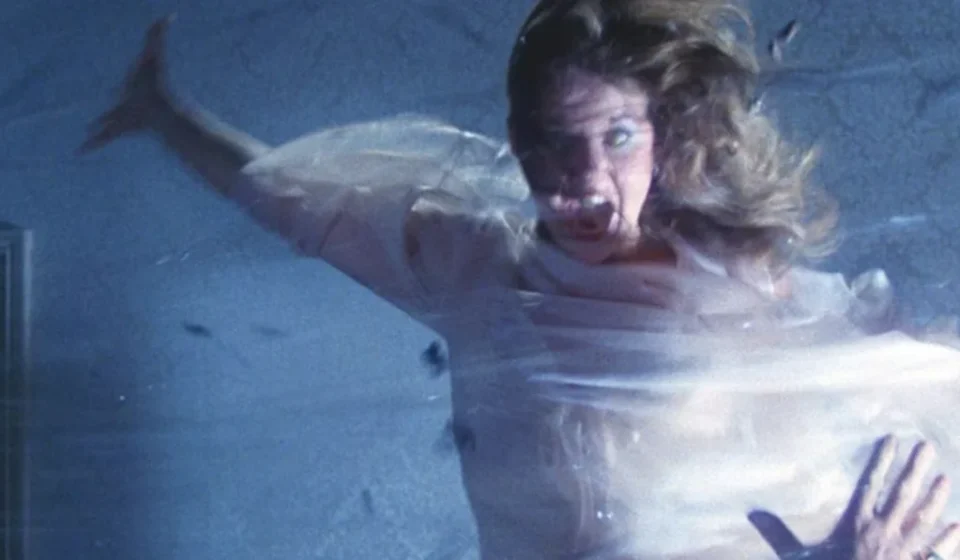
For nearly half a century, Exorcist II: The Heretic has existed as a cinematic punchline—a "train wreck" synonymous with the creative hubris of the 1970s. It is a film defined by memes: James Earl Jones clad in a giant locust costume, Linda Blair performing a tap-dance exorcism, and the baffling, psychic-adjacent "Synchronizer" machine that left audiences and crew members alike in a state of bewildered paralysis.
However, in David Kittredge’s dazzling new documentary, Boorman and the Devil, the narrative surrounding John Boorman’s 1977 disaster is fundamentally reframed. Kittredge doesn’t merely document a failure; he conducts an autopsy on a dream that lost its way, offering a poetic, robust, and deeply empathetic look at one of the most misunderstood chapters in New Hollywood history.
The Genesis of an Impossible Sequel
To understand the tragedy of Exorcist II, one must understand the ambition of its director. John Boorman, now 92, was at the absolute zenith of his creative powers in the mid-1970s. Having debuted with the stylish Catch Us If You Can (1965) and achieved critical and commercial acclaim with the visceral Deliverance (1972), Boorman was a visionary cinephile. He was even offered the opportunity to direct the original Exorcist, an offer he declined in favor of his own idiosyncratic projects like the surrealist sci-fi epic Zardoz (1974).
When the studio system came knocking again for a sequel, the landscape of Hollywood had shifted. The success of The Godfather Part II had signaled that sequels could be artistic, high-minded, and profitable. Boorman saw an opportunity to explore the interiority of a traumatized character—to take the raw, supernatural horror of the original and transmute it into a spiritual journey.
Kittredge’s documentary posits that the "devil" in the title is not merely a reference to the demon Pazuzu, but to the hubristic belief that an auteur can force a radical, abstract vision into the rigid, commercial machinery of a franchise sequel.
Chronology of a Production in Peril
The descent of Exorcist II into chaos was not immediate, but it was inevitable. The production was marred by a series of inexplicable, almost biblical setbacks that would eventually mirror the "cursed" reputation of its predecessor.
The Scripting Quagmire
The film’s screenplay, initially credited to William Goodhart, became a revolving door of revisions. Rospo Pallenberg was brought in to overhaul the narrative, yet his exact mandate on set remained a source of confusion for the cast and crew. The story—which saw a grown-up Regan MacNeil (Blair) teaming up with detective-priests to vanquish Pazuzu—was intended to be a tale of triumph. Instead, it became a muddled mess of half-baked psychic inventions and disjointed symbolism.

The Human Cost
By 1977, Linda Blair was one of the highest-paid actresses in the industry, yet her commitment to the production was erratic. Richard Burton, then fresh off his tumultuous second divorce from Elizabeth Taylor, frequently departed the set early, leaving his co-stars to navigate the bizarre material alone. Louise Fletcher, a recent Oscar winner for One Flew Over the Cuckoo’s Nest, famously admitted in the documentary that she struggled to grasp the film’s tone, leading to a performance that felt untethered from the rest of the cast.
The "Curse" and Physical Collapse
The production was plagued by physical disasters. The most harrowing moment came when Boorman himself fell ill after inhaling toxic sand on a soundstage, contracting San Joaquin Valley fever. Production ground to a halt for five weeks. Concurrently, Blair faced her own brush with danger, nearly falling from a building during a stunt. These incidents, combined with the ballooning budget—which climbed from an estimated $12.5 million to over $15 million—created a climate of paranoia. The cast and crew began to whisper that the project was being punished by forces beyond their control.
Supporting Data: A Failure by Design?
From a standard industry perspective, Exorcist II was an abject failure. It failed to recoup its budget, was critically savaged, and effectively halted the momentum of a promising franchise for years. Yet, Boorman and the Devil argues that these metrics miss the point.
Stanley Kubrick, who had also been approached for the project, famously declined, noting that the only path to a successful Exorcist sequel was to lean into gore and violence—the very things the original had mastered. Boorman admits in the documentary that Kubrick was correct, yet he stands by his desire to make something "spiritual."
Kittredge provides essential context for the "blind bidding war" that led to the film’s creation. Warner Bros. purchased the rights based on a scant pitch and the pedigree of the talent involved, effectively signing a blank check for a film that had no coherent blueprint. This disconnect between executive expectation and directorial whim remains one of the most compelling aspects of the film’s history.
Official Perspectives and Retrospective Wisdom
Boorman and the Devil is elevated by the participation of those who lived through the madness. Linda Blair offers nuanced insight into the pressures of child stardom and the peculiar experience of working on a film that is simultaneously a career-defining performance and a notorious critical failure.
Perhaps most incisive are the contributions of modern directors like Mike Flanagan and Karyn Kusama. They provide a philosophical framework for the documentary, treating Boorman’s struggle as a cautionary tale for all creators. They discuss the "circles of hell" that directors often build for themselves when they try to satisfy personal artistic urges within the constraints of a studio mandate.
Boorman, now in his 90s, reflects on the project with a grace that is both surprising and touching. He acknowledges that the film would have been more successful without the long shadow of William Friedkin’s original hanging over it—a shadow that Friedkin himself nurtured, as he was reportedly furious that a sequel was made at all. Despite the agony of the process, Boorman defends the finished product as some of his most "beautiful" work, suggesting that the beauty lay in the attempt, not the outcome.

Implications: The Legacy of a Misunderstood Masterpiece
What are the implications of this reassessment? For those who already champion Exorcist II, Kittredge’s film is a vindication. For those who despise it, it is a brilliant on-ramp to the history of New Hollywood—an era where directors were given the keys to the kingdom and sometimes drove the car straight into a canyon.
The documentary succeeds because it is as much a portrait of David Kittredge as it is of John Boorman. By using illustrations to romanticize the anecdotes and carefully curating the timeline, Kittredge positions himself as an "agonized creator" in his own right. The film becomes a meta-commentary on the act of filmmaking: a possession of the creator by the material.
It is a profound disappointment that, despite months of acclaim on the festival circuit, Boorman and the Devil has faced hurdles in finding wider distribution. However, in a poetic twist of irony, perhaps that is fitting. A film about the cursed, chaotic, and uncontrollable nature of Exorcist II deserves to remain a elusive, "lost" object—a secret shared between those who appreciate the beauty of a spectacular failure.
As we look back at the career of John Boorman, Boorman and the Devil serves as a vital reminder: sometimes the most memorable art comes not from the films that hit their marks, but from the ones that were brave enough—or foolish enough—to aim for the heavens and miss, landing instead in the heart of the abyss.
Grade: B+
“Boorman and the Devil” premiered at the 2025 Venice Film Festival and was a standout at the Brooklyn Horror Film Festival.