A Cinematic Resurrection: Andrey Zvyagintsev Returns with ‘Minotaur’ After Personal and Political Upheaval

Editor’s note: This interview was originally conducted during the 2026 Cannes Film Festival. MUBI will release "Minotaur" in theaters on Friday, November 20.
In the world of contemporary international cinema, few names carry the weight and reverence of Andrey Zvyagintsev. The Russian auteur, celebrated for his surgical dissections of human morality and systemic decay in films like "Leviathan" and "Loveless," has long been a fixture on the global festival circuit. However, his return to the Croisette this year was not merely a professional milestone; it was a profound testament to survival. After a decade-long gap between feature films and a harrowing personal health crisis that nearly claimed his life, Zvyagintsev has returned with "Minotaur," a taut, psychological thriller that mirrors the complexities of his own recent history.
A Near-Fatal Ordeal: The Path to Recovery
The road to "Minotaur" began in 2021, when Zvyagintsev contracted a severe case of COVID-19. What followed was a medical nightmare that saw him react violently to the Sputnik vaccine, resulting in a 14-day medically induced coma. Upon waking, he faced the devastating reality of Guillain-Barré Syndrome, a rare disorder in which the immune system attacks the nerves, leaving his limbs paralyzed.

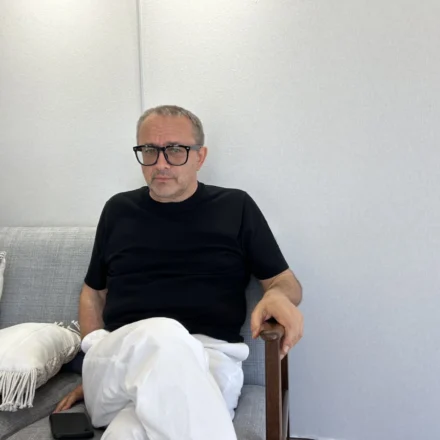
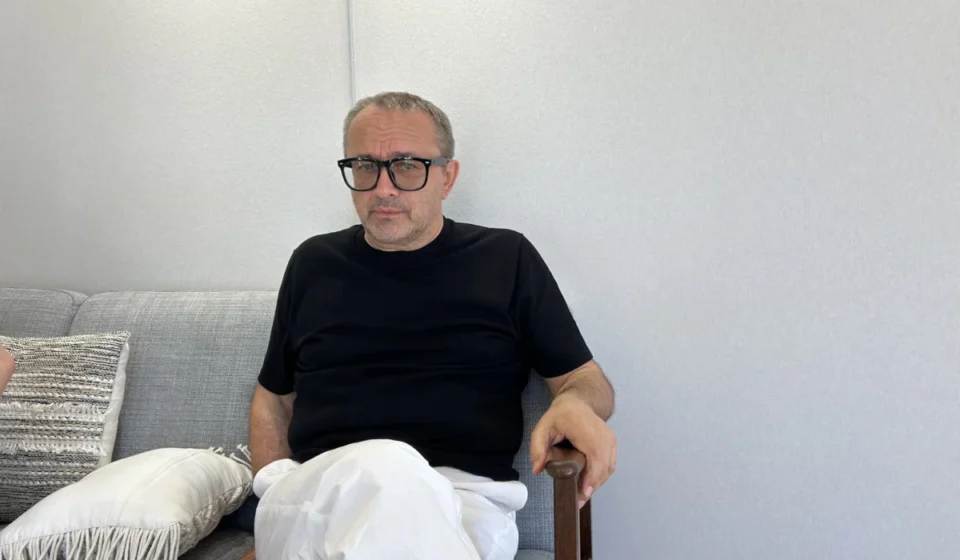
For a year, the director was bedridden, confined to a state of absolute stillness. When he finally left a hospital in Germany in 2022, his recovery remained uncertain. "I did not know if I would ever be able to walk again, to live again as a normal person," Zvyagintsev reflected during an interview on the rooftop of the Palais des Festivals. While he has regained full motion in his hands—a critical tool for his craft—he continues to navigate the lingering physical consequences of his illness. "I have still a bit of a difficulty walking," he admitted, his voice steady despite the weight of the ordeal. "I’m not at my best, but I am here."
During his long convalescence, Zvyagintsev found solace in the very medium he defines his life by. Although he claims he hasn’t turned on a television in two decades, he immersed himself in the digital archives of global cinema. This period of quiet observation, isolated from the world but deeply connected to the art of storytelling, became the incubator for his return to directing.
The Geography of Exile: Crafting "Minotaur"
The production of "Minotaur" serves as a case study in resilience. Following the onset of the war in Ukraine four years ago, Zvyagintsev made the agonizing decision to depart Russia and relocate to Paris. The move was necessitated by the suffocating political climate in his home country, where his independent voice risked being silenced or, worse, branded as an enemy of the state.

"It might result in us becoming what is called ‘foreign agents’; it’s a hard thing," he noted. "Maybe this will happen, maybe not. Let’s not be too pessimistic, but mostly all independent journalists are saying that their oppressions are going to get even harsher, and that I think we have decades ahead of us before things get better."
Choosing France was both a professional and personal decision. His 16-year-old son had been educated at a French school in Moscow, making the transition logical for his family. For Zvyagintsev, however, the allure was artistic. "France is the homeland to cinema," he explained. "There are so many cinephiles among spectators. Also here in France, directors have the final cut. In the states, it’s much harder to get in a position where you are not censored; it’s not a producer or someone who decides instead of you."
With his base of operations in Europe, Zvyagintsev faced the logistical challenge of recreating a Russian milieu while in exile. He turned to Riga, Latvia, to film his sixth feature. "The dormitory suburbs around Riga look exactly like Russian dormitory suburbs," he observed. "A Russian eye would not be able to distinguish between Russia and Latvia in this instance."

The Ethics of Casting in a Time of Repression
Perhaps the most harrowing aspect of the production was the process of casting. Zvyagintsev sought to capture a specific, authentic Russian sensibility, but he was acutely aware that any actor still living in Russia who accepted a role in his film would be placing themselves in the crosshairs of the state.
"I would talk to them about the script and show them parts of the script, so that they know what they’re getting involved in, because, of course, they were at risk of getting blacklisted," he said. The result was a wave of refusals from actors who feared the professional and personal consequences of working with an exiled director.
However, one actor stood apart: Dmitriy Mazurov. His willingness to anchor the film despite the risks serves as the emotional bedrock of the project. "Most of them, with heartache, refused to take part in the film, but there was one who accepted, and I’m still completely amazed at his courage," Zvyagintsev said. When the director asked if he was certain about taking the role, Mazurov’s response was simple and definitive: "If I’m not doing this part, I don’t know what I’m doing in acting."

Deconstructing the Thriller: A New Vision
"Minotaur" is an adaptation of Claude Chabrol’s 1969 classic, The Unfaithful Wife. While the original film—and its later American remake, Unfaithful—follows a traditional narrative arc of infidelity, discovery, and retribution, Zvyagintsev had no interest in a simple retread.
"The Chabrol film is much more classical," Zvyagintsev explained. "It follows a pattern: he killed, then he’s discovered, and then he will be punished. And I wanted to break up this classical structure and to invent something different based on our Russian realities."
The film operates on the tension of observation. In a daring stylistic choice, Zvyagintsev crafted a 20-minute sequence following a murder that contains absolutely no dialogue. By stripping away language, he forces the audience into the same position as the protagonist: watching, waiting, and interpreting the silence of a guilty partner. "It’s 20 minutes, even a little bit more, with not one subtitle, so you only observe his actions, and there are no words: it’s extremely cinematic in its essence," he said.

Looking Ahead: The Future of a Master
The completion of "Minotaur" marks the end of a long, arduous chapter. Despite the physical toll of his illness and the emotional strain of exile, Zvyagintsev describes the filmmaking process as a restorative force. "When you are full of inspiration, when you are searching constantly for solutions, the light, the sets, the performance of the actors, you don’t feel fatigued in the same way," he said. "There is such a joy in making the film that is, in your head, real. I think it’s the best drug there is."
The director is already looking toward the future, specifically toward resurrecting "Jupiter," an ambitious project that had to be put on ice when funding proved elusive amidst his health struggles. "I have met some producers who are interested in it," he said, signaling that his momentum has not been broken by the years of silence.
As "Minotaur" prepares for its wide release on November 20, it stands as more than just a return to form for Andrey Zvyagintsev. It is a bold, uncompromising statement from an artist who has looked into the abyss—both of his own body and his nation’s politics—and chosen to continue creating. In an era where the space for independent, intellectual cinema is shrinking, Zvyagintsev’s resilience offers a vital reminder of the power of the director’s vision to endure, even in the face of near-total erasure.