Genre Cinema’s Global Vanguard: A Deep Dive into the 2026 Fantasia International Film Festival Awards

The Fantasia International Film Festival, widely regarded as the preeminent hub for genre cinema in North America, concluded its 2026 edition with a high-stakes awards ceremony that solidified the festival’s reputation as a launchpad for visionary international talent. In a year defined by psychological intensity, radical body horror, and profound human narratives, the jury selections underscored a shift toward films that defy traditional genre boundaries to explore the fragility of identity and the darkness of the human condition.
At the center of this year’s accolades was Hanna Bergholm’s Nightborn, a harrowing exploration of maternal trauma that swept the top honors, including the prestigious Cheval Noir trophy for Best Film. As the curtains closed on the July 25 ceremony, it became clear that the 2026 festival was not merely a showcase of scares, but a masterclass in the cinematic subversion of the grotesque.
A Night of Triumph: The Cheval Noir Winners
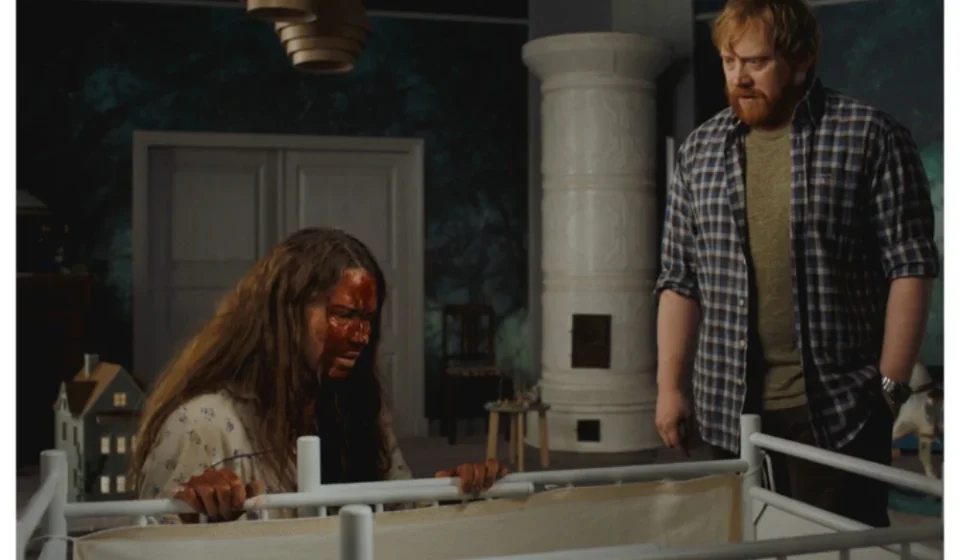
The top honor of the night, the Cheval Noir for Best Film, was bestowed upon Hanna Bergholm’s Nightborn. A co-production between Finland, Lithuania, France, and the U.K., the film presents a visceral, unsettling look at a mother’s struggle against the "threatening presence" of a child she cannot bring herself to love. The jury lauded the film for its relentless suspense and a bittersweet, lingering emotional resonance that challenges the viewer’s perception of reality versus illusion.
The film’s dominance was further cemented by lead actress Seidi Haarla, who was awarded the Outstanding Performance Award. Her portrayal—described by the jury as a "transcendent portrayal of a very different kind of determined mother"—was noted for its astonishing physicality and dark, unflinching honesty.
While Nightborn led the charge, Kasper Kalle’s No Rest for the Wicked proved to be a formidable challenger, securing two major statues: Best Director and Best Actor for Pilou Asbæk. The jury praised Kalle for his "skillful helming of a beautifully dark period piece," noting that the director acted as a "captain of a sailing vessel," unifying his crew to bring a story of identity and love to life. Asbæk’s performance was equally lauded for his "effortless magnetism" and ability to craft a character who felt as ancient as the sea itself.
Technical Mastery and Artistic Vision
The 2026 Fantasia awards placed a significant emphasis on the technical crafts that elevate genre filmmaking. Andrea Corsini’s Ferine emerged as a powerhouse in the technical categories, securing Best Cinematography for Fabrizio La Palombara and Best Score for the legendary Italian composer Pino Donaggio.
The jury’s citation for La Palombara was particularly glowing, highlighting the "carefully measured use of the anamorphic format" and precise camera compositions that paid homage to Italian horror masters while forging a unique, modern visual language. The recognition of Pino Donaggio—whose work on classics like Don’t Look Now and Carrie is etched into cinema history—served as a poignant reminder of the enduring power of musical scores to anchor the most surreal of narratives.
Furthermore, the introduction of the Best Film Editing category marked a significant milestone for the festival. Soichi Ueno took home the inaugural award for his work on Hideo Jojo’s Beasts Clutching at Straws. The jury noted the necessity of honoring the "last stop" of the creative process, praising Ueno for his "masterful control of non-linear construction" and his ability to maintain narrative cohesion amidst complex, imaginative transitions.
The New Flesh: Honoring Debut Features
The New Flesh Competition, dedicated to highlighting first-time feature directors, showcased the raw, untamed potential of the next generation of filmmakers. The top prize went to the New Zealand production Mum, I’m Alien Pregnant, directed by the collective THUNDERLIPS.
Described as a "wild ride from start to finish," the film was lauded for its ability to navigate complex themes of bodily autonomy and social anxiety through a lens of extreme humor and shock. The jury’s tongue-in-cheek commendation for "best alien penis of the festival" belied the film’s deeper intellectual engagement with the monstrous and the playful. The Special Mention for Best Performance went to the duo of Dilnaz Kurmangali and Ayan Utepburgen for their work in the Kazakhstani film Sicko, where they balanced intense tonal shifts between comedy and grit.
Satoshi Kon and the Excellence of Animation
Animation at Fantasia continued to serve as a medium for profound social commentary. The Satoshi Kon Award for Best Animated Feature was presented to Blaise, directed by Jean-Paul Guigue and Dimitri Planchon. The jury was struck by the film’s ability to turn the crushing weight of social anxiety and people-pleasing into a hilarious, empathetic experience. By using a flat, collage-like aesthetic, the film mirrored the discomfort of its characters, ultimately delivering a message about the courage required to be oneself.
The short film categories also highlighted a global breadth of talent. Jeem 1983 (Lebanon) took the Gold Satoshi Kon Award, offering a poignant look at the use of fantasy as a coping mechanism for children living in the shadow of war. The jury noted the importance of the film as a window into Arabic animation, a sector they hope to see more of in future festival editions.
The Canadian Landscape: Northern Excellence
The Northern Excellence Award for Canadian Filmmaking recognized the profound cultural contributions of local talent. Maya Annik Bedward’s Black Zombie won the top prize for its comprehensive and visually stunning examination of the Haitian diaspora and the history of zombie culture. It was a victory for academic and artistic inquiry alike.
A special mention was given to Angus Silver’s Insectasy, a film the jury described as having "Cronenbergian chutzpah." The film’s focus on the intersection of post-pandemic anxiety, bug addiction, and the celebration of kink marked it as one of the most provocative and distinct entries of the year.
Implications for the Future of Genre Cinema
The 2026 Fantasia International Film Festival did more than distribute trophies; it acted as a barometer for the current state of global genre cinema. Several key implications can be drawn from this year’s results:
- The Resurgence of Practical Effects: As seen in the Special Mention for Sleep No More, there is a clear appetite for handmade, tangible effects in an era of CGI saturation. The "hair monster" and limb-growth sequences in Sleep No More serve as a reminder that tactile, visceral imagery remains a cornerstone of effective horror.
- Identity as a Primary Theme: From No Rest for the Wicked to Blaise, the recurring theme of the year was the search for, and the pain of, identity. Filmmakers are increasingly using genre tropes to interrogate how society shapes the individual and how the individual, in turn, breaks free.
- Cross-Cultural Collaborations: The diversity of the co-productions—spanning from Japan and Germany to Finland and Lithuania—indicates that genre cinema is becoming an increasingly globalized industry. Festivals like Fantasia are essential in bridging these geographic gaps, allowing disparate cultures to share in a universal language of fear and wonder.
Conclusion
The 2026 Fantasia International Film Festival solidified its status as a critical nexus for cinematic innovation. By honoring films that are as intellectually rigorous as they are technically daring, the jury has set a high bar for the coming year. As we reflect on the triumphs of Nightborn, the directorial precision of Kasper Kalle, and the animated empathy of Blaise, it is evident that the "genre" label is no longer a constraint, but a wide-open field of possibility. For the audiences who witnessed these films, the experience was more than just a screening; it was a journey into the "most adorable," the most terrifying, and the most human aspects of our shared existence.
Summary of Major Jury Awards
- Cheval Noir (Best Film): Nightborn (Finland/Lithuania/France/U.K.), dir. Hanna Bergholm
- Best Director: Kasper Kalle, No Rest for the Wicked
- Best Screenplay: Edwin, Eka Kurniawan, and Daishi Matsunaga, Sleep No More
- Best Cinematography: Fabrizio La Palombara, Ferine
- Best Score: Pino Donaggio, Ferine
- Outstanding Performance (Actress): Seidi Haarla, Nightborn
- Outstanding Performance (Actor): Pilou Asbæk, No Rest for the Wicked
- Satoshi Kon Award (Feature): Blaise, dirs. Jean-Paul Guigue and Dimitri Planchon
- Northern Excellence Award: Black Zombie, dir. Maya Annik Bedward