The Evolution of the Modern Romcom: A Deep Dive into Alicia MacDonald’s ‘Finding Emily’

The big-screen romantic comedy, once the crown jewel of the Hollywood studio system, has faced a challenging decade. In an era dominated by franchise tentpoles and high-concept thrillers, the genre has often retreated to streaming platforms or attempted to reinvent itself through two specific, and often exhausting, lenses: the quasi-absurd high concept or the protective shield of heavy irony. This summer’s One Night Only served as a prime example of the former, while many recent indie offerings represent the latter—films so terrified of being perceived as "cheesy" that they roll their eyes at their own tropes before the audience has a chance to.
However, director Alicia MacDonald’s feature debut, Finding Emily, suggests a third path. Produced by the legendary Working Title Films—the house that Richard Curtis built—the film manages to be both a sharp critique of modern dating and a sincere celebration of the genre’s enduring power. By blending the "wry comedy of embarrassment" that defined British cinema in the 1990s with the complex, hyper-connected reality of Gen Z sexual politics, Finding Emily emerges as a pivotal moment for the contemporary romantic comedy.
Main Facts: A Digital-Age Dilemma
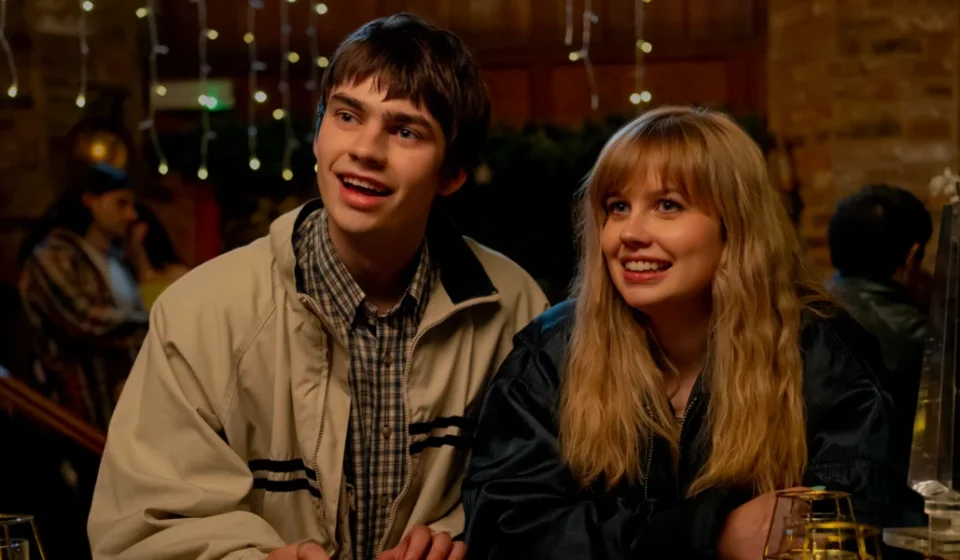
At its core, Finding Emily is a story about the collision between analog romanticism and digital reality. The film follows Owen Brompton (played by Spike Fearn), a gentle-souled, aspiring musician in Manchester whose aesthetic is heavily indebted to the Britpop era. Owen’s life is upended after a chance encounter at a student union club with a girl wearing glittery fairy wings (Sadie Soverall). He is instantly smitten, but in the hazy aftermath of the night, he realizes the phone number she gave him is missing its final digit.
The narrative engine is fueled by Owen’s quest to find this "Emily," a search that leads him to the local university campus. There, he encounters a different Emily: Emily Raine (Angourie Rice), an American psychology student who is as cynical as Owen is idealistic. Emily Raine is currently writing a dissertation on the "real-world impracticality of romantic attachment," citing Freud’s assertion that "love is a state of temporary psychosis."
What follows is a sophisticated exploration of how the "grand gestures" of 20th-century cinema—the very tropes Working Title pioneered in films like Notting Hill and Love Actually—translate into a world of viral memes, cancel culture, and data-driven relationship dynamics.
Chronology: From Meet-Cute to Viral Infamy
The film’s narrative structure meticulously deconstructs the traditional romcom timeline, replacing the "happily ever after" trajectory with a more volatile, internet-mediated journey.
The Catalyst: The Missing Digit
The story begins in the sweat-drenched atmosphere of a Manchester student union. Owen, a sound technician rather than a student, represents the "townie" perspective. His encounter with the first Emily is framed through a "beer-goggles glow," establishing the dreamlike quality of his initial obsession. When he wakes to a nine-digit phone number, his decision to physically hunt for her on campus sets the plot in motion.
The Intersection: The Two Emilys
Owen’s disruptive search—which involves crashing lecture halls to call out for "Emily"—eventually brings him face-to-face with Emily Raine. Rather than a romantic spark, their first meeting is an intellectual clash. Emily Raine, intrigued by Owen’s "demented" search, sees him not as a romantic hero, but as a live case study for her thesis. She refers to him as her "very own Stanford Prison Experiment," a comparison that highlights the clinical, almost predatory nature of her academic interest.
The Escalation: The "Email Guy" Incident
The turning point occurs when Emily Raine, under the guise of helping Owen, provides him with the email addresses of every Emily enrolled at the university—318 in total. Owen, lacking digital literacy and failing to understand the difference between CC and BCC, mass-emails the entire list. This "grand gesture" of the digital age immediately backfires. Within hours, Owen is branded the "toxic virgin," a campus-wide stalker, and eventually, "Email Guy," an international meme.
The Resolution: Beyond the Data
The final act of the film deals with the fallout of this viral infamy. As Emily Raine watches her "subject" suffer under the weight of internet cancel culture, her clinical detachment begins to crumble. The film moves toward a resolution that challenges both Owen’s naive romanticism and Emily’s rigid academic skepticism, suggesting that while love cannot be graphed, it can still be found amidst the chaos of the digital realm.
Supporting Data: Production Context and Aesthetic Identity
Finding Emily is more than just a narrative; it is a calculated aesthetic response to the history of the British romantic comedy. Its success is grounded in the synergy between its production pedigree and its modern execution.
The Working Title Legacy
It is significant that the film comes from Working Title Films. This production company practically patented the British romcom through the 1990s and 2000s, producing classics like Four Weddings and a Funeral and Bridget Jones’s Diary. Screenwriter Rachel Hirons and director Alicia MacDonald lean into this DNA, utilizing the "wry comedy of embarrassment" that is a hallmark of the studio. However, they successfully update the formula for a "Zoomer" worldview, ensuring the film never feels like a "focus-grouped" attempt at youth culture.
Manchester as a Character
While London has traditionally been the backdrop for Working Title’s romances, Finding Emily gives Manchester a "valentine" on screen. Cinematographer Rachel Clark avoids the clichés of gritty Northern realism, instead opting for a "cozy intimacy." Even on the city’s grayest days, the film maintains a fuzzy, warm aesthetic that mirrors Owen’s optimistic outlook. The soundtrack further anchors the film in its setting, featuring Joy Division and Oasis-inflected indie bands, bridging the gap between Manchester’s musical history and its contemporary student scene.
Digital Integration
One of the film’s most technically impressive feats is its integration of the online realm. Editor Phil Hignett seamlessly blends deadly-accurate TikTok parodies and social media feeds into the narrative flow. This isn’t just window dressing; it reflects how modern life is lived simultaneously online and offline. The film’s ability to treat the digital world as a tangible, high-stakes environment is a key factor in its relevance.
Official Responses and Critical Analysis
The critical reception of Finding Emily has centered on its ability to balance "smart" and "sweet." Early reviews suggest that the film’s greatest strength lies in its casting and its nuanced take on contemporary social issues.
Performance Highlights
- Angourie Rice (Emily Raine): Rice, coming off the success of the 2024 Mean Girls musical, is praised for her "defensive spikiness." She portrays a heroine who is, in many ways, the film’s antagonist, using Owen for her own academic gain. Critics have noted her ability to maintain a "natural, straight-talking warmth" even as her character makes ethically questionable choices.
- Spike Fearn (Owen Brompton): Fearn is widely considered the film’s breakout star. After a difficult role in James L. Brooks’ Ella McCay, Fearn finds a "core of goofy, hopeful humanity" in Owen. He manages to make a character who could have been a "hollow punchline" into a sympathetic figure that audiences root for.
- Minnie Driver: As the "above-it-all dean" of the university, Driver provides a "delicious" supporting performance that adds a layer of established gravitas to the youthful cast.
Critical Perspective on Cancel Culture
Industry analysts have pointed out that Hirons’ script engages thoughtfully with the "rights and wrongs of internet cancel culture." By showing how the internet "flattens both issues and personalities," the film finds sympathy for both the man who is "merely naive" and the women who are "reasonably and often hilariously fed up with being pestered." This nuanced approach sets Finding Emily apart from films that either ignore social media or treat it as a purely villainous force.
Implications: The Future of the Genre
The success of Finding Emily carries several implications for the future of the romantic comedy and the portrayal of Gen Z on screen.
The "Cringe" as a New Sincerity
One of the film’s most quoted lines—"True freedom in this life is knowing you’re cringe and doing it anyway"—serves as a manifesto for a new type of romantic comedy. It suggests that the antidote to modern cynicism isn’t a return to 90s earnestness, but rather an acceptance of vulnerability. In a world of curated social media feeds, the "cringe" of a grand gesture becomes a radical act of honesty.
The Death of the "Manic Pixie Dream Girl"
The film explicitly calls out the "manic pixie dream girl" trope within its first ten minutes. By making the "dream girl" (the first Emily) a literal missing person and the "real girl" (Emily Raine) a complex, ethically flawed academic, the film moves the genre away from idealized archetypes. It suggests that modern audiences are more interested in the friction of real personalities than the smooth surfaces of romantic fantasy.
A Template for Studio Romcoms
Finally, Finding Emily proves that the "studio romantic comedy" is not dead; it simply required a software update. By focusing on "active and passive energies" rather than just high-concept plot points, MacDonald and Hirons have created a film that feels both timeless and hyper-current. As Emily’s misguided research ultimately proves, love stories cannot be plotted like science experiments—a lesson that both the characters and the film industry at large seem to be rediscovering.
In conclusion, Finding Emily is a sophisticated, heart-filled entry into the British cinematic canon. It honors the legacy of Working Title while fearlessly critiquing the world in which today’s young adults must find connection. It is a film that knows the price of a grand gesture in the age of the algorithm, but suggests that, for the right person, it might still be worth the "psychosis."