Behind the Mask: The Enigmatic Magno Stift and the Star Power of Billy Porter in ‘The Hunger Games: Sunrise on the Reaping’

The Hunger Games franchise has long been celebrated for its ability to weave complex socio-political commentary into the fabric of a dystopian young adult thriller. Central to this world-building is the Capitol—a sprawling, opulent metropolis that stands in grotesque contrast to the impoverished districts it exploits. Nowhere is this dissonance more visible than in the stylists, the architects of aesthetic wonder who transform doomed tributes into marketable commodities. In the latest installment, The Hunger Games: Sunrise on the Reaping, audiences are introduced to the erratic and unsettling Magno Stift, a character who serves as a dark reflection of the Capitol’s excess. Portrayed by the inimitable Billy Porter, Stift has become a focal point of conversation, both for his narrative significance and for the magnetic performance of the actor behind the prosthetics.
The Character: Magno Stift and the Rot of the Capitol
In the source material, Magno Stift is presented as an unreliable and deeply unlikable figure, a man who has fully embraced the performative cruelty of the Capitol. Married to the surgically altered District 12 chaperone Drusilla Sickle—played with chilling precision by Glenn Close—Stift represents the stagnation and moral decay of the Capitol’s creative class.
The narrative perspective of the film’s protagonist, a young Haymitch Abernathy, offers a scathing assessment of the man. Unlike his peers, who strive for innovation and grandeur in their tribute costumes, Stift is defined by his lack of effort and his penchant for monotony. Haymitch observes that while other stylists treat the annual parade and interview circuit as a canvas for artistic evolution, Stift seems to possess a near-infinite supply of the same threadbare coal miner overalls, merely shifting them across different sizes.
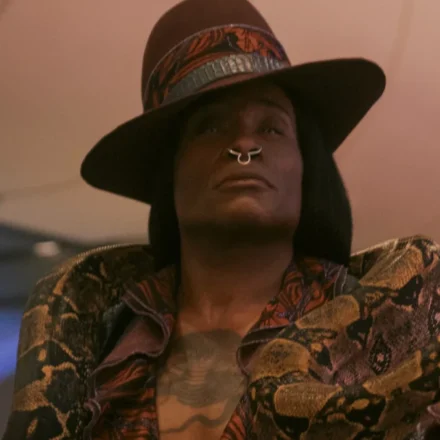
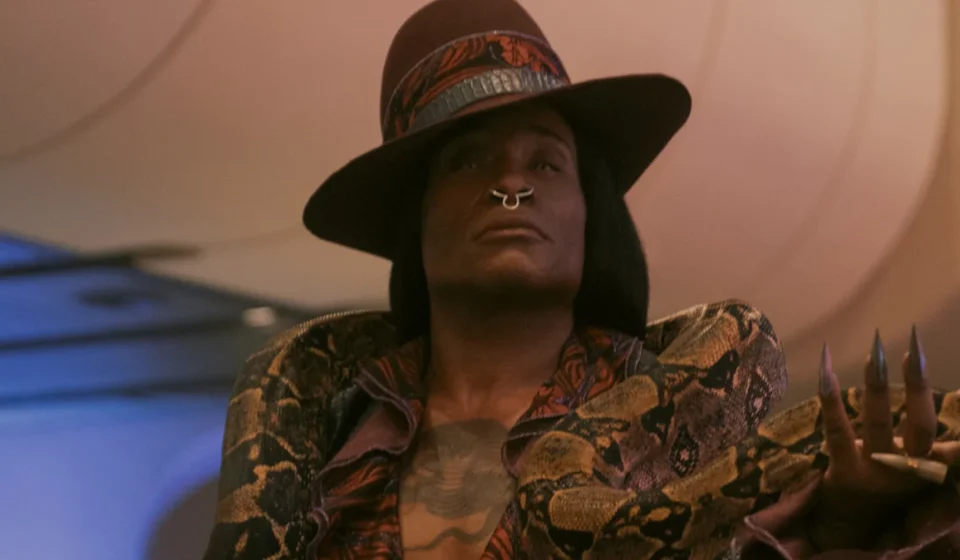
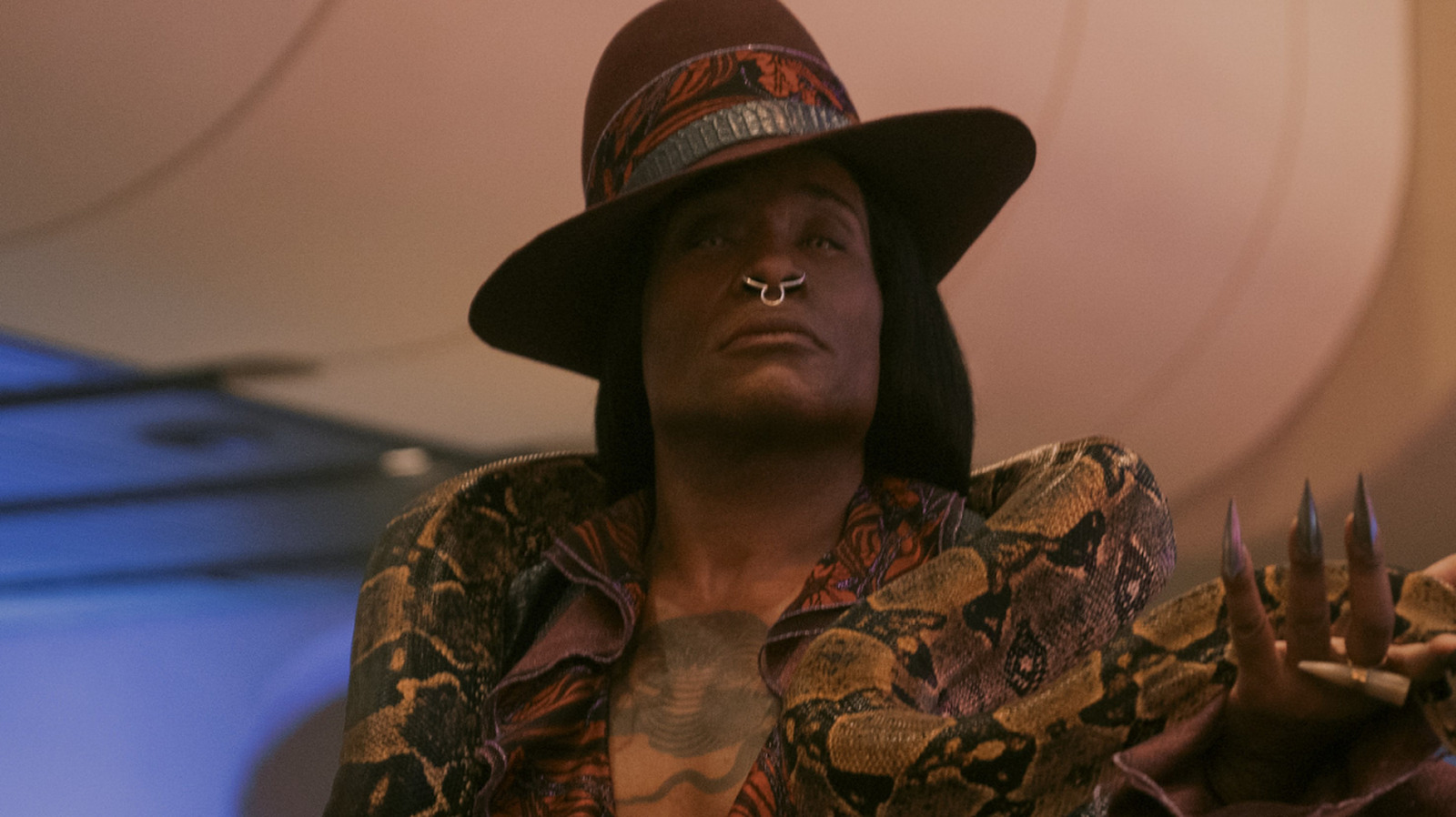
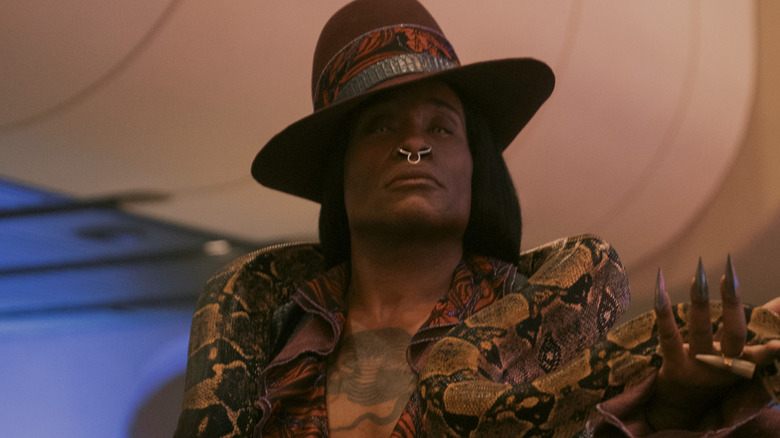
Visually, Stift is a jarring presence. As described in the novel and brought to visceral life on screen, his sun-leathered skin is permanently etched with a snakeskin tattoo pattern. He eschews traditional attire, opting for a shirt constructed from metal diamonds and—notably—no trousers. His appearance is completed by sandals that lace up to his pelvis and, most disturbingly, live garter snakes dangling from his ears, writhing in constant, perceived misery. His trajectory in the story is as tragic as it is fitting: his penchant for keeping dangerous, living accessories eventually leads to his demise when one of his wearable reptiles poisons him.
Chronology of a Career: From Broadway to the Capitol
To understand why Magno Stift feels so startlingly familiar, one must look at the meteoric rise of the man behind the makeup: Billy Porter. Porter’s presence in Sunrise on the Reaping is not merely a casting choice; it is a testament to an artist who has spent decades redefining the boundaries of performance.
The Foundation: Broadway and ‘Kinky Boots’
Porter’s journey to household-name status began on the stage. While he had early film credits, such as a singing role in the 1996 classic The First Wives Club, it was his portrayal of Lola in the Broadway hit Kinky Boots that cemented his legacy. His performance, which earned him both a Tony Award and a Grammy, showcased his ability to blend vulnerability with fierce, flamboyant strength—a duality he brings to the screen in The Hunger Games.
The 2010s: Mainstream Breakthrough
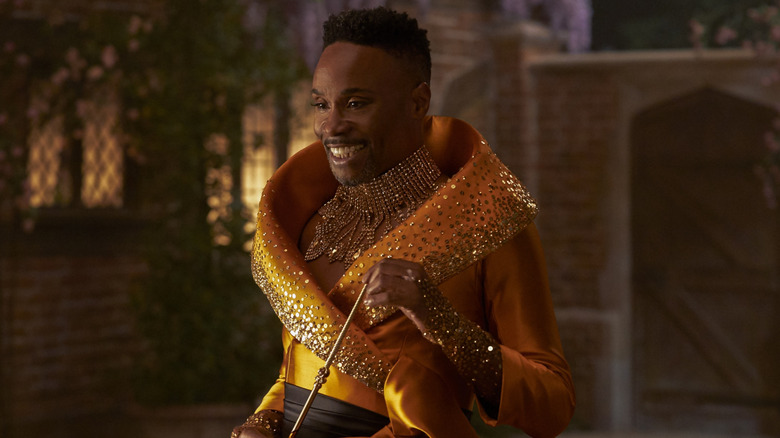
Following his stage success, Porter’s presence in the film industry expanded significantly. He appeared in the 2014 film The Humbling alongside Al Pacino and Greta Gerwig, and the 2020 comedy Like a Boss. However, it was his 2021 turn as the "Fab G" (the fairy godparent) in Amazon’s Cinderella that truly introduced him to a global, younger audience. By reimagining the iconic role—previously immortalized by Whitney Houston—Porter signaled his commitment to breaking traditional gender norms. As he famously stated, "Magic has no gender," a philosophy that seems to permeate his approach to characters like Magno Stift.
The Emmy-Winning Era: ‘Pose’
Perhaps the most significant chapter in Porter’s career occurred on the small screen. His role as Pray Tell, the vibrant and tragic emcee in Ryan Murphy’s Pose, garnered him widespread critical acclaim. Winning an Emmy for the role made him the first openly gay Black man to secure a lead acting Emmy, a landmark achievement in television history.
Supporting Data: Why Magno Stift Resonates
The intrigue surrounding Stift lies in the subversion of expectation. In a franchise defined by high-concept couture and immaculate presentation, Stift is intentionally "off." He is a stylist who refuses to style, a man of power who looks like he has been left to rot.
The casting of Porter—an actor renowned for his impeccable red-carpet fashion and advocacy for gender-fluid expression—is a masterstroke of irony. By placing someone known for challenging fashion norms into a character who represents the stagnant, lazy, and grotesque aesthetic of the Capitol, the production team highlights the disconnect between the Capitol’s perception of itself and its true, decaying nature.
Official Perspectives and Behind-the-Scenes Insights
While production details for Sunrise on the Reaping have remained tightly guarded, the collaborative process between Porter and the creative team has been highlighted in interviews regarding the film’s character design.
The decision to lean into the more disturbing elements of Stift—the snake earrings and the metal diamond shirt—was a collaborative effort to ensure that the character served as a visual manifestation of the Capitol’s hubris. For Porter, playing a character so antithetical to his public persona required a deep dive into the psychological toll of life in the Capitol. As he has expressed in past discussions regarding his work on Pose, Porter approaches roles as a form of "proxy for healing" and a way to process the trauma of the environments he portrays.
By bringing that same emotional gravity to Stift—a man who has been numbed by the violence of the Games—Porter transforms what could have been a mere caricature into a haunting reminder of the human cost of the Hunger Games system.
Implications: The Legacy of the Stylist
The inclusion of Magno Stift in The Hunger Games: Sunrise on the Reaping serves a dual purpose. On a narrative level, he acts as a bridge between the reader’s understanding of the Capitol’s decadence and the harsh reality of the tributes’ experiences. His lack of care for his tributes, manifested in his repetitive and uninspired outfits, underscores the systemic indifference that defines the Capitol.
On a broader cultural level, the casting of Billy Porter continues the Hunger Games tradition of using the Capitol to satirize contemporary fashion and celebrity culture. In our world, stylists are the invisible hands that shape the images of the famous; in Panem, they are the hands that prepare the doomed for the slaughter. Porter’s performance challenges the audience to look beyond the spectacle and see the hollow, often cruel individuals who curate it.
As The Hunger Games: Sunrise on the Reaping continues its theatrical run, the discourse surrounding Magno Stift proves that the franchise remains as potent as ever. Through the lens of a character who is, by all accounts, "as bad as they say," Billy Porter has once again managed to captivate an audience, proving that whether he is playing a fairy godparent or a dystopian nightmare, his command of the screen is absolute. The legacy of the Hunger Games is one of survival, and in the case of Magno Stift, it is also a story about the masks we wear—and the ones that eventually consume us.