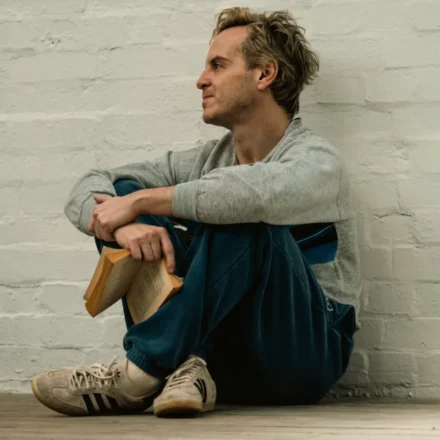

In the pantheon of British theatrical legends, few stories are as hauntingly beautiful or as profoundly brave as that of Ian Charleson. Now, thanks to the cinematic vision of writer Stephen Beresford, that story has been immortalized in the new biopic Elsinore. Starring Andrew Scott as the late stage luminary and featuring Olivia Colman as his dedicated physician, Margaret Johnson, the film offers an unflinching, tender exploration of mortality, artistry, and the quiet heroism of a man who chose to face his end in the spotlight.
The Main Facts: A Secret Kept in the Spotlight
Elsinore recounts the extraordinary true events of November 13, 1989. On that fateful night at London’s National Theatre, Ian Charleson walked onto the stage to perform the role of Hamlet for the final time. To the audience of 1,000, he was a commanding, brilliant actor at the peak of his craft. In reality, Charleson was dying of AIDS, a diagnosis he had kept hidden from the public eye.
The film serves as both a tribute to Charleson’s immense talent and a harrowing look at the early years of the AIDS epidemic in the UK. By focusing on his determination to finish his run as the Danish Prince, the film moves beyond the tragedy of his illness to highlight his wit, his tenacity, and his refusal to be defined solely by his condition.
Chronology of a Legacy
To understand the gravity of Elsinore, one must look at the timeline of Charleson’s final years.
The Diagnosis (1986)
The narrative arc of the film begins in 1986, the year Charleson received his HIV-positive diagnosis. This period marks the beginning of a grueling physical and emotional journey. The film tracks the gradual decline of his health, handled with meticulous care by makeup department head Nadia Stacey. To maintain historical and personal accuracy, Stacey avoided the "Hollywood-ized" version of sickness. Instead, she utilized subtle, period-appropriate techniques to show the progression of the virus, including the use of tattoo transfers to replicate sarcoma lesions and the careful layering of skin-tone discoloration to mirror Charleson’s waning strength.
The Commitment to the Craft
Throughout his decline, Charleson’s commitment to his final performance never wavered. The production team placed a heavy emphasis on the logistical reality of an actor in the 1980s. Recognizing that Charleson was naturally blonde and blue-eyed—a stark contrast to the jet-black hair and brown eyes of Andrew Scott—the team opted for a grounded, realistic approach. Rather than using heavy prosthetics that might jar the audience, they employed blonde highlights and blue contact lenses, mimicking the way an actor of that era might have physically altered their appearance for a role.

The Final Bow (1989)
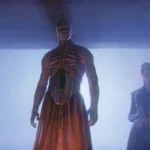
The film culminates in the 1989 National Theatre performance. This sequence is central to the film’s emotional core, as it captures the duality of the man: the vibrant, sharp-witted actor on stage and the fragile, terminally ill patient behind the curtain. The inclusion of real-life friends of Charleson—including his best friend, David Rintoul, who portrays the Ghost of Hamlet’s father—adds a layer of visceral authenticity that few biopics achieve.
Supporting Data: Behind the Transformation
The authenticity of Elsinore is bolstered by an obsessive attention to detail, led by makeup artist Nadia Stacey. Stacey, recently honored at the Middleburg Film Festival, emphasized that her goal was never to draw attention to the makeup, but rather to allow the story to dictate the visual transformation.
The "Anti-Cliché" Approach to the 1980s
Recreating the 1980s is a perennial challenge for period films, as the decade is often reduced to perms and neon. Stacey’s strategy was to strip away the artifice. "You shouldn’t notice hair and makeup unless you actually want to," she noted. This restrained approach allowed the audience to focus on the psychological weight of the characters rather than the era’s aesthetic tropes.
The Wig Dilemma
A significant portion of the film’s visual credibility rests on Olivia Colman’s transformation into Dr. Margaret Johnson. The team had to navigate the difficulty of making a wig look entirely natural under the scrutiny of a modern lens. After referencing archival photographs of the real Margaret Johnson, the team settled on a blonde bob that captured her essence without distracting from the narrative. Colman herself noted that after studying the real woman, she felt a strong, intuitive pull toward the aesthetic accuracy of the wig, helping her step fully into the character.
Official Responses and Behind-the-Scenes Chemistry
The production of Elsinore was marked by a profound sense of camaraderie and reverence for the subject matter. The bond between Andrew Scott and Olivia Colman—honed during their time on Fleabag—provided the emotional anchor for the film.
The "Gift" of Presence
Colman recalls a particularly moving moment during the filming of the final act. Although the scene focused entirely on her character’s reaction to Charleson’s performance, Scott—despite having finished his own coverage and facing an exhausting, long-term shoot—insisted on coming in on his day off. He stood off-camera, performing lines from Hamlet to give Colman the authentic emotional reaction she needed. "He was performing bits of Hamlet for me," Colman recounted, emphasizing the depth of Scott’s generosity as a scene partner.

A Community of Memory
The decision to cast friends of Ian Charleson as background actors was a deliberate choice by casting director Jessica Ronane. By surrounding the leads with people who had known and loved the man they were portraying, the production created an environment of genuine emotional weight. Colman noted that the most consistent feedback from those who knew Charleson was, "Ian was hilarious." This quality—his humor—was a priority for the filmmakers, who wanted to ensure that Elsinore did not become a one-dimensional tragedy.
Implications: A Hero for the Modern Era
The release of Elsinore serves as a poignant reminder of the "past heroes" who navigated the darkest chapters of history with grace. The film’s reception, particularly during its premiere at the London Film Festival, suggests that its message resonates far beyond the confines of the theater world.
The Power of Representation
By shining a light on a man who kept his struggle with AIDS a secret, Elsinore invites audiences to reconsider how we define "strength." Charleson’s choice to perform was not merely an act of professional duty; it was an act of personal defiance against the stigma of his time. The film posits that his final performance was his most significant work—not because of the lines he spoke, but because of the reality he transcended to speak them.
A Lasting Legacy
As Colman reflected after seeing the completed film, watching the final edit was a cathartic experience. "I cried as it started till the end," she shared, noting that the film’s power lies in its ability to remind us of the humanity behind historical figures. In an era where biopics often lean toward sensationalism, Elsinore stands as a quiet, respectful, and deeply moving testament to the enduring power of the human spirit.
Ultimately, the success of Elsinore lies in its restraint. It does not demand that we pity Ian Charleson; rather, it asks that we bear witness to the complexity of his life and the profound, silent bravery of his final act. Through the collaborative efforts of its cast and crew, the film successfully elevates a private struggle into a universal story of courage, ensuring that the legacy of Ian Charleson remains vibrant, human, and unforgettable.