
As the 44th edition of the Torino Film Festival (TFF) unfolds, the event is cementing its reputation as a vital laboratory for emerging talent, balancing a deep respect for historical cinema with a progressive, forward-looking programming strategy. Under the guidance of artistic director Giulio Base, the festival has navigated the competitive landscape of the international circuit by prioritizing artistic merit over industry "bragging rights," while simultaneously fostering an environment of unprecedented inclusivity for female filmmakers.
A Commitment to Gender Parity Beyond Quotas
In a film landscape often criticized for its systemic barriers, the Torino Film Festival has emerged as a beacon of progress. For the second consecutive year, 10 of the 16 films featured in the prestigious feature competition are directed by women—a figure that is mirrored in the festival’s short-film selections.
While these numbers would satisfy the most rigorous diversity mandates, artistic director Giulio Base is quick to clarify the philosophy behind the curation. “This is part of a worldwide trend in the film industry,” Base explains. “Women are already doing great work, so it’s not about percentages. I only care about good films, and there are plenty of them.”
Base’s approach rejects the notion of tokenism. Instead, he views the rise of female voices as an organic correction to historical underrepresentation. By focusing on the strength of the storytelling rather than the gender of the storyteller, the festival has curated a competition slate that feels both urgent and authentic.
Curatorial Philosophy: Quality Over "Premiere" Status
In an era where international festivals often engage in high-stakes bidding wars for "world premiere" status, Torino has carved out a unique identity. Base maintains that the obsession with being the first to screen a film often comes at the expense of thematic coherence and quality.
“I’m not obsessed with securing world premieres,” Base asserts. “I don’t think the Turin public goes around the world’s festivals saying, ‘I’ve already seen it.’ I’d rather choose the strongest films out there.”
This curatorial freedom has allowed the festival to assemble a diverse program of 120 titles across six sections. By prioritizing films that possess genuine artistic weight—regardless of their festival history—Base has fostered a more intimate, intellectual connection between the screen and the Turin audience.
The Selection Process: A Generational Synergy
The Herculean task of narrowing down more than 5,000 submissions falls to a selection committee that Base has intentionally reshaped. To ensure the festival’s pulse remains synced with modern sensibilities, he recruited a committee of six members, all under the age of 30.
“Ultimately, the question of women comes down to who’s watching the films,” Base explains. “I’m the old guy, so I want fresh eyes on work coming in from all over the world. When the six young men and women and I sit down to discuss the selections, I realize we all watch differently, and I always benefit from the exchange.”
This "generational mix" acts as a safeguard against institutional stagnation. By blending his own decades of industry experience with the digital-native perspectives of his younger colleagues, Base ensures that the festival remains true to its origins as the Festival Internazionale Cinema Giovani—the Festival of Young Cinema.
Star Power Meets Emerging Talent
While the TFF is dedicated to discovering new voices, it has successfully leveraged the profiles of established arthouse stars to elevate these emerging filmmakers. This year’s competition is particularly notable for its star-studded rosters, which provide a bridge between mainstream prestige and independent innovation.
Key highlights include:
- "Butterfly," directed by Itonje Søimer Guttormsen and starring Renate Reinsve.
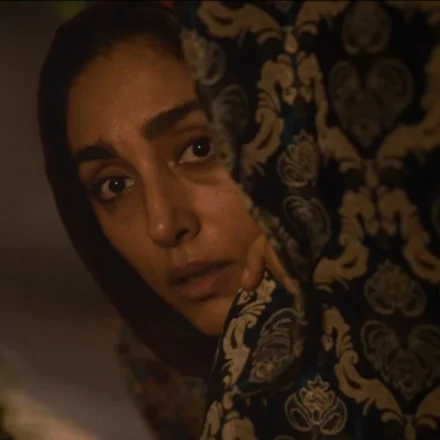
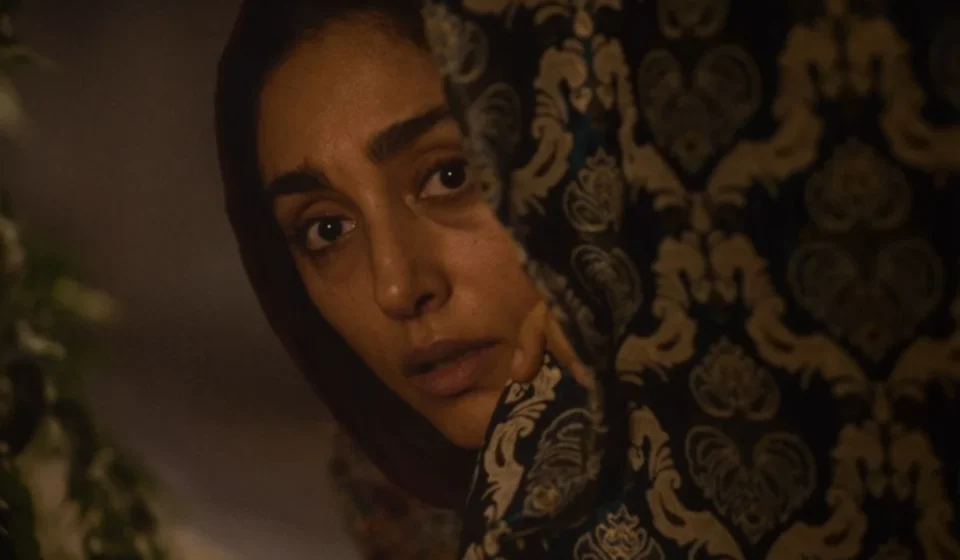
- "When She Hears the Bells," directed by Chabname Zariab and starring Golshifteh Farahani.
- "The Last Day," directed by Rachel Rose, featuring Alicia Vikander and Wagner Moura.
Furthermore, the inclusion of breakout projects like Muriel D’Ansembourg’s Truly Naked, Sarah Arnold’s Too Many Beasts, and Amira Duynhouwer’s Sugar demonstrates the festival’s commitment to nurturing raw talent while providing them with a platform that commands global attention.
Empowering Female Leadership
The TFF’s commitment to women extends well beyond the directorial chair. The 44th edition features three all-female-led juries, signaling a symbolic and practical shift in how the festival is judged and evaluated.
- Francesca Archibugi, known for Vivere, will chair the feature competition.
- Stefania Casini, a screen legend of 1900 and Suspiria fame, oversees the documentary competition.
- Chiara Francini, a pop culture icon and veteran of Miracle at St. Anna, manages the shorts.
This emphasis on female leadership is also woven into the educational components of the festival. For the Marilyn Monroe retrospective, the TFF has enlisted an exclusive roster of 24 female journalists and academics to introduce the films.
“Marilyn was so often seen as a sensual object,” Base reflects. “For me, it’s important that 24 women share their perspectives to show that she was so much more than that.” By reframing the legacy of icons through a modern, gender-conscious lens, the festival is contributing to a broader cultural re-evaluation of cinema history.
Must-See Highlights: Gaza and the Power of Documentary
When asked about his personal preferences, Base highlights two films that encapsulate the TFF’s mission to provide a platform for stories that demand to be heard.
The first is Thirteen in Gaza, by Palestinian filmmaker Hosam Abu Da. The film, which recently won at TIFF, holds historical significance as the first production shot and completed in Gaza in over a decade. Base acknowledges the tragedy that the director cannot be present to showcase his work, but emphasizes that the festival’s role is to ensure these voices reach an international audience regardless of political barriers.
The second, Good People, is a documentary by Venice Golden Lion winner Milcho Manchevski. The film covers the tragic fire at a Macedonian disco, drawing parallels to other international tragedies. Base describes it as the film that moved him the most during the selection process. "The people he interviewed gave such touching, unsensationalized testimony about what it was like to be there," Base says. "It’s a great documentary, and enormously moving."
Implications: The Future of the Torino Film Festival
The trajectory of the Torino Film Festival under Giulio Base suggests a model for the future of mid-sized film festivals. In an industry dominated by the "Big Three" (Cannes, Venice, Berlin), Torino is carving out a niche that relies on agility, intellectual rigor, and a willingness to challenge the status quo.
Base, who holds a doctorate in theology, approaches his role with a philosophical bent. He is acutely aware of the resource disparity between his festival and the global titans, yet he remains undeterred.
“I’m a dreamer,” Base says. “I’d like to take the festival to the top of the charts. That’s what we’re trying to build and that’s our ambition. It’s not easy, because we have maybe a tenth of what the big festivals have, but sometimes David beats Goliath.”
As the festival continues to champion young, diverse, and unconventional voices, it is clear that Torino is not merely trying to replicate the success of others. Instead, it is building an ecosystem where the quality of the narrative is the ultimate currency. Whether the TFF reaches the "top of the charts" in the eyes of industry insiders remains to be seen, but for the filmmakers and audiences involved, it is already achieving something far more valuable: a relevant, inclusive, and profoundly human cinematic experience.