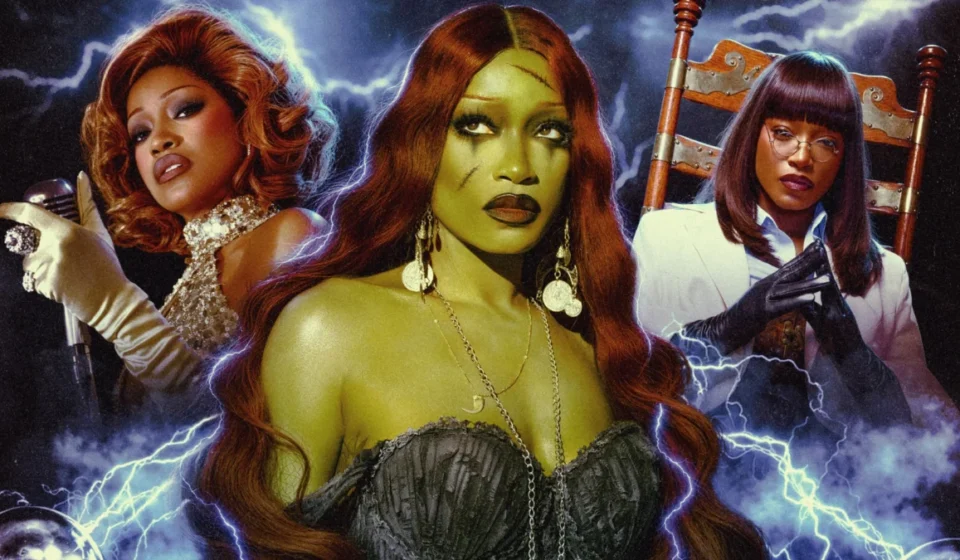
The Rebirth of a Horror Icon: How Keke Palmer is Stitching Her Legacy Together with "Keke Frankenstein"

In the landscape of modern Hollywood, few stars have navigated the transition from child actor to multimedia powerhouse with as much authenticity and genre-bending flair as Keke Palmer. Known for her razor-sharp wit and commanding screen presence in Jordan Peele’s Nope and the revival of The ’Burbs, Palmer has consistently proven that she is more than just a performer—she is a cultural architect. This Halloween, she has taken her fascination with the macabre to a new level, releasing the hauntingly introspective single "Keke Frankenstein," a track that serves as both a musical milestone and a psychological manifesto.
The Genesis of a Monster: Unpacking "Keke Frankenstein"
On October 30, amidst the height of the spooky season, Palmer dropped "Keke Frankenstein," a song that draws direct thematic inspiration from Mary Shelley’s seminal 1818 gothic novel. The lyrics act as a bridge between the artist’s public life and her private journey through healing and self-discovery.
The core of the song lies in its refusal to view "brokenness" as a final state. Palmer sings: "So when you witness this rebirth, know that it’s divine / I was cut apart and rebuilt, I was water redefined / Call it monstrous, call it holy, either way, the frame is mine."
For listeners, the subtext is impossible to ignore. Following her highly publicized separation from Darius Jackson, the father of her son, Leo, Palmer has been vocal about the necessity of moving out of "survival mode." The track serves as a sonic representation of her personal Renaissance—a process of taking the disparate, painful pieces of a shattered life and reassembling them into something stronger, more deliberate, and, as she puts it, "monstrously holy."
A Chronology of Horror: From "Madame Dread" to the Operating Table
Palmer’s obsession with horror is not a recent marketing pivot; it is a long-standing creative passion that has deep roots in her personal and professional history. To understand why "Keke Frankenstein" feels like such a natural progression, one must look at the timeline of her engagement with the genre.
2023: The Bride of the Son
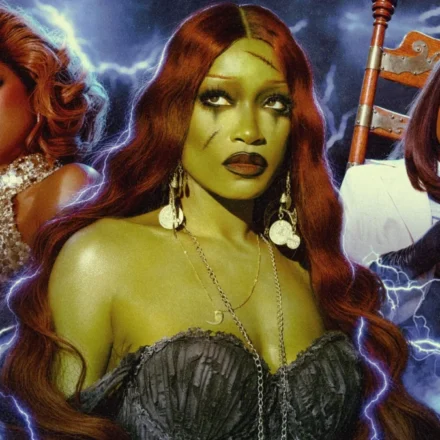
The public first caught a glimpse of Palmer’s dedication to the classics during her son’s first Halloween. In a viral moment, Palmer dressed as the Bride of Frankenstein, while her infant son, Leo, was cast as the doctor himself. Her accompanying caption, "He gave me LIFE," was a clever nod to the original film’s themes of creation and maternal (or in this case, paternal) devotion. It signaled to her fanbase that Palmer wasn’t just wearing a costume; she was engaging in a dialogue with the cinematic history of horror.
2025: Madame Dread and the Anthology Era
By September 2025, Palmer had cemented her status as a genre enthusiast by appearing as the cover star for Dread Central. During this period, she spearheaded Dread Manor, an anthology series styled after the campy, terrifying tradition of Tales from the Crypt. As "Madame Dread," she displayed a penchant for the theatrical, proving that she could command a room with the same gravitas as the iconic horror hosts of the 1980s.
2026: The "Keke Frankenstein" Era
The culmination of these efforts arrives with the 2026 release of "Keke Frankenstein." The accompanying music video, which sees Palmer playing the dual roles of Dr. Frankenstein and the Creature, represents her most ambitious visual project to date. By assuming the role of both creator and creation, she reclaims the narrative of her own life, suggesting that she is the only person qualified to assemble her identity.
Supporting Data: The Anatomy of a Genre Fan
In interviews conducted during her Dread Central cover feature, Palmer articulated a sophisticated understanding of horror tropes. Her influences are as eclectic as her career, spanning the psychological to the supernatural.

"It was definitely the original IT miniseries," Palmer noted, reflecting on the foundation of her fear. "Tim Curry is incredible. It changed how we felt about clowns in the same way that Jaws changed how people felt about sharks."
Her horror curriculum also includes Candyman, a film that left a lasting impression on her childhood. "For us, just going in the bathroom and somebody forcing you to say Candyman a few times would literally give us nightmares."
These insights are vital to understanding why "Keke Frankenstein" resonates so deeply. The track features lines such as, "I ain’t running from the shadows, I’ll be dancing with the freaks / Let the trauma do a two-step while I rise above the peaks," demonstrating that Palmer isn’t just a fan of the jump scare; she is a student of the genre’s ability to externalize internal trauma. By framing her personal healing as a "villain era," she adopts the power typically reserved for the antagonist, effectively neutralizing the victim narrative that the media often attempts to project onto her.
Official Responses and Creative Direction
Through her company, KeyTV, Palmer is moving beyond mere participation in horror; she is becoming a producer of it. In discussions regarding her future projects, Palmer has expressed a desire to develop original horror media that centers on Black experiences and unconventional storytelling.
"Some girls are born. Others are MADE," Palmer posted to her Instagram following the announcement of her new single. "A little electricity, a little experimentation, and a whole lot of KEKE. The monster has awakened."
This statement is more than just promotional hyperbole. It is a declaration of independence. By leveraging her influence to create content that honors the Universal Monsters legacy while injecting it with the urgency of modern pop music, Palmer is carving out a niche that few other celebrities of her stature occupy. She is bridging the gap between the campy, retro aesthetic of classic horror and the raw, confessional nature of contemporary R&B and pop.
Implications: The Future of the "Spooky Queen"
The implications of Palmer’s pivot toward horror are significant for both her career and the industry at large.
- Genre Credibility: Palmer is proving that mainstream pop stars can navigate the niche, often gatekept world of horror with genuine intellectual and aesthetic appreciation. Her ability to quote A Nightmare on Elm Street and cite Freddy Krueger as a favorite villain isn’t just "fan-service"—it’s a testament to her lifelong immersion in the genre.
- Narrative Control: By utilizing the Frankenstein metaphor, Palmer has provided a blueprint for how public figures can process trauma in the digital age. By turning her "broken pieces" into a "monstrous" work of art, she preempts public scrutiny and dictates the terms of her own evolution.
- KeyTV Expansion: With her production house, KeyTV, Palmer is signaling that her future lies in behind-the-camera control. The success of Dread Manor and the creative direction of "Keke Frankenstein" suggest that she is positioning herself as a showrunner who understands the visual and psychological power of horror.
As we look toward the future, it is clear that Keke Palmer is no longer just the star of the show—she is the architect of the set. "Keke Frankenstein" is a bold, electrifying step forward for an artist who refuses to be anything other than her own creator. As she continues to dance with the "freaks" and terrorize the metaphorical streets of Hollywood with her wit and ambition, one thing remains certain: the monster has indeed awakened, and she is just getting started.