A Symphony of Survival: Reflecting on Eighty Years of the Karlovy Vary International Film Festival

The Karlovy Vary International Film Festival (KVIFF) is not merely a cinematic event; it is a living document of Central European history. As the festival marks its 60th edition—spanning a remarkable eighty-year journey—it stands as a testament to the endurance of culture in the face of shifting geopolitical tides. From its inception in the aftermath of World War II to its current status as a premier global stage, KVIFF has navigated the complexities of occupation, ideological suppression, and the triumphant rebirth of the Czech Republic.
The Architecture of Resilience: A Chronological Evolution
The festival’s story begins in 1946, a fragile moment in history when Czechoslovakia emerged from Nazi rule. Launched just weeks before the inaugural Cannes Film Festival, KVIFF was intended as a beacon of restored national identity. By 1958, despite the encroachment of state communism, the International Federation of Film Producers Associations (FIAPF) designated Karlovy Vary as a category-A film festival, placing it in the highest echelon of international cinema alongside Cannes, Venice, and Berlin.
However, the Cold War would soon cast a long shadow. In 1959, the Soviet Union imposed a mandate requiring KVIFF to alternate years with the Moscow International Film Festival, a restriction that stifled the festival’s momentum for decades. It was not until 1994, two years after the peaceful dissolution of Czechoslovakia, that the festival fully reclaimed its independence. Today, the "Vary Special" edition serves as a bridge between that tumultuous past and a future defined by artistic autonomy.
The festival’s physical home, the Hotel Thermal, remains an essential character in this narrative. A masterpiece of Brutalist architecture, the hotel provides a "sanatorium" aesthetic—a nostalgic, slightly austere atmosphere that grounds the festival in its history while providing a striking contrast to the progressive, cutting-edge programming within its walls.

The Rituals of the Crystal Globe
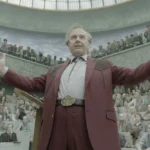
To visit Karlovy Vary is to enter a world of idiosyncratic traditions. Among the most cherished are the festival’s signature trailers, directed by Ivan Zachariáš. These short, eccentric black-and-white films feature recipients of the festival’s highest honor, the Crystal Globe. Whether it is Mel Gibson dodging a blowgun over his trophy or Stellan Skarsgård using the award as a fishing lure, these vignettes humanize the titans of cinema, stripping away the pretension often associated with high-profile film awards.
Equally foundational to the festival’s identity is the ongoing commitment of artistic director Karel Och, who continues the tradition of programming one film by John Cassavetes each year. This multi-year masterclass serves as a philosophical anchor, reminding attendees of the festival’s dedication to independent, human-centric storytelling.
Retrospective: "Out of the Past — KVIFF 60/80"
This year’s milestone anniversary necessitated a deep dive into the archives. The "Out of the Past — KVIFF 60/80" section was a masterclass in historical curation, offering a roadmap of how the festival survived and evolved.
The retrospective screened Powell and Pressburger’s A Matter of Life and Death (1946), a surrealist war melodrama that felt particularly resonant given the geopolitical fragility of the era in which it first screened for Czechoslovak audiences. The program also honored the winners of the Crystal Globe through the decades, from Ján Kadár and Elmar Klos’s searing courtroom drama The Defendant (1964) to Ken Loach’s Kes (1970), which brought international social realism to the forefront just after the trauma of the Prague Spring.

Perhaps most poignantly, the festival highlighted directors who were once persona non grata. Juraj Jakubisko’s Birds, Orphans and Fools (1969) stood as a powerful example of cinema that had been censored and suppressed for decades, only to be reclaimed after the 1990s. By juxtaposing these Eastern European deep cuts with pioneers like Glauber Rocha, the festival underscored its long-standing ambition to look beyond the Iron Curtain, proving that its appetite for global cinema was never fully contained by political borders.
Modern Cinematic Horizons: Competition and Discovery
While the retrospectives honored the past, the contemporary sections—Proxima and the Crystal Globe Competition—pushed the boundaries of current filmmaking.
The Proxima section, which replaced the old "East of the West" category, has successfully transitioned into a borderless showcase for emerging talent. This year, the Grand Prix went to Lover, Not a Fighter, the debut feature from Slovak director Martina Buchelová. The film is a hyper-modern, fragmented love story that utilizes vertical phone footage and rapid-fire montage to capture the anxiety and intimacy of contemporary youth. It is a bold, scrappy piece of filmmaking that perfectly encapsulates the festival’s mission to highlight voices that defy conventional structure.
In the main Crystal Globe competition, Aung Phyoe’s Fruit Gathering took home the top prize, a testament to the festival’s truly global scope. However, the most debated film of the year was undoubtedly the Bulgarian drama Black Money for White Nights, directed by Kristina Grozeva and Petar Valchanov.

Implications of the "White Nights"
Black Money for White Nights serves as a sobering mirror to the festival’s own history. The film follows an elderly couple whose life of minor, systematic corruption is fueled by a desperate desire to visit St. Petersburg. Even as the reality of the Russian invasion of Ukraine intrudes upon their lives, the couple chooses willful ignorance, retreating into a romanticized version of the past—symbolized by living room wallpaper adorned with birch forests.
The film is a brilliant, unsettling fable about the danger of nostalgia and the impossibility of separating personal life from political reality. While it did not win a prize, its presence was vital. It challenged the audience to consider the cost of "distancing" oneself from history. In many ways, the film’s failure to secure a top honor—despite its critical acclaim—sparked discussions about the festival’s own careful navigation of current events. It acted as a coda to a festival that has learned, through sixty editions, that the only way to survive the past is to confront it, even when the reflection is uncomfortable.
A Somatic Experience: Cannes Exports and Personal Grief
The festival’s programming also showcased the best of international cinema, including two standout films from the Cannes circuit: A Man of His Time and Everytime.
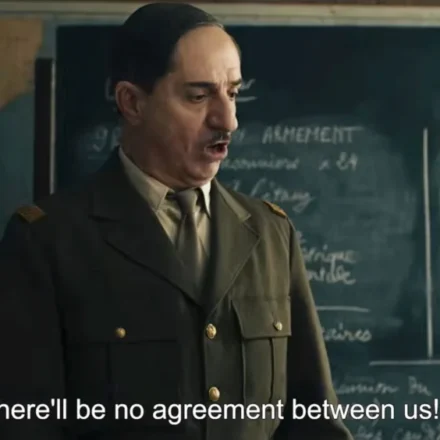
Emmanuel Marre’s A Man of His Time is a harrowing study of complicity. Set within the Vichy regime, the film explores the banality of evil through the rise of an ambitious, mediocre man. With its stationary, fly-on-the-wall cinematography and a haunting performance by Swann Arlaud, the film forces the viewer to confront the ease with which individuals can become cogs in an atrocity.

In contrast, Sandra Wollner’s Everytime offers a more intimate, hallucinogenic exploration of grief. Drawing comparisons to Charlotte Wells’s Aftersun, the film uses the medium of fiction to process the trauma of loss. Wollner’s work is a "memory piece" that balances urban realism with an ethereal, dream-like quality, asserting that cinema’s greatest power lies in its ability to soothe the wounds that reality refuses to heal.
Conclusion: The Path Forward
As KVIFF looks toward its next eighty years, it remains a festival defined by its eclecticism. It is a space where Brutalist history meets the digital fragmentation of the TikTok generation, and where the echoes of the Cold War are heard alongside the urgent cries of contemporary political drama.
The "Vary Special" edition has confirmed that the festival’s strength lies in its ability to adapt without losing its soul. It has moved beyond the ideological baggage of its communist inheritance, transforming it into a foundation for a truly independent cultural institution. Whether through the restoration of forgotten masterpieces or the championing of daring new voices, the Karlovy Vary International Film Festival continues to prove that cinema is not just a form of entertainment, but an essential tool for understanding the complexity of human survival. In the spa-town of Karlovy Vary, the past is never dead; it is merely waiting for the next screening to breathe new life into it.