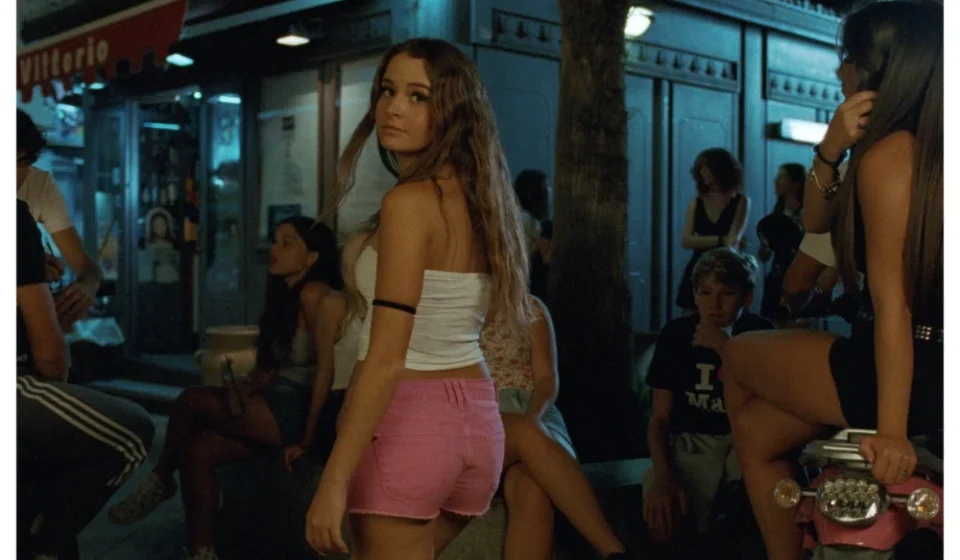
Sicilian Echoes: Giovanni Tortorici’s ‘Ketticè’ Challenges Class and Conformity at Locarno

The Locarno Film Festival has long served as a prestigious launchpad for bold, idiosyncratic voices in world cinema. This year, the spotlight falls squarely on 30-year-old Italian filmmaker Giovanni Tortorici, who returns to the festival circuit with his sophomore feature, Ketticè. Following the acclaim garnered by his debut, Diciannove (Nineteen)—which premiered in the Venice Horizons section—Tortorici has pivoted from an autobiographical exploration of late adolescence to a gritty, ensemble-driven portrait of 2012 Palermo.
Ketticè, a title derived from a Sicilian dialect nickname, is a coming-of-age drama that masterfully dissects the collision between two sixteen-year-olds from vastly different social strata. As the film competes for top honors in Locarno, it stands as a testament to the power of authentic, street-cast storytelling, elevated by the presence of Italian icon Monica Bellucci.
The Narrative Core: A Refuge in the Shadows
At the heart of Ketticè lies the unlikely, intense bond between Ketty and Giulio. Set against the backdrop of a Palermo defined by political stagnation, the encroaching influence of social media, and a pervasive sense of cultural numbness, the film paints a vivid picture of a generation feeling the weight of an adult world that is both judgmental and omnipresent.
Ketty, a girl from the working-class districts with familial ties to the Mafia, and Giulio, a boy born into the stifling, manicured expectations of the aristocracy, find solace in a shared, illicit routine. Their friendship is anchored by the act of purchasing marijuana from a street dealer in a local housing project. To the protagonists, this ritual is more than a rebellion; it is a desperate search for freedom—a sanctuary where they can escape the prying eyes of surveillance cameras and the stifling expectations of their respective households.
Tortorici notes that the film’s inspiration was somewhat fortuitous. While revisiting old screenplays written in his early twenties, he rediscovered the raw, unfiltered mannerisms and linguistic quirks of his own sixteen-year-old self. "I wanted to delve deeper and reconstruct a bit of that whole reality," Tortorici explains. "It gave me the opportunity to explore things I hadn’t touched on in my previous film. The power dynamics at that age are much clearer—the tension between parents, the education system, and state control."
Chronology of a Vision: From ‘Diciannove’ to ‘Ketticè’
The trajectory of Giovanni Tortorici’s career has been swift and deliberate. His debut, Diciannove, was lauded for its intimate, introspective look at the cusp of adulthood. However, the transition to Ketticè represents a broadening of scope.

- Early Development (Circa 2012-2022): The seeds of the story were planted during Tortorici’s own youth in Palermo. The screenplay sat in limbo for nearly a decade, allowing the director the distance required to view the period with a more analytical lens.
- The Resurgence: Following the successful reception of Diciannove, Tortorici returned to his earlier drafts. He realized that the specific, almost volatile power struggles he had documented as a 22-year-old writer were the perfect vehicle for a larger ensemble piece.
- Casting and Pre-production: Departing from conventional casting, Tortorici prioritized authenticity over name recognition for the lead roles. Rachele Testagrossa (Ketty) and Salvatore Gallina (Giulio) were selected through an extensive street-casting process, bringing an raw, unpolished energy to the screen.
- The Bellucci Factor: The decision to bring in a professional heavyweight like Monica Bellucci to play Giulio’s mother provided the necessary gravity to the aristocratic half of the narrative. Her participation was secured after Tortorici identified a specific archetype in Sicilian upper-class society that he felt only she could embody.
- Festival Premiere: Ketticè makes its major debut at the Locarno Film Festival, marking Tortorici’s solidification as one of Italy’s most promising auteurs.
Supporting Data: The Sociology of the Screen
Ketticè is not merely a drama; it is a sociological study of class tension. The physical manifestation of these differences is stark. Ketty’s propensity for physical confrontation is a direct antithesis to the controlled, rigid upbringing of Giulio.
"Giulio is very physically controlled," says Tortorici. "His mother tells him to keep his elbows down at the dinner table and not to gesticulate. In short, there is a clear contrast between these two characters, which is why they are attracted to each other."
The film also serves as a time capsule for 2012 Sicily. Tortorici intentionally chose this year because it captured a "pre-digital" transition—a time when the first pervasive impacts of social media were beginning to erode the traditional social fabric of the city. The characters’ anxiety regarding surveillance cameras and the "gaze" of the adult world reflects a generation starting to feel the encroachment of the modern, monitored state.
Official Perspectives: The Bellucci Interpretation and the Guadagnino Method
Monica Bellucci: A Study in Elegance and Violence
Perhaps the most intriguing casting choice is that of Monica Bellucci. Playing a woman who hides an eccentric, and at times violent, nature behind a facade of aristocratic elegance, Bellucci’s performance has already garnered significant industry chatter.
Tortorici notes that he drew inspiration from real-world figures he encountered growing up in Sicily. "In public, they are very elegant and well-mannered," he observes. "But then, within the walls of their homes, they become pretty eccentric and even slightly violent. I’ve known many of these women, and I think it’s a transnational, class thing."
Working with Bellucci was, by all accounts, a seamless experience. The director recalls that she understood the psychological underpinnings of the character almost immediately during rehearsals. "She gave a very intelligent, very realistic interpretation. When I showed the film to people who know this aristocratic world, they told me they found a lot of truth in her performance."

The Maieutic Guidance of Luca Guadagnino
As a long-time collaborator and partner, director Luca Guadagnino serves as a producer on both of Tortorici’s features. When asked about the nature of their creative partnership, Tortorici describes it as "maieutic"—a Socratic approach that emphasizes self-discovery over direct instruction.
"He doesn’t tell you specific things about a problem," Tortorici explains. "He acts like a psychoanalyst who helps you discern what might be an external influence versus what you are holding back on out of prudence or cowardice." This method, which forces the filmmaker to confront their own creative intentions, is arguably the defining element of Tortorici’s burgeoning style. It is a process that values the "author’s personal point of view" above all else.
Implications: A New Wave in Italian Cinema
The success of Ketticè at Locarno suggests a shift in the Italian cinematic landscape. By blending the raw, documentary-style energy of street casting with the high-production value of established stars, Tortorici is carving out a niche that bridges the gap between art-house realism and mainstream appeal.
The film’s focus on the "political stagnation" of early 2010s Italy also invites viewers to reflect on how those years shaped the current sociopolitical climate of the country. By focusing on the youth, Tortorici suggests that the roots of contemporary Italian malaise were firmly planted in the experiences of those who came of age during the dawn of the social media era.
As the film prepares for wider distribution, the industry is closely watching how audiences respond to the stark class contrasts and the unsettling, yet tender, friendship at the core of the story. If Diciannove was the promise of a talent to watch, Ketticè is the delivery. Giovanni Tortorici has proven that he is not just interested in telling a story, but in interrogating the very structures—familial, societal, and political—that dictate the lives of the marginalized and the elite alike.
With the backing of a mentor like Guadagnino and a performance from a global icon like Bellucci, Ketticè is poised to be one of the most discussed films of the festival circuit. For the viewer, it offers a rare glimpse into a Palermo that is both deeply specific and hauntingly universal—a place where the search for freedom often begins with a shared secret in the shadows.