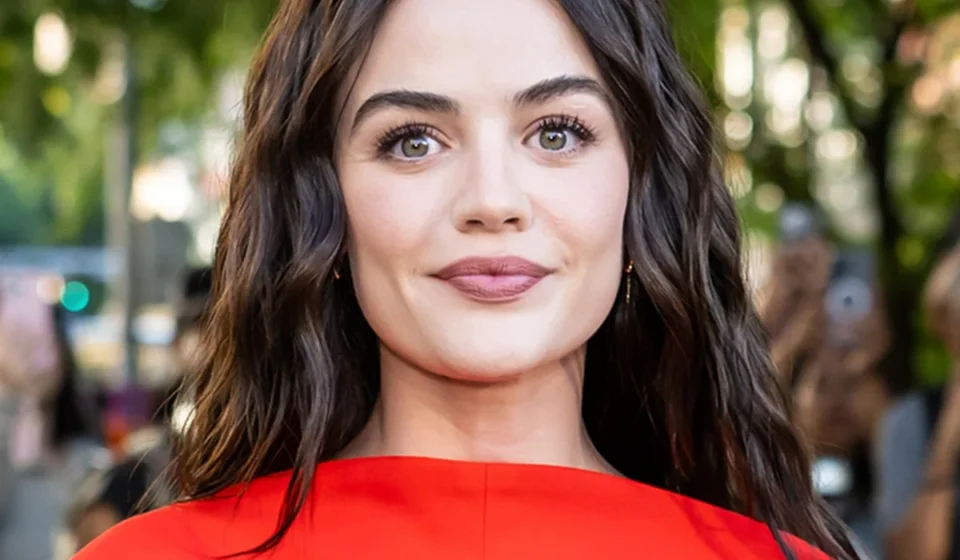
Navigating Nostalgia: Lucy Hale Addresses the "Problematic" Legacy of Pretty Little Liars

In the landscape of modern television, few shows defined the social media era quite like Pretty Little Liars (PLL). The teen drama, which ran from 2010 to 2017, became a cultural touchstone, blending mystery, fashion, and high-stakes romance. However, as cultural standards evolve, so too does the audience’s perspective on the series’ central narratives. Recently, Lucy Hale, who starred as the iconic Aria Montgomery, found herself at the center of a public discourse regarding the controversial romance between her character and her English teacher, Ezra Fitz, played by Ian Harding.
The Catalyst: A Social Media Reunion
The discourse was reignited on October 25 following a social media post by Hale. To celebrate their upcoming collaborative project, the holiday film 12 Dates of Christmas, Hale shared a video on Instagram that featured a recreation of an infamous kiss between her and former costar Ian Harding. While the video was intended as a lighthearted tribute to their two-decade-long friendship, the response from the public was swift and largely critical.
Fans, armed with a modern lens regarding power dynamics and professional ethics, quickly pointed out that the "Ezria" relationship—a high school student dating a 22-year-old teacher—represents a dynamic that, by today’s standards, mirrors predatory grooming.
A Necessary Clarification
Recognizing the weight of the criticism, Hale took to Instagram Stories to clarify her intent. "I’m obviously seeing a lot of the comments, and I just want to say that two realities can be very true," Hale explained. "It’s very obvious that Aria and Ezra is problematic, and it did not age well."
Hale emphasized that the video was a celebration of her enduring personal connection with Harding, not an endorsement of the fictional relationship that defined the series. "Ian and I were teenagers when we were doing that show," she noted. "We were quick friends, and we have known each other almost 20 years. The video was actually more about Ian and I’s friendship, not glamorizing anything."
Chronology of a Controversial Romance
To understand why this reaction was so intense, one must look at the timeline of the show’s production and the shifting societal norms that accompanied its rise and fall.
The 2010 Context
When Pretty Little Liars premiered in 2010, the romantic trope of the "forbidden teacher-student affair" was a staple in teen literature and television. Based on the book series by Sara Shepard, the show faithfully adapted the source material, which leaned heavily into the allure of the taboo.
In a recent appearance on the podcast On Purpose With Jay Shetty on September 21, Hale addressed why the plotline existed in the first place. "My character dated her teacher, and that’s been a little controversial, especially lately," she remarked. "But like, this came out in 2010, so of course she would date her teacher. That’s what happened in the book, so it should happen in the show."
The Post-2017 Reckoning
Following the show’s finale in 2017, the global conversation surrounding consent, power imbalances, and the representation of grooming in media shifted dramatically. The #MeToo movement and a heightened awareness of professional boundaries led many viewers to re-examine their favorite teen dramas. What was once viewed as "romantic" or "forbidden" by 2010 standards was re-categorized by many as a depiction of an inappropriate and inherently coercive power dynamic.
Supporting Data: The Evolution of Audience Reception
The backlash Hale received is not an isolated incident. It is part of a broader trend of "retrospective criticism," where legacy media is evaluated through a contemporary moral framework.
The "Ezria" Dynamic vs. Modern Standards
In the world of Pretty Little Liars, the Aria/Ezra relationship was often framed as a "soulmate" connection, culminating in their marriage in the series finale. However, critics argue that the romanticization of this bond ignored the severe ethical breach inherent in an adult educator pursuing a minor.
Data from social media sentiment analysis suggests that while PLL remains a high-traffic show on streaming platforms, the discourse around it has become increasingly polarized. Younger viewers, in particular, often cite the Aria/Ezra dynamic as a "red flag" in their re-watches, contrasting it with other relationships in the show that did not involve such stark power imbalances.
The Cast’s Stance
Hale is not the only cast member who has had to navigate the legacy of the show. Her comments reflect a growing trend among actors who participated in teen dramas of the 2000s and 2010s. Many have begun to acknowledge that while they are proud of the work they did and the friendships they formed, they are also capable of identifying the flaws in the writing of their younger years.
Official Responses and Philosophical Implications
Hale’s response serves as a masterclass in modern celebrity crisis management—acknowledging the validity of the audience’s concerns without denigrating the personal professional milestones she achieved during the show’s run.
Prioritizing Future Narratives
When asked about the possibility of a reunion or a follow-up series involving the original cast—including Ashley Benson, Shay Mitchell, and Troian Bellisario—Hale was clear about how the show would need to handle its past.
"People loved that relationship because it was forbidden romance," she admitted. "But it’s just interesting how much we’ve evolved as humans that I feel like that would be the first thing we’d have to address on the show."
This statement implies that if the cast were to return to Rosewood, they would not be able to ignore the elephant in the room. The "Ezria" plotline would likely need to be deconstructed, challenged, or framed within a narrative that acknowledges the toxicity that was overlooked in previous seasons.
The Burden of Representation
The broader implication of this situation is the responsibility that rests on creators and actors when portraying complex, potentially harmful dynamics. In the current era, audiences are demanding more accountability. The "forbidden romance" trope is no longer a free pass; it is now a subject of intense scrutiny.
The Broader Context of TV Reunions
While the Pretty Little Liars discourse highlights the complications of nostalgia, it exists within a vibrant culture of television reunions that celebrate the human connections forged on set. As the accompanying list of reunions—from The Nanny to Friends—demonstrates, fans are desperate to see their favorite ensembles return to the screen.
These reunions often serve as a bridge between the past and the present. Whether it is Fran Drescher supporting her former costars in a theater production or the Boy Meets World cast gathering for a reunion, these moments provide comfort and continuity. However, as Lucy Hale’s experience proves, nostalgia is rarely simple. It requires a delicate balance of honoring the history of a show while remaining responsive to the growth of the audience.
Conclusion: Lessons for the Future
Lucy Hale’s candidness regarding Pretty Little Liars underscores a vital shift in the entertainment industry. The era of blind nostalgia is fading, replaced by a more critical, thoughtful engagement with the media we consume. By acknowledging that her character’s storyline "did not age well," Hale has not only validated her fans’ concerns but has also set a precedent for how legacy stars can engage with their past work.
As the industry continues to produce new content, the lesson from Rosewood is clear: stories involving power imbalances and controversial dynamics will be scrutinized. The creators who succeed in the future will be those who recognize that while stories are products of their time, the impact of those stories persists, and they must be willing to address the shadows of the past with honesty and grace.
Ultimately, Hale’s commitment to her craft and her coworkers remains strong. As she moves forward with new projects, she carries the lessons of the PLL era with her, proving that it is possible to cherish the memories of a show while still acknowledging the necessity of social and cultural evolution.