The Myth of the Hollywood Ladder: Why Recognition No Longer Guarantees a Career

For generations, the roadmap to Hollywood success was sold as a linear ascent: get an agent, book the studio job, win the award, and repeat until you can afford a home in a quaint enclave of Studio City. It was a narrative of inevitable progression, a "Thanos-like" collection of professional Infinity Stones. However, for a new generation of working filmmakers—particularly women and creators of color—that narrative has proven to be a dangerous, outdated fantasy. In the modern industry, recognition might get you into the room, but it rarely translates into a greenlit project.
The Hollow Victory of Accolades
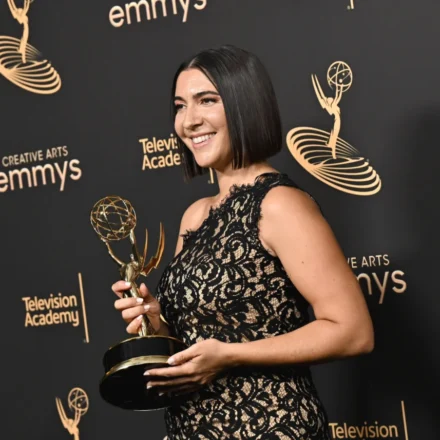
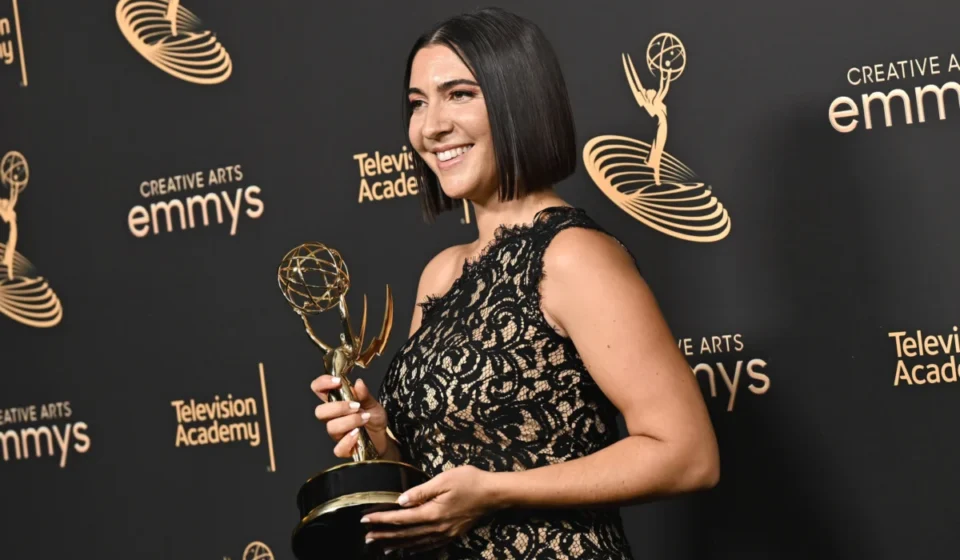
Bridget Stokes knows this distinction intimately. In 2022, she made history as the first Black woman to win an Emmy for directing a variety series for her work on A Black Lady Sketch Show. The professional reception was immediate: her inbox flooded with congratulations, and her calendar filled with high-level meetings.
To an outsider, the trajectory seemed clear. But the reality was starkly different. "I didn’t get a studio job offer for almost four years after I had won the award," Stokes revealed. "Like, four years after I had won an Emmy and had this ‘decoration,’ I never got a job offer."
Stokes’ experience exposes a profound disconnect between industry prestige and actual economic viability. Her journey complicates the enduring, yet increasingly debunked, idea that Hollywood operates like a ladder. "There’s no place you can reach and have ‘made it,’" she said. Having consulted with Oscar-nominated directors and seasoned auteurs who still find themselves struggling to finance passion projects, she concludes, "We’re artists trying to convince commerce people to make our art. It’s just never going to be easy, no matter who you are."
A Landscape in Contraction
The difficulty of Stokes’ position is compounded by a seismic shift in the industry. The post-pandemic landscape, coupled with prolonged labor strikes, corporate mega-mergers like the Skydance deal, and the environmental impact of the 2025 wildfires, has created a period of extreme contraction.

Data from the FilmLA 2025 Q4 and year-to-date Production Report paints a grim picture of this era: on-location production in Los Angeles plummeted 16.1 percent in 2025. Every major category, from student films and shorts to documentaries and music videos, saw a decline. By the end of 2025, television production was 50.1 percent below its five-year average, while feature films lagged 31.7 percent behind. While the 2026 Q1 report suggests a modest uptick from those historic lows, production levels remain significantly suppressed, creating an environment where even established talent is forced to fight for scraps.
The Structural Bias: Who Gets to Create?
The disparity in who gets to direct and write for the screen is not merely a matter of taste; it is a systemic feedback loop. According to the 2026 Boxed In report by Dr. Martha M. Lauzen of the Center for the Study of Women in Television and Film, programs featuring at least one woman creator employed significantly more women in key creative roles. On these sets, women wrote 48 percent of episodes, compared to a mere 17 percent on shows created exclusively by men.
Yet, the macro-level statistics remain stagnant. During the 2025-26 season, women accounted for only 22 percent of creators across broadcast and streaming. The situation is equally dire in film. UCLA’s 2026 Hollywood Diversity Report noted that in 2025, only one in 10 top theatrical films featured a female director, and roughly one in five had a director of color. Perhaps most telling is the writing room: 71.9 percent of all credited writers on top theatrical releases were white men, while BIPOC writers accounted for just 13.5 percent.
Trieu Tran, a veteran actor with a 25-year career spanning HBO’s The Newsroom and Hulu’s Monsterland, points to the absurdity of the "progress" narrative. "I hate when I hear people say the needle is moving," Tran said. "The needle has not fucking moved. It’s only moving for a select few." Tran, who has navigated the industry as an immigrant, describes a casting process that feels like a trap: "Too Asian, not Asian enough. Too Vietnamese, not Vietnamese enough."
The Pivot to Independence
Faced with the realization that the traditional gates are not opening, a new slate of filmmakers is opting to build their own path. Rather than waiting for the "good old days," they are securing private investors, establishing independent production companies, and cultivating niche audiences.

Ebony Elaine Hardin, a producer who transitioned from casting at CBS and NBCUniversal to her current role as director of production at the subscriber-funded studio Dropout, embodies this shift. "We kind of dropped out of the studio system," she said. By choosing creative autonomy over corporate mandates, the company has proven that entertainment does not need to appeal to everyone to be successful.
"I don’t think that entertainment personally has to [appeal to everyone]," Hardin explained. "It can be more niche. This is just for these people—made by people who care deeply about that audience."
This strategy is bolstered by the data. The UCLA Diversity Report confirms that BIPOC audiences are the engine of the theatrical market, purchasing the majority of opening-weekend tickets for over half of the top 20 films in 2025. Films with casts that were 41–50 percent BIPOC actually produced the highest median global and domestic box office results.
The New Business Reality
The modern filmmaker must now be a hybrid artist-entrepreneur. Emmy-winning casting director Jazzy Collins, the first Black woman to win in her category, acknowledges the value of awards but emphasizes that they are no longer the primary currency of success. "There’s some really fantastic people that have never won an Oscar, never won an Emmy, and they’re working more than the people that have," she noted.
For Collins, fundraising is no longer a peripheral task—it is the core of the job. "I’m not gonna wait for you to knock on my door," she said. "You’re gonna have to come knock on my door when I’m already up and running."

This "scrappy" approach is echoed by filmmaker Lauri Levenfeld, who is directing the upcoming Swipe Up and producing Stokes’ project Zugzwang. "You have to literally think about from A to Z how you’re going to get this thing done," Levenfeld said.
A Balanced Perspective: The Producer’s Dilemma
Despite the excitement surrounding the indie movement, industry veterans warn against over-romanticizing the struggle. Wayne Horton, a former Netflix executive, points out that studios are not necessarily acting out of malice, but out of extreme risk aversion. "My job as a producer is to develop projects that are great creatively, but also turn a profit," Horton explained. "There are a lot of great scripts out there, but there isn’t a strong business case for every script."
The challenge for the next generation is to bridge the gap between creative vision and the business reality. The success of the independent model, as seen in the 52.3 percent increase in feature film shoot days in Q1 2026, suggests that the market is beginning to favor those who can demonstrate fiscal responsibility alongside artistic merit.
The Future: A Different Path Up the Mountain
The landscape of Hollywood is undergoing a permanent transformation. The traditional, heavily-guarded gates of the major studios may never fully open to the majority of creators, but the definition of "having made it" is being rewritten.
Filmmakers like Hardin, who is currently championing projects like Flacalta Effect and Trashy People, are not abandoning the dream of awards or mainstream success; they are simply refusing to let their careers stagnate while waiting for permission to work. By fostering communities, owning their intellectual property, and understanding the financial mechanics of their medium, these creators are proving that the revolution will not be a singular event, but a steady, grassroots building of new, independent infrastructure.

As Stokes moves forward with Zugzwang, she and her peers are demonstrating that while the mountain is steeper than ever, they are no longer climbing it in the dark. They are building a new trail, one that prioritizes creative integrity and audience connection over the fleeting validation of a system that was never designed for them in the first place. The "infinity stones" of Hollywood might still be out of reach for many, but for a new generation, the prize is no longer the stone—it is the power to build the gauntlet themselves.