The Art of the Impossible: How DNEG Reimagined Looney Tunes for Coyote vs. Acme

In the landscape of modern visual effects, the challenge of blending 2D animation sensibilities with photorealistic cinematography is rarely as daunting as it was for the team behind Coyote vs. Acme. Directed by Dave Green, the project sought to bridge the gap between the chaotic, physics-defying world of Warner Bros.’ classic Looney Tunes and the grounded reality of a live-action environment. To achieve this, DNEG’s Visual Effects Supervisor Alexander Seaman and Animation Director Keith Roberts spearheaded an ambitious technical and artistic undertaking that required rethinking how digital characters interact with the "real" world.
The result is a masterclass in hybrid filmmaking, where the intentional preservation of cartoon "impossibility" is held in perfect tension with the weight and lighting of a photographed universe.
The Core Objective: Preserving the "Chuck Jones" DNA
For Seaman and Roberts, the production was not merely a technical job; it was a labor of love. Seaman, who famously attended a childhood birthday party dressed as Roger Rabbit, viewed the project as a career-defining opportunity. Roberts, involved from the project’s infancy, brought a deep-seated respect for the animation style of Chuck Jones, the legendary animator whose work defined the iconic look and timing of Wile E. Coyote.
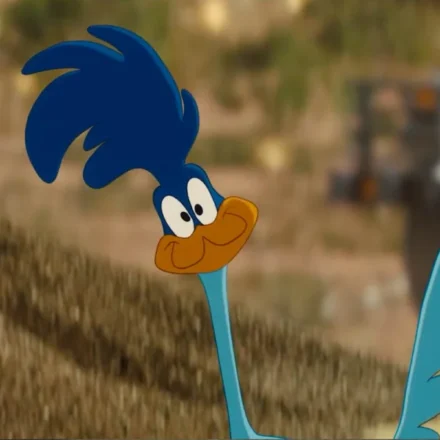
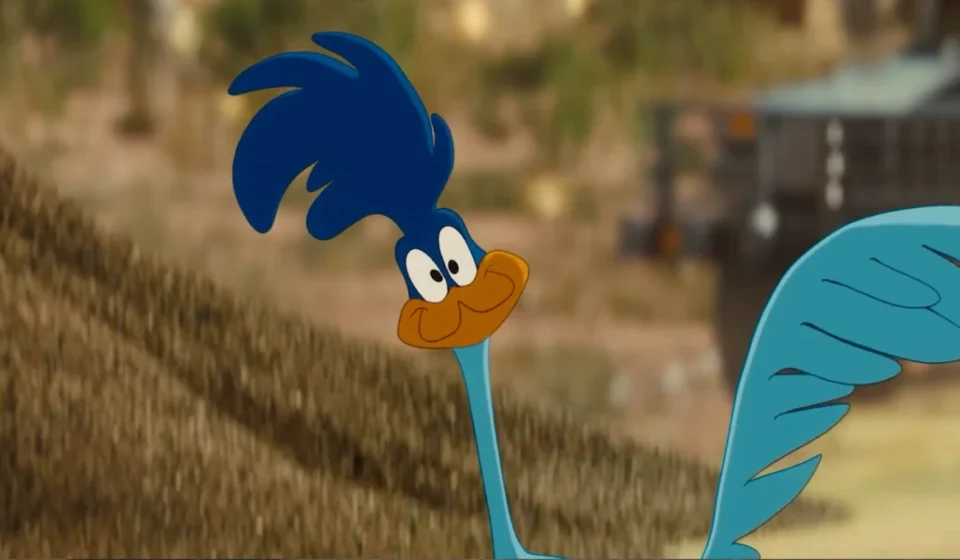
The fundamental challenge was avoiding the "uncanny valley" trap of making the characters look "too real." While contemporary CG often prioritizes photorealism, Coyote vs. Acme required the opposite: a commitment to graphic simplicity, economy of motion, and the precise, snap-cut timing that makes a cartoon funny. The team realized early on that modern CG tools, which excel at fluid, overlapping motion, were actually detrimental to the aesthetic they were trying to replicate.

Chronology of the Workflow: From Sketchvis to Final Render
The production cycle for Coyote vs. Acme was non-linear, demanding a high degree of adaptability. The workflow can be broken down into several critical phases:
1. The Sketchvis Phase
Before any heavy-duty 3D work began, the team utilized a process called "sketchvis." This involved artists drawing directly over live-action plates. This stage allowed Director Dave Green to iterate on comedic timing rapidly—testing multiple versions of a sequence in a single week. By avoiding the limitations of 3D rigs early on, the creative team could focus entirely on the "gag." Once the timing was perfected in 2D, the animation team would then "reverse-engineer" the rigs and camera movements to match the successful drawings.
2. On-Set Performance and Puppetry
A pivotal element of the film’s authenticity was the presence of puppeteer Dave Barclay on set. Barclay provided a physical Wile E. Coyote, offering actors a tangible object to look at and interact with. This physical presence provided the natural rhythm of performance that is often missing when actors are forced to gaze at "nothing." These takes were then carefully cleaned; the puppet and puppeteer were removed, leaving behind the precise eyelines and physical interactions that grounded the digital character.
3. Rigging and Toon Shading
DNEG utilized custom rigs designed for extreme manipulation—far beyond what would be required for a character in a realistic drama. Using Clarisse, the team developed specialized toon shaders. The most significant technical hurdle was the generation of character outlines. These outlines were produced in Houdini, but they were not static; they were dynamic, adjusted in real-time based on the character’s movement, depth in the frame, and proximity to the camera. This ensured that the "drawn" look remained consistent, regardless of the camera lens used.

Supporting Data: Technical Constraints and Solutions
The interplay between the cartoon character and the live-action world was governed by strict mathematical and artistic constraints.
- Frame Timing (Ones vs. Twos): In classic animation, characters are often animated "on twos," meaning a pose is held for two frames to create a specific, staccato rhythm. However, for scenes where Wile E. walks alongside a live-action human, the team found that "ones" (updating every frame) were necessary to prevent the character from feeling disconnected from the actor. The final film relies on a delicate, shot-by-shot decision process regarding frame rate.
- Lens Distortion: A standard cinematic lens, while perfect for human actors, often distorted the cartoon characters in ways that made them appear "wrong." Consequently, the team often used a separate rendering camera for the characters, allowing them to adjust perspective and silhouette independently of the background.
- Lighting Restraint: While DNEG is famous for its photoreal lighting, the team had to intentionally "dumb down" the lighting for Wile E. They utilized Nuke-based roto shapes to apply simple, flat highlights. By avoiding complex light-and-shadow modelling on the character’s surface, they maintained the graphic integrity of the original animation style.
Official Perspectives: The Philosophy of "The Falling Piano"
The "falling piano" sequence serves as the perfect case study for the film’s hybrid physics. To make the gag work, the team had to balance the violent, abrupt timing of a cartoon with the recognizable weight of a real car.
"We tested several approaches," Seaman noted during the fxpodcast. "We looked at whether a realistic piano would be funny, but it lost the spirit of the bit. We had to construct the physics of the scene around the animated gag, not the other way around."
This involved a combination of practical special effects stunts on set, which were then augmented, re-timed, and integrated with the CG piano. The result is a sequence where the audience accepts the absurdity of the piano because the car underneath reacts with genuine, weight-based physics.

Implications: The Future of Hybrid Animation
The work done by DNEG on Coyote vs. Acme sets a new benchmark for how intellectual property can be translated from 2D animation to live-action. By prioritizing the "intent" of the original animators—the economy of pose, the silhouette, and the graphic clarity—rather than the "realism" of the digital models, they have proven that the soul of a character lies in its style, not its texture.
Furthermore, the extensive use of Unreal Engine for pre-visualization and environmental blocking allowed for a level of flexibility that is rarely seen in VFX-heavy productions. By keeping the desert environments "fluid" until the final stages of the pipeline, the team ensured that the environments could always accommodate the shifting needs of the animation.
The Lasting Impact
The success of this production lies in its restraint. As Alexander Seaman highlighted, the margin between a recognizable character and one that feels "wrong" is incredibly narrow. The project proves that even with the most advanced 3D tools available, the most important technology in the room remains the human eye—the ability to recognize when to deviate from the laws of physics to satisfy the laws of comedy.
For those interested in the granular details of this process, the full fxpodcast offers an exhaustive look into how the teams at DNEG managed to balance the "wonderfully spontaneous" on-screen result with the rigorous, calculated engineering that makes it possible. In an era where audiences are increasingly fatigued by "perfect" CGI, Coyote vs. Acme offers a refreshing reminder that the most compelling visual effects are often those that choose character, style, and story over pure, unadulterated realism.