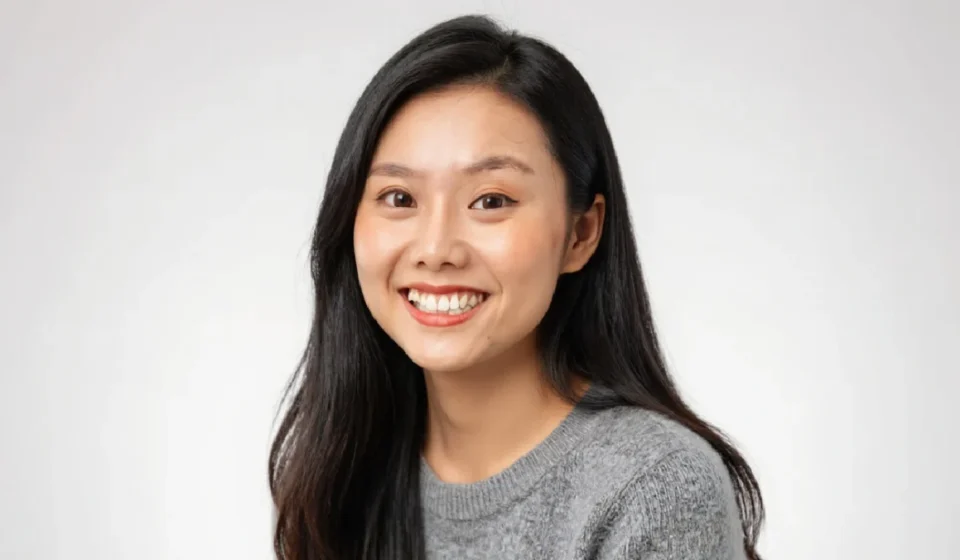
The Hybrid Horizon: OpenArt AI CEO Coco Mao on the Future of Film and Synthetic Media

The landscape of cinematic production is undergoing a seismic shift, yet according to Coco Mao, co-founder and CEO of OpenArt AI, the industry remains firmly rooted in the physical world. Speaking at the Access Canada Summit—an event powered by The Hollywood Reporter—Mao offered a nuanced perspective on the tension between generative artificial intelligence and traditional filmmaking. While the rapid evolution of AI tools has captured the imagination of Silicon Valley and digital creators alike, Mao argues that the future of Hollywood lies not in the replacement of live action, but in a sophisticated symbiosis of human performance and synthetic enhancement.
The State of Play: Generative Tools and the "Vibe Directing" Revolution
At the heart of Mao’s discussion was the debut of "Director," OpenArt AI’s latest flagship tool. Designed to transform text-based prompts and scripts into coherent, high-fidelity video, the platform represents a significant leap forward in generative capability. Unlike many early AI video models that struggle to maintain temporal consistency beyond a few seconds, Director is capable of producing clips up to five minutes in length.
Mao characterizes the core innovation as "vibe directing," a methodology that allows users to articulate the tone, aesthetic, and emotional trajectory of a scene without requiring the technical overhead of traditional animation software. This approach has found immediate traction among social media content creators, who require rapid turnaround times and high-volume output.
The business implications are already becoming clear. Marketing and advertising agencies, driven by the necessity of high-revenue content generation, have emerged as the most aggressive adopters of OpenArt’s suite. With a user base now averaging seven million monthly, the platform is proving that while cinema may be cautious, the broader creative economy is hungry for AI-augmented workflows.
A Chronology of Technological Disruption
To understand the current friction between AI and Hollywood, one must look at the historical trajectory of film technology.
- The Early Wave (2022-2023): The initial explosion of generative AI models (such as DALL-E and Midjourney) caught the entertainment industry off guard, sparking intense debate regarding intellectual property, labor rights, and the ethical use of training data.
- The Prototyping Phase (2023-2024): Filmmakers began experimenting with AI for mood boards and storyboarding, utilizing the tools to visualize scenes before committing to expensive physical builds.
- The Current Integration (2024-Present): Tools like OpenArt’s Director have moved beyond simple image generation, offering temporal video generation. This has prompted a shift in discourse from "Will AI replace filmmakers?" to "How will AI change the pipeline?"
Mao acknowledges that the film and television industry is, by design, the slowest to adopt these new technologies. "We see this industry being the slowest one, for good reason," she noted during the session moderated by Steven Zeitchik, The Hollywood Reporter’s senior editor of technology and politics. The inherent risks—creative, legal, and financial—ensure that Hollywood’s institutional giants approach innovation with a level of scrutiny that smaller digital studios simply do not possess.
Supporting Data and Industry Adoption
While the cinematic establishment remains hesitant, the data suggests that the "hybrid approach" is already becoming the de facto standard in professional workflows. According to Mao, the most common entry point for AI in professional film is pre-production and post-production.
Pre-production: The New Storyboard
Producers are utilizing AI to generate previz sequences, allowing directors to test camera angles and lighting setups long before the crew arrives on set. This drastically reduces the time spent on "creative alignment" during the high-pressure environment of principal photography.
Post-production: Efficiency at Scale
In the edit suite, AI is being deployed for visual effects (VFX) cleanup, background extension, and asset generation. By automating the mundane tasks that previously required thousands of man-hours, studios are beginning to see a tangible reduction in post-production timelines, if not yet a massive reduction in costs.
Mao’s observations are bolstered by the shifting demographics of her platform’s user base. The "vibe directing" approach is not merely a hobbyist tool; it is being integrated into the workflows of agencies that handle multi-million dollar advertising campaigns. These users, who treat video as a measurable revenue-generating asset, have provided the feedback loop necessary to iterate the software from a "toy" into a professional utility.
Official Perspectives: The Human Element
The core of Mao’s message is one of tempered optimism. When asked about the potential for AI to render human actors obsolete, she was categorical in her denial.
"I don’t see moving strictly online as the right direction, because people’s acting is still very, very hard to imitate in AI," Mao stated. "I personally want to see a good mix of live production and AI."
This perspective aligns with a growing consensus among filmmakers: AI excels at environments, textures, and atmospheres, but it currently lacks the "soul" of a nuanced human performance. The micro-expressions, the subtle improvisations, and the chemistry between actors are elements that current models can approximate but rarely replicate with genuine emotional resonance.
Furthermore, Mao addressed the controversy surrounding AI, recognizing that the industry needs time to mature and that many in the creative community are rightfully protective of their craft. "There has been a lot of controversy and I understand this is an industry that needs more time to mature," she admitted.
The Implications: A New Era of Collaboration
Mao draws a direct historical parallel to the rise of Computer-Generated Imagery (CGI) and Visual Effects (VFX) in the 1980s and 90s. When digital effects were first introduced, there was widespread resistance from traditionalists who feared the end of "real" filmmaking.
"It’s almost like when VFX came out and a lot of people were against it," Mao recalled. "And now, there are so many VFX artists."
This analogy suggests that the industry is in the early stages of a talent-shift. Just as the title of "VFX Artist" became a pillar of modern production, we are likely to see the emergence of "AI Orchestrators" or "Synthetic Media Supervisors" in the coming decade. These professionals will be tasked with blending human-led performances with AI-generated backgrounds and effects, creating a seamless visual language that would have been impossible—or prohibitively expensive—twenty years ago.
The Hybrid Model
The future, as described by the OpenArt CEO, is not one of automation, but of augmentation. By offloading the "heavy lifting" of world-building and set generation to tools like Director, filmmakers can theoretically focus more resources on the human elements of the story: acting, direction, and script.
However, the transition will not be frictionless. The legal framework surrounding AI-generated content remains in flux, and the labor unions in Hollywood continue to negotiate protections for human creators. As AI tools become more integrated, the industry will have to grapple with the definition of "original content" and the role of the creator in a world where a script can be rendered in seconds.
Conclusion: The Path Forward
The dialogue between technology leaders like Coco Mao and the entertainment establishment is essential. By advocating for a hybrid approach—where AI handles the heavy lifting of scale and efficiency while humans maintain the creative and performative core—OpenArt AI is positioning itself as a partner to the industry rather than a disruptor aiming to dismantle it.
While the "slowest" industry to adopt new tech, Hollywood has historically proven to be the most innovative in its eventual application of that technology. As AI tools continue to mature, the focus will likely shift from the technology itself to the artistry of those who wield it. In this new era, the most successful creators will be those who view AI not as a replacement for the lens, but as a new, incredibly powerful brush with which to paint their stories.