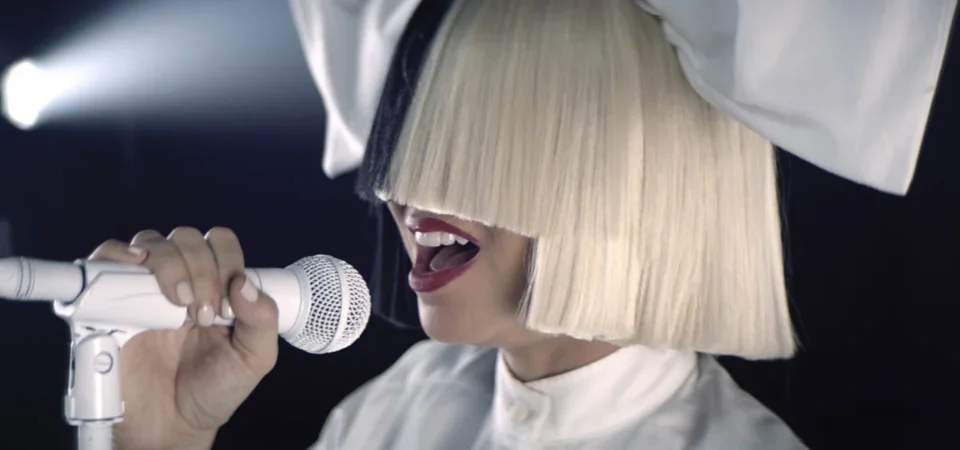
The Architecture of Anonymity: Sia’s ‘Nostalgic for the Present’ and the Evolution of the Faceless Pop Star

The landscape of modern celebrity is built upon a foundation of hyper-visibility. In an era where social media demands constant intimacy and "behind-the-scenes" access, the act of hiding one’s face is not merely a stylistic choice; it is a radical act of rebellion. The release of Sia: Nostalgic for the Present, a performance film capturing the essence of the singer’s 2016 tour, offers a profound look at one of the most successful experiments in anonymity in pop history.
Originally conceived as a visual companion to her stadium-filling tour, the film—which has seen a limited theatrical revival—serves as both a "greatest hits" compendium and a psychological study of an artist who chose to become a vessel rather than a brand. By examining Sia’s trajectory alongside contemporaries like Lady Gaga, and analyzing the symbiotic relationship she shared with dancers like Maddie Ziegler, we can better understand the unique, albeit polarizing, legacy of the "camera-shy exhibitionist."
Main Facts: The Concept and Execution of ‘Nostalgic for the Present’
Sia: Nostalgic for the Present is a 75-minute cinematic experience that blurs the lines between a concert film and a series of high-concept music videos. Directed and curated to reflect the aesthetic of her 2016 tour, the film presents a unique staging: Sia herself remains stationary at stage left, perched on a platform, almost entirely obscured. Her signature wig—a blunt, oversized bob divided into half-blonde and half-black—serves as a curtain between her and the audience.
The film’s primary focus is not the singer, but the interpretive dancers who manifest her internal emotional states on stage. Chief among them is Maddie Ziegler, the then-14-year-old prodigy who became the physical avatar for Sia’s voice. The film features a series of vignettes, some featuring Hollywood heavyweights like Kristen Wiig, Paul Dano, Ben Mendelsohn, and Gaby Hoffmann. These actors appear in pre-recorded segments that were projected onto massive screens during the live performances, while live dancers mirrored their movements in real-time.
The setlist comprises Sia’s most formidable anthems, including "Chandelier," "Elastic Heart," "Cheap Thrills," "Titanium," and "The Greatest." Each performance is treated as a self-contained piece of performance art, choreographed by Ryan Heffington, whose "ugly-pretty" style of movement redefined pop choreography in the 2010s.
Chronology: The Long Road to Enigmatic Superstardom
To understand the weight of Nostalgic for the Present, one must look at the unconventional timeline of Sia Furler’s career. Unlike many of her peers who found fame in their teens, Sia’s ascent was a slow burn that spanned decades and continents.
The Australian Roots and Indie Success (1990s – 2004)
Sia began her career in the mid-90s in the Adelaide acid jazz scene with the band Crisp. After moving to London, she became a background vocalist for Jamiroquai and eventually a lead singer for the downtempo group Zero 7. Her early solo work, such as the 2004 album Colour the Small One, was characterized by intimate, jazz-inflected folk. It was during this period that "Breathe Me" became a cult hit, famously soundtracking the series finale of HBO’s Six Feet Under.
The Breaking Point and the Songwriting Pivot (2005 – 2013)
As her solo fame grew, Sia’s mental health and struggles with addiction intensified. The pressure of being a "front-facing" celebrity led to a breakdown, prompting her to "retire" from being a performer. She pivoted to songwriting for other artists, becoming the "hitmaker for hire" for icons like Rihanna ("Diamonds"), Beyoncé ("Pretty Hurts"), and David Guetta ("Titanium"). It was during this era that she realized she could dominate the charts without ever showing her face.
The Era of the Wig (2014 – 2017)
The release of 1000 Forms of Fear in 2014 marked the birth of the "faceless" Sia. Refusing to appear in her own music videos or show her face on television, she utilized Maddie Ziegler and the iconic oversized wig to create a buffer between her private life and her public persona. The 2016 Nostalgic for the Present tour, captured in the current film, was the culmination of this conceptual era—a period where Sia was arguably the most famous person in the world who could still walk through a grocery store unrecognized.
Supporting Data: The Mechanics of the "Vessel" Aesthetic
The film highlights a specific psychological phenomenon: how anonymity can actually amplify the emotional resonance of music. In Nostalgic for the Present, Sia’s physical stillness contrasts sharply with the "gymnastic aggression" of the dancers.
The Power of the "Abstract Figure"
By standing still, Sia becomes what critics call an "abstract figure." Because the audience cannot see her eyes or facial expressions, they are forced to project their own emotions onto the performance. Her voice—a raspy, powerful instrument reminiscent of Amy Winehouse but polished with the synth-pop sheen of Giorgio Moroder—functions as the "force" while the dancers provide the "action."
The Ziegler Factor
Maddie Ziegler’s contribution cannot be overstated. In the film, Ziegler’s facial contortions and frantic movements serve as the emotional shorthand for the lyrics. Data from the 2010s music video era shows that "Chandelier" garnered over 2.5 billion views, a feat attributed largely to the viral nature of Ziegler’s performance. In the film, Ziegler is described as a "mime crossed with Daryl Hannah in Blade Runner," utilizing a "Sid Vicious-style" sneer to convey the ferocity of Sia’s anthems of survival.
The Visual Uniformity
The film emphasizes a "talismanic" uniformity. Every person involved in the production—from the A-list actors in the videos to the offstage crew—wears a version of the black-and-white wig. This creates a "hive mind" aesthetic, suggesting that "Sia" is not a person, but a collective emotional experience.
Official Responses and Critical Reception
The reception of Sia’s faceless era, and the Nostalgic for the Present film specifically, has been a mix of awe and skepticism.
The "Gaga" Comparison
Early in her career, Lady Gaga (Stefani Germanotta) used masks and avant-garde fashion to create an "aura of mystery." However, as the industry noted, Gaga’s masks were a form of "elaborate camouflage" designed to draw attention to her character. Critics have pointed out that while Gaga eventually "unmasked" to reveal the actress and jazz singer underneath, Sia’s hiding felt more like a defensive crouch.
Industry Critique of the "Nostalgia Reel"
While the film is being celebrated by fans, some critics argue that it feels "severely lacking in the shock of the new." Because the film is nearly a decade old, the transgressive nature of the "faceless performer" has been somewhat diluted by time. In the 2010s, Sia’s refusal to be seen was a headline-grabbing mystery; in the 2020s, it is viewed as a "2010s nostalgia reel," a relic of a specific moment in pop culture history.
The Ethics of the Avatar
There has also been significant discourse regarding Sia’s use of Ziegler. While the collaboration was immensely successful, some industry insiders questioned the pressure placed on a child performer to carry the physical and emotional weight of an adult’s career. Sia has consistently defended the relationship, describing Ziegler as "part of her family," but the film’s portrayal of Ziegler’s "facial contortions" and "psycho flourishes" remains a point of intense analysis for those studying child stardom.
Implications: The Paradox of the Camera-Shy Exhibitionist
The core tension of Nostalgic for the Present lies in Sia’s "primal ambivalence" toward fame. She is a "camera-shy exhibitionist"—someone who clearly desires for her voice to be heard by millions but lacks the constitution to be stared at. This paradox has significant implications for the future of the music industry.
The "Wall" of Anonymity
The film prompts the question: Why did Sia’s momentum seem to hit a wall after 2017? While her hits remain sublime—particularly "Chandelier," which has found a second life as a theatrical centerpiece in Broadway’s Moulin Rouge!—her solo output has slowed. The implication is that pop stardom, at its highest level, requires a "primal desire to put oneself out there." By remaining behind the wig, Sia may have reached the natural limit of how far an "absent" star can go in an industry that increasingly trades on personal brand and authenticity.
The Path to a Comeback
However, the enduring power of her music suggests that a "ferocious comeback" is entirely possible. The film reminds us that Sia’s gift for crafting "shiny and fierce" dance hooks is nearly unparalleled. Just as Lady Gaga successfully transitioned from the "masked supernova" to a respected Oscar-winning actress and vocalist, Sia possesses the raw talent to reinvent herself.
The film concludes with the sense that Sia does not necessarily need to "come out from behind the wig" to find success again. In a world of AI-generated influencers and digital avatars, her brand of "human facelessness" might actually be more relevant than ever. The only requirement is that she rouse herself to create something as "glorious as titanium" once more.
Conclusion
Sia: Nostalgic for the Present is more than a concert film; it is a document of a high-wire act. It captures a moment when a woman with a generational voice decided that she didn’t want to be a face, and in doing so, she became a mirror for her audience. Whether she remains a figure of the 2010s or evolves into a new era of mystery, the film stands as a testament to the power of the song over the celebrity, and the art of being present while remaining entirely hidden.