The Rodent in the Room: How the Richard Gere Rumor Became Hollywood’s Original Meme

For over four decades, one salacious, unproven, and frankly bizarre urban legend has haunted the periphery of Hollywood’s collective consciousness. Mention the name "Richard Gere" in certain circles, and inevitably, someone will whisper about a rodent, a hospital emergency room, and a tabloid-fueled nightmare that has defied every attempt at debunking. It is the definitive Hollywood rumor—a tale so sticky, so absurd, and so persistent that it has outlived the careers of many of its contemporaries.
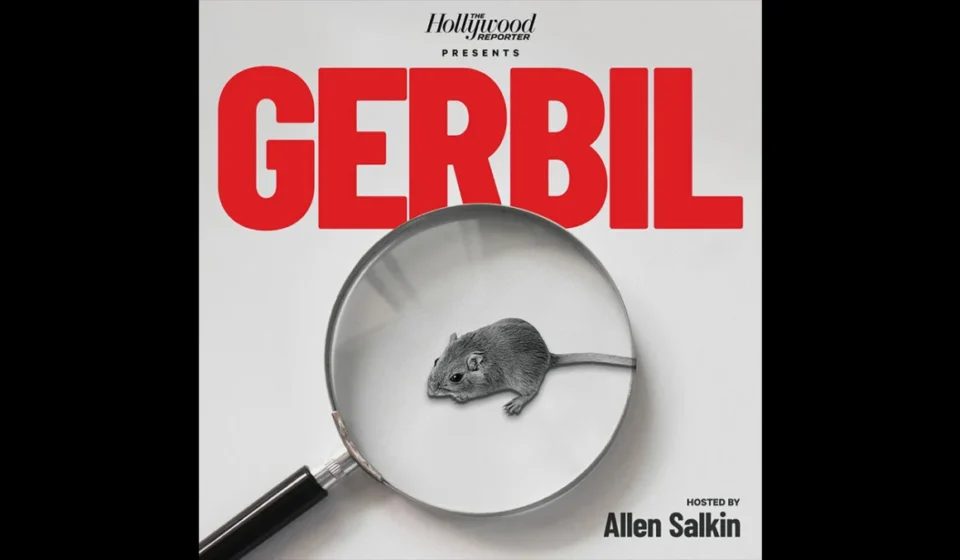
Now, a new 12-episode podcast series from The Hollywood Reporter, titled Gerbil, seeks to peel back the layers of this cultural phenomenon. Hosted by veteran journalist Allen Salkin, the series does not merely attempt to prove or disprove the legend—which remains entirely unsubstantiated—but instead treats the story as a primary artifact of American media history. By examining how this rumor took root long before the internet age, Gerbil offers a masterclass in how misinformation functions as a mirror for our societal anxieties.
The Anatomy of an Urban Legend: Main Facts
The core of the legend is deceptively simple: a story involving a famous movie star, a small mammal, and an unfortunate medical emergency. Despite the lack of a single shred of credible evidence, the story became a ubiquitous fixture of late-20th-century pop culture.
In Gerbil, Salkin approaches the story not as a gossip column investigation, but as a sociological deep dive. The podcast posits that the endurance of the rumor is not a testament to its truth, but to its utility. As Salkin noted in a recent THR column, the gerbil story is the "most essential rumor in Hollywood history" because it captures the intersection of celebrity, voyeurism, and the irrational fears of the public.
The podcast series is produced in partnership with Aliza Rosen of AYR Media, a powerhouse in the true-crime and investigative podcast space. Together, they have assembled a roster of high-profile interviewees—including sex columnist Dan Savage, film director Mike Figgis, and cultural critics like Andrew Sullivan—to analyze why this specific story managed to survive for 40 years without ever dying a natural death.
A Chronology of Contagion: The Pre-Internet Meme
To understand the longevity of the Richard Gere rumor, one must understand the environment in which it was born. In the early 1980s, the "tabloid industrial complex" operated on a different frequency. Without the rapid-fire fact-checking capabilities of social media, urban legends traveled through schoolyards, office breakrooms, and late-night television monologues like a contagion.
The 1980s: The Primordial Soup
The legend emerged during the early years of Gere’s rise to superstardom. He was the quintessential heartthrob, a man whose image was defined by a mix of brooding intensity and traditional masculinity. The rumor served as a disruptive force against that image. By attaching a grotesque, emasculating, and private humiliation to a public icon, the rumor functioned as a leveling mechanism—a way for the public to "bring down" a star who seemed untouchable.
The 1990s and 2000s: Institutionalization
As the internet began to permeate households in the 1990s, the rumor did not fade; it found a new, digital life. It became one of the first "memes" in the modern sense of the word—a piece of information that replicated itself across digital forums, email chains, and early message boards. During this era, the story became so entrenched that it was treated as a "known fact" by those unfamiliar with the rigorous standards of journalism, despite the fact that no hospital records, no eyewitness testimony, and no corroborating evidence ever surfaced.
Supporting Data: Why We Believe the Unbelievable
Why does a lie survive when the truth is so much more boring? The podcast explores the psychological and cultural underpinnings of why audiences are so willing to suspend disbelief.
The Role of Celebrity
Professor Fred Turner, a communications expert at Stanford University, provides one of the most incisive takeaways from the series. "This is Richard Gere, an American icon," Turner observes. "And so in some sense, the gerbil is not just up Richard Gere’s ass, it’s up America’s ass."
This perspective suggests that the rumor is a vessel for American anxieties regarding sex, class, and the nature of fame. By projecting our own "nightmares and dreams" onto celebrities, we turn them into characters in a drama that we control. The rumor is a narrative device, a way of making sense of the untouchable nature of Hollywood royalty.
Expert Analysis
The podcast features a multidisciplinary approach to the legend:
- Journalists: Mark Rozzo and Michael Gross provide context on the media landscape of the 1980s and 90s, explaining how gossip was codified into news.
- Cultural Commentators: Figures like Andrew Sullivan and Karina Longworth discuss the intersection of personal reputation and public myth-making.
- Creative Voices: Directors and podcasters examine the narrative structure of the story itself, noting how its "gross-out" factor helped it stick in the cultural memory.
Official Responses and the Silence of the Star
For the vast majority of his career, Richard Gere has maintained a policy of dignified silence regarding the rumor. This is a common, and often calculated, strategy in crisis management. Engaging with an urban legend often provides it with more oxygen; to deny it is to grant it legitimacy.
However, the silence of the subject has, in some perverse way, fueled the rumor’s longevity. In the absence of a vigorous, public rebuttal, the public filled the void with speculation. The podcast investigates this silence, not as an admission of guilt, but as a fascinating case study in how celebrities navigate the toxic environment of tabloid fame. It highlights the power imbalance between an individual and the collective, voracious appetite of the public for "secret" knowledge about the rich and famous.
The Implications: Lessons for the Digital Age
The Gerbil podcast is timely, arriving in an era where misinformation is no longer just a source of amusement, but a systemic threat to democratic discourse. By examining a "silly" rumor from the 1980s, the series illuminates the mechanisms of modern disinformation.
The "Gerbilization" of Information
We live in a world where the speed of information often outpaces the truth. The Richard Gere story was an analog version of what we see today on social media: a story that feels "true" to the audience, and therefore, the facts become secondary. The podcast serves as a warning: when we allow our biases and our desire for sensation to override our critical thinking, we create monsters that are difficult to slay.
A Legacy of Resilience
As the series highlights, the rumor is not about the gerbil. It is about the evolution of the American myth. It is about how we categorize our heroes and villains, and how we use stories to process our own fears. By interviewing a diverse range of voices, Salkin and his team demonstrate that the rumor has evolved into a "meta-story"—a story about the act of storytelling itself.
Conclusion: Why You Should Listen
Gerbil is not just a podcast for fans of Hollywood history; it is a vital exploration of the human psyche. It is a reminder that the most persistent lies are those that tell us something about ourselves, rather than something about their subjects.
As the series premieres on September 17, listeners will be invited to look past the punchline and into the mirror. Whether you have heard the rumor a thousand times or are encountering it for the first time, Gerbil promises a deep, analytical, and highly entertaining journey through one of the most enduring enigmas in pop culture.
The series will release its first two episodes on September 17, with subsequent episodes dropping every Thursday across all major platforms, including Apple Podcasts, Spotify, Amazon Music, and iHeart. In a landscape saturated with true-crime podcasts focusing on the macabre, Gerbil offers a refreshing, intellectually rigorous look at a different kind of crime: the long-term, systematic assassination of a man’s reputation by the collective imagination of a nation.