
Hollywood’s Digital Reckoning: Creators Coalition on AI Launches Ambitious Initiative to Define the Future

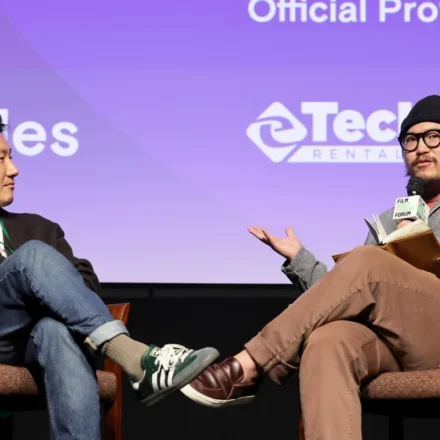
In an industry currently gripped by the existential uncertainty of generative technology, the Hollywood landscape is preparing for a new phase of strategic defense. On Wednesday, the Creators Coalition on AI (CCAI)—a nine-month-old advocacy group spearheaded by industry luminaries including Joseph Gordon-Levitt, Everything Everywhere All At Once co-director Daniel Kwan, and television veteran Ted Tremper—is launching a major public initiative designed to bring order to the technological chaos.
Titled the "Standards & Definitions Project," the initiative aims to move the conversation around artificial intelligence from a state of "nebulous fear" to one of concrete, industry-wide strategy. By providing a standardized glossary of terms and a data-driven visualizer of job displacement risks, the CCAI is attempting to build a foundation upon which creators can advocate for their livelihoods in an increasingly automated era.
The Genesis of the Standards & Definitions Project
The CCAI was born out of a perceived vacuum in the current discourse surrounding AI. While major entertainment guilds—such as SAG-AFTRA and the WGA—have fought historic battles to protect their members, the CCAI operates as a supplementary, cross-disciplinary force. It is a human-centric collective designed to unite the various silos of the entertainment industry, providing a resource that bridges the gap between individual talent, labor unions, and Big Tech.
The project is the culmination of two intensive "conventions" held this summer, which brought together guild-based delegates from eleven distinct creative realms, ranging from directing and sound design to animation, writing, and acting. The goal was to reach a consensus on how to define the role of AI in the creative process.
The result is a web portal that functions as a digital roadmap for the industry. It launches with a comprehensive glossary of approximately 180 terms, alongside an "AI Impact Visualizer" that assesses the vulnerability of over 150 specific creative jobs across 11 key sectors.
Defining the Undefinable: A New Lexicon
One of the primary obstacles in the current AI debate is the lack of a shared vocabulary. When a studio executive, a labor lawyer, and a concept artist discuss "generative content," they are often referring to vastly different concepts.
The CCAI’s new glossary aims to codify these interactions. For instance, the project defines "Human-authored content" as creative work where no generative AI system contributed expressive content, even if technological tools were used for technical tasks like processing, capturing, or distribution. This distinction is crucial for future contractual language and intellectual property claims.
Conversely, the term "AI Digital Performance" is meticulously defined as the application of AI to capture, synthesize, or replicate a performer’s unique attributes—including facial expressions, body movements, biometrics, and voice. By creating these rigorous, agreed-upon definitions, the CCAI is equipping creators with the tools to demand transparency and fair compensation in their individual talent deals and collective bargaining negotiations.
The AI Impact Visualizer: Quantifying the Threat
Perhaps the most provocative aspect of the new portal is the AI Impact Visualizer. The tool utilizes a zero-to-five scale to rank the likelihood of AI role replacement. A score of zero indicates that the technology does not interact with the job, while a five suggests that AI could theoretically perform the entire role independently.
Currently, the database covers 150 job categories. While many of these are currently marked as "recommended knowledge"—a status indicating that there is not yet sufficient data to draw a definitive conclusion—the project is designed to be dynamic.
Ted Tremper, who produced The AI Doc earlier this year, explains that the goal is not to predict the future with absolute certainty, but to establish "ground truth." He acknowledges that the scale has limitations—for example, a hairdresser might score a zero on direct replacement, but the role could still be fundamentally altered if a production shifts to entirely virtual sets.
"The purpose of these resources is to take all the things we hear about with regard to AI and establish ground truth," Tremper noted in an interview. "This is not the terminus of what we’re trying to do. But it establishes an ongoing process for people to be able to coordinate."
Implications for Industry and Policy
The implications of the CCAI’s project extend far beyond the soundstages of Burbank and the boardrooms of Silicon Valley. By creating a standardized language, the coalition is making it easier for state and federal lawmakers to draft effective legislation.
As Joseph Gordon-Levitt pointed out in a recent statement, artists and content creators are serving as the "canary in the coal mine" for the broader economy. "Without proper guardrails, AI companies will destroy not only the creative industries, but so many others," Gordon-Levitt stated. "Building those guardrails is ambitious, but it’s possible, and a good first step is making sure we’re all speaking the same language."
The project is already supported by a massive coalition of industry heavyweights, including Judd Apatow, Ava DuVernay, Margot Robbie, and Guillermo del Toro. Their participation signals that the industry is moving toward a unified, albeit cautious, front.
A Living Document for a Rapidly Changing World
The CCAI recognizes that the pace of AI development is blistering, rendering static reports obsolete almost as soon as they are published. To counter this, the group plans to issue major updates to the glossary and the impact data on a quarterly basis.
The initiative also incorporates a crowdsourcing element. A survey portal allows verified Hollywood professionals to input their own experiences and observations regarding how AI is affecting their daily workflows. This, in turn, will allow the CCAI to refine the impact scores and keep the industry informed about which roles are evolving, which are being augmented, and which are under immediate threat of displacement.
Daniel Kwan, whose work on Everything Everywhere All At Once frequently touches upon the surreal nature of modern technology, emphasized the need for transparency in the fight for creators’ rights. "If we’re going to be fighting for transparency, we should also be modeling it," Kwan said. "Let’s build some solutions together—and on our terms."
Conclusion: Toward Collective Agency
As the entertainment industry navigates the most significant disruption since the advent of the internet, the Creators Coalition on AI is betting that clarity is the most potent weapon in the creative arsenal. By moving past the "nebulous fear" that has dominated the headlines, the CCAI is attempting to transform anxiety into institutional agency.
Whether this initiative will succeed in influencing policy or forcing tech companies to the table remains to be seen. However, by providing a common language and a quantitative look at the shifting labor market, the CCAI has taken a significant step toward ensuring that human creativity remains at the center of the cinematic experience. In the age of algorithms, the coalition argues, the most important work is not just writing the stories, but defining the conditions under which those stories can continue to exist.