

Welcome to Trekspertise, a series where we break down the technology, history, details, and decisions that make the Star Trek universe so complex—and so fun.
The premiere of Star Trek: Starfleet Academy in January 2026 marked a watershed moment for the franchise, bringing to the screen a long-gestating concept that had been kicking around the halls of Paramount since the days of producer Harve Bennett in the early 1980s. Despite its premature cancellation—with a second and final season slated for 2027—the series succeeded in demystifying the institution that serves as the bedrock of the Federation. For generations of viewers, the Academy has been a backdrop for heroics, but the logistical reality of attending "Space College" remains one of the most demanding career paths in the galaxy.
The Foundation: An Institution of Elite Standards
Starfleet Academy is far more than a simple university; it is the primary crucible for the officers who command the most advanced starships in the galaxy. First referenced in the original Star Trek pilot "Where No Man Has Gone Before," the Academy is the standard-bearer for Federation excellence.
While the franchise has occasionally highlighted enlisted personnel—engineering chiefs, yeomen, and security specialists who may not hold Academy degrees—the path to the bridge, to command, and to the senior staff is paved exclusively through the Academy’s four-year program. It is the crucible where scientific theory meets moral fortitude, and where the brightest minds from a hundred different worlds are synthesized into a cohesive, disciplined force for exploration and defense.
Chronology: From Concept to Classroom
The journey to an on-screen portrayal of the Academy was a marathon, not a sprint.

- 1980s: Harve Bennett, a driving force behind the Star Trek film franchise, famously pitched a "Starfleet Academy" prequel series to Paramount, imagining a "Star Trek" take on a college drama. While the studio passed at the time, the concept persisted in literary tie-ins and fan speculation for decades.
- The TNG Era: Episodes such as "The First Duty" and "Coming of Age" provided the first concrete look at the academic and psychological rigors of the entrance process, cementing the idea that the Academy was not merely a school, but a life-defining trial.
- The DS9/Voyager Era: Through characters like Nog—the first Ferengi to join Starfleet—the franchise explored the social barriers and the sheer determination required for non-human, non-traditional candidates to integrate into the rigid, meritocratic structure of the Academy.
- 2026: Star Trek: Starfleet Academy finally brought the experience to the forefront, showcasing a post-reconstruction era where the institution was forced to adapt to a fragmented galaxy, offering a modern perspective on the classic "Academy" trope.
The Entrance Gauntlet: More Than Just Academics
Applying to Starfleet Academy is a process designed to filter out anyone who lacks the psychological resilience required for deep-space service. As depicted in the Star Trek: The Next Generation episode "Coming of Age," the admissions process is a multi-phased endeavor.
The academic component is demanding enough, covering a curriculum that includes astrophysics, warp field theory, xenolinguistics, probability mechanics, and interspecies ethics. However, the true test is psychological. Candidates are subjected to evaluations that measure their character under fire.
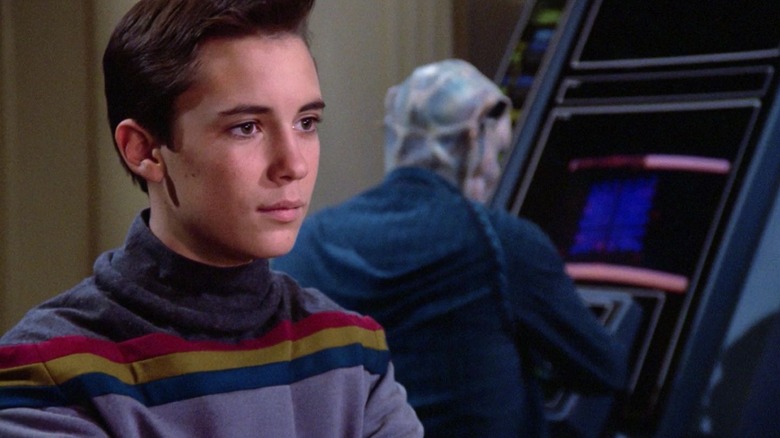
In the infamous "Coming of Age" scenario, applicants were subjected to a staged emergency—a simulated disaster involving casualties. The intent was not to test technical knowledge, but to observe split-second moral decision-making. These simulations are designed to reveal the candidate’s innate ability to prioritize life and manage the trauma of command. As young Wesley Crusher learned, the Academy is not looking for the student who answers the most questions correctly; they are looking for the leader who can remain composed when the answer is impossible to find.
Supporting Data: The Curriculum of the Stars
The breadth of knowledge required at the Academy is staggering. A typical four-year stint includes:
- Core Sciences: Advanced Subspace Geometry, Quantum Mechanics, and Stellar Cartography.
- Humanities and Diplomacy: Comparative Xenomythology, Federation Law, and Advanced Interspecies Ethics.
- Command and Strategy: Tactical Analysis, Warp Engineering, and the infamous Kobayashi Maru—the ultimate test of character in a no-win scenario.
The Kobayashi Maru remains the most famous, or perhaps infamous, component of the curriculum. Designed as a simulation of an unwinnable rescue mission, it is not a test of technical skill but a test of how a cadet handles the concept of defeat. It is a defining moment for any future captain, designed to break the ego and expose the core of the officer’s decision-making process.

Implications: The Academy as a Society
The implications of the Academy’s influence on the Federation are profound. By centralizing the training of its officers in San Francisco, Starfleet ensures a standardized, albeit rigid, culture that transcends planetary origins.
However, the 32nd-century setting of the recent series highlighted how the Academy must remain fluid. During the Federation’s reconstruction, the rigid, traditional admissions process became a luxury the organization could not always afford. The school had to pivot, focusing more on the immediate needs of a crumbling society than the bureaucratic gatekeeping of the 24th century. This evolution reflects the broader theme of the franchise: that while the rules of the Academy are strict, the mission of Starfleet—to seek out new life and protect the weak—is always subject to the shifting realities of the universe.
Official Responses and Educational Philosophy
While the Academy is a fictional construct, its educational philosophy mirrors real-world military academies like West Point or the Naval Academy, albeit with a focus on "exploration" over "conquest."
The showrunners of the 2026 series noted in interviews that the goal of the show was to emphasize the humanity of the cadets. By showcasing the transition from civilian to officer, the series aimed to bridge the gap between the high-stakes drama of bridge life and the relatable, often messy, experience of young adulthood.
"We wanted to see the people behind the uniform," said one production lead during the series launch. "Before they are heroes making impossible choices in the Delta Quadrant, they are students dealing with competition, identity, and the weight of their own potential."
Conclusion: The Long Road to Ensign
Upon completing four years of rigorous study, a cadet graduates and is granted the rank of Ensign. But the education does not stop there. The path forward branches out into specialized tracks: medical school for ship doctors, tactical school for security officers, or command school for those aspiring to the center seat.
Starfleet Academy remains a symbol of the ultimate meritocracy. It is a place where a Ferengi can learn the ethics of the Federation, where a human can study the myths of a hundred species, and where the next generation of explorers is forged. While the school doors may only open once a year, and the testing process remains a gauntlet that breaks even the brightest, the Academy continues to be the light that guides the Federation into the unknown. It is, and always will be, the first step into a larger world.