
Following a 2026 box office landscape defined by visionary horror hits like Obsession and Backrooms, the genre has cemented itself as the primary engine for creative disruption in Hollywood. As audiences continue to flock to theaters for visceral, high-concept thrills, industry leaders and independent auteurs are looking toward the future, asking not just what will scare us next, but how the mechanics of fear are evolving in an increasingly digital and hyper-connected age.
At the most recent Fantastic Fest in Austin, Texas, a panel of industry titans and rising directors gathered to dissect the state of the genre. The conversation, which touched on the business of terror, the changing nature of fandom, and the future of artistic risk-taking, provided a roadmap for how horror will continue to dominate the cultural conversation in the coming years.
The Panelists: A Convergence of Visionaries
The discussion featured a formidable cross-section of the horror ecosystem, representing both the institutional powerhouses fueling the genre and the creative forces driving its evolution.
The panel included:
- Emily Gotto: SVP of Acquisitions and Production at Shudder.
- Nick Lazo: SVP of Development and Production at Shudder.
- Angel Melanson: Director of Programming at Shudder.
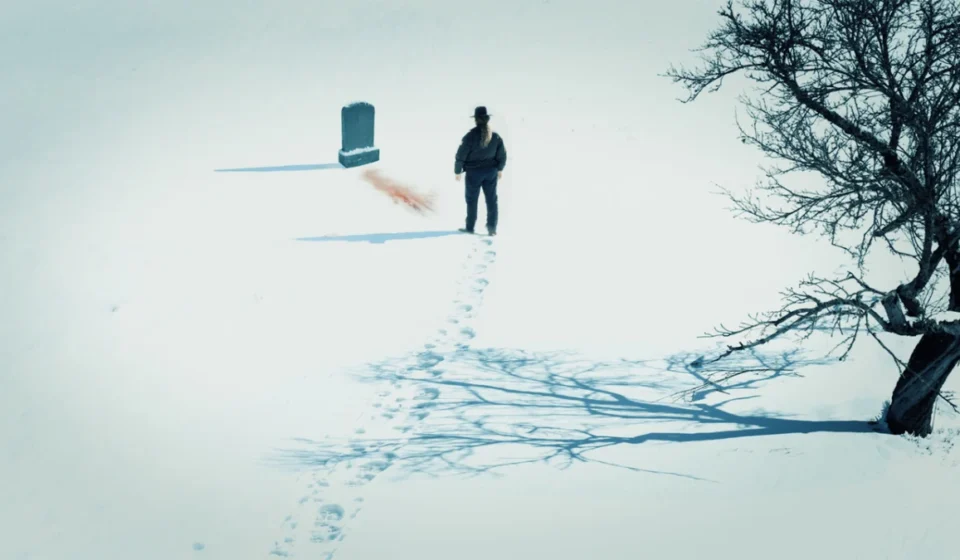
- Jordan Downey: Director of The Cycle (debuted at Fantastic Fest) and a featured segment director for Shudder’s V/H/S/Beyond.
- Toby Poser: Filmmaker and member of the Adams Family, creators of The Glorious Dead, recently acquired by Shudder.
The "Sandbox" Philosophy: Why Horror Thrives
To understand the current boom, one must first understand the unique versatility of the genre. Unlike the rigid constraints of a period drama or a high-budget franchise blockbuster, horror functions as a "sandbox"—a playground where filmmakers are encouraged to mix and match tones, genres, and experimental forms.
Nick Lazo noted that the genre’s inherent flexibility is its greatest strength. "I think you can inherently take risks with scary material because you can have really deep conversations about dramatic things that happen in your life, and wrap them in this genre cloth that is accessible, fun, and cool," Lazo explained.
Lazo emphasized that horror is the most viable path for emerging filmmakers with limited resources. In a landscape where big-budget CGI spectacles demand massive overhead, horror thrives in the shadows. "When you can say something very scary in a very dark room that doesn’t require a lot of lighting or set design… you’re mitigating your risk automatically just having your budget be a little bit lower," he added.
The Democratization of Terror
The evolution of the genre is inextricably linked to the democratization of film production. As technology has become more accessible, the barrier to entry for horror filmmakers has plummeted, allowing for a surge of diverse, idiosyncratic voices.
Angel Melanson reinforced the idea that horror has no rulebook. "The rules are there are no rules," Melanson stated. "Horror dictates that you can do anything. You wrap fantasy in there, you can throw drama in there, you can have comedy. Everyone is hungry for something that is original, that is new."
Melanson noted that while equipment accessibility is a factor, the audience’s hunger for original concepts is the primary driver. "It’s very accessible. You have strong performances, you have a strong story, and we’re all going to show up for that. Horror is more forgiving than other genres—it’s about the emotional impact, not the budget sheet."
The Next Wave: Authorship Over Subgenre
When the conversation shifted toward predicting the "next big thing" in horror, the panel largely rejected the idea of chasing trends. Emily Gotto, who oversees acquisitions for Shudder, argued that the future of horror will be defined by authorship rather than specific subgenre tropes.
"Everybody loves a monster movie," Gotto said. "But when we talk about originality, we’re talking about authorship. It’s the voice of the filmmaker that is coming forward to talk about something or someone within the genre sandpit."
Gotto emphasized that while trends like folk horror or supernatural slasher flicks may ebb and flow, what makes a film stand out is the "point of view" or the "style of direction." Whether the filmmaker is exploring sociological, anthropological, or deeply personal subject matter, the "next wave" is dictated by the creator’s vision—not by executive mandates. "I don’t think it’s dictated by us as executives," Gotto noted, "or at least I would hope it’s not."
The Feedback Loop: Fans, Critics, and the Creative Process
In the age of social media and platforms like Letterboxd, the relationship between the filmmaker and the audience has become immediate and often confrontational. For creators like Toby Poser, this feedback loop is not a burden but a challenge.
"We’re absolutely listening to what everyone has to say, and we almost take it as a personal challenge to then try something different," Poser explained. She recounted how the production of The Glorious Dead was a reaction to the criticisms levied against their previous work. "Sometimes people will say, ‘Oh, they do a lot of folk horror. They have slow burn.’ It was almost like homework with our newest one. We said, ‘No, let’s set out to really see what we do with a film that takes place over the course of one day with just escalating dread.’"
Jordan Downey echoed this sentiment but offered a word of caution regarding the nature of digital criticism. "It’s somewhat similar to feedback you get on a script or on a cut where you want to listen to it all, but then you try to build a bigger picture," Downey said.
Downey noted that while digital feedback can be valuable, it is often filtered through the lens of "troll culture," which can obscure genuine critique. "I love talking to people right after the screening to hear what they thought. I would also love if someone said, ‘Hey, I didn’t really like this scene.’ You take it all with a grain of salt and ultimately have to filter it through your own filmmaking style."
Implications: The Business of Fear
The implications of this panel’s discussion for the broader industry are clear: horror is no longer a "B-movie" side project; it is the heartbeat of cinema.
- Risk Mitigation: By focusing on lower-budget, high-concept projects, studios can find massive returns on investment. The "sandbox" approach allows for smaller bets that carry the potential for massive viral success.
- Voice-Driven Development: The industry is moving away from assembly-line franchises and toward creator-led projects. The success of Shudder and similar platforms proves that audiences are actively seeking out the specific, often unconventional, voices of auteurs.
- The Digital Reckoning: Filmmakers are learning to navigate the dual-edged sword of internet feedback. By engaging with audiences directly at festivals and social platforms, they are fostering a loyal community that feels invested in their future projects.
Conclusion: The Future is Fearless
As we look past 2026, the horror genre remains in a state of constant, healthy mutation. It is a genre that thrives on the tension between the filmmaker’s artistic intent and the audience’s insatiable appetite for the unknown.
The panel at Fantastic Fest made one thing explicitly clear: the future of horror will not be determined by focus groups or corporate algorithm-based content. It will be determined by the brave, the bold, and the voices willing to descend into the darkest corners of the human experience to bring back something truly original. Whether it is through a monster movie, a psychological thriller, or a genre-bending experiment, the future of cinema is dark, and that is exactly where it needs to be.