
Since the publication of Bram Stoker’s Dracula in 1897, the vampire has served as cinema’s most malleable monster. Whether representing the aristocratic rot of the Old World, the dangers of repressed Victorian sexuality, or the looming existential threats of plague and immigration, the creature is a mirror held up to human anxieties. Yet, few films have utilized this folkloric vessel with as much intellectual rigor and visceral, street-level grit as Abel Ferrara’s 1995 masterpiece, The Addiction.
Thirty years after its release, The Addiction remains an intoxicating, harrowing, and intellectually dense entry in the vampire canon. It is a film that refuses to rely on the "shock and awe" tactics of typical genre fare, opting instead to marinate in the grim, neon-lit anxieties of 1990s New York City. Through the lens of vampirism, Ferrara and screenwriter Nicholas St. John explore the cyclical nature of sin, the mechanics of power, and the devastating, inescapable gravity of addiction.
The Architecture of a Masterpiece: Main Facts
At its core, The Addiction is a philosophical chamber piece disguised as a horror film. It tells the story of Kathleen (Lili Taylor), a philosophy graduate student whose world is upended when she is accosted and bitten by a mysterious woman in a dark alley. Unlike traditional vampire lore, where the victim is an innocent prey, the assailant frames the act as a consensual failure of will. She does not "invite" the vampire in; she fails to tell her to leave.
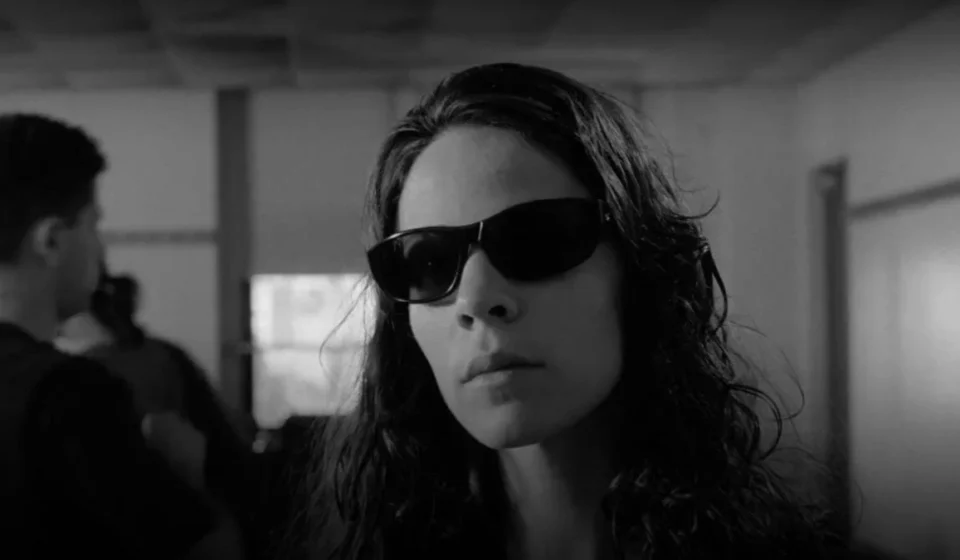
This interaction establishes the film’s central thesis: vampirism is not a curse visited upon us, but an addiction we inherit and perpetuate. The film stars Lili Taylor in a career-defining performance, joined by Christopher Walken in a pivotal, chilling turn as Peina, a mentor-figure vampire who embodies the philosophical weight of their condition. Shot in stark, high-contrast black-and-white, the film is a masterclass in atmosphere, blending German Expressionist sensibilities with the uncompromising, documentary-style rawness of Greenwich Village in the mid-90s.
Chronology of a Descent
The narrative trajectory of The Addiction is a slow-motion car crash of the soul. We first meet Kathleen as a scholar obsessed with the ethics of atrocity—specifically, the Vietnam War and the moral culpability of those who stand by while violence occurs. Her transition into a vampire is not a sudden, monstrous transformation, but a creeping moral erosion.
The Inciting Incident
Following her encounter in the alley, Kathleen experiences a "hunger" that is unmistakably analogous to substance abuse. She begins to view her academic surroundings and the people within them through the cold, predatory eyes of an addict. The film’s pacing is patient; it forces the audience to sit with her discomfort, her withdrawal symptoms, and her eventual surrender to the "fix."

The Mid-Point: The Role of Peina
The introduction of Christopher Walken’s Peina serves as the film’s intellectual pivot. If Kathleen represents the naive initiate, Peina represents the cynical endpoint of the cycle. He has transcended the base hunger and moved into a state of detached, nihilistic observation. His presence shifts the film from a standard horror narrative to a Socratic dialogue on the nature of evil.
The Third Act: The Explosion of Violence
As the film reaches its climax, the slow-burn tension finally ruptures. Kathleen’s internal struggle against her nature gives way to an unapologetic embrace of her bloodlust. The finale is a visceral, chaotic, and deeply unsettling sequence that suggests the only logical conclusion to a life defined by consumption is total destruction.
Supporting Data: The Aesthetic of Decay
The visual language of The Addiction is perhaps its most enduring legacy. Cinematographer Ken Kelsch, a frequent collaborator with Ferrara on films like Bad Lieutenant and The Driller Killer, utilizes the streets of New York as a primary character.
- Cinematographic Style: The decision to shoot in black-and-white serves a dual purpose: it strips away the veneer of modern life, revealing the timeless, primal nature of the film’s themes, and it allows for a chiaroscuro lighting style that mimics the inner darkness of the characters.
- Location Constraints: Filmed over just 23 days around NYU and Greenwich Village, the production lacked the luxury of elaborate sets or hundreds of extras. Ferrara famously remarked on the Arrow 4K commentary, "You think I’m directing these people? We shoot in the street, bro." This lack of artifice provides a "grimy" authenticity that CGI-heavy modern horror rarely achieves.
- Pacing and Tone: The film is notoriously patient. It prioritizes dialogue-heavy scenes exploring the works of Nietzsche, William S. Burroughs, and Jean-Paul Sartre, balanced against short, sharp bursts of disturbing imagery.
Official Responses and Critical Reception
Upon its release, The Addiction was polarizing, as is common with Ferrara’s work. Critics noted its "hallucinatory and rambling quality," with many highlighting the overt allusions to the AIDS crisis and the general malaise of the 1990s. While some found the philosophical tangents to be "pretentious," others heralded the film as a seminal work of independent cinema.
It is frequently compared to modern psychological horror like Rose Glass’s Saint Maud, both films sharing a "quiet, ominous dance toward destruction." In the decades since, the film has undergone a critical reappraisal, now widely recognized as a masterpiece of intellectual horror that refuses to patronize its audience.
Implications: The Vampire as a Mirror for Modernity
The true power of The Addiction lies in how it links the "vampire" to the "addict." By portraying the hunger for blood as a direct parallel to the hunger for narcotics, Ferrara effectively deconstructs the morality of the genre.

The Ethics of Power
The film posits that we are all, in some sense, "collaborators." By ignoring the suffering of others, by enabling structures of violence, and by indulging our own destructive appetites, we become like the vampire: parasites who exist by draining the life-force of those around us.
The Legacy of the 90s
The inclusion of real-world imagery—spliced shots of historical atrocities, Vietnam, and the decaying urban landscape—anchors the film in a very specific, painful reality. It suggests that the monsters are not hiding in the shadows; they are the result of the systemic failures of our society. The film’s "train of consciousness" reflection on power and destruction remains startlingly relevant today, as we grapple with modern crises of global instability and individual isolation.
Conclusion: Why It Matters
The Addiction is a film that demands multiple viewings. Its layers are so intricately woven that it never feels like a single idea is secondary or half-baked. Whether you are watching it for the electrifying performance by Lili Taylor, the philosophical musings of Christopher Walken, or the haunting, raw cinematography of Ken Kelsch, the film leaves a mark.
It is a rare piece of art that makes you "wonder and wince" in equal measure. In an era of horror cinema dominated by jump scares and predictable tropes, The Addiction stands as a reminder of what the genre can achieve when it is allowed to be messy, intellectual, and deeply, painfully human. For those looking to experience this haunting descent, the film is currently available to stream for free on Plex—a fittingly accessible portal into a film that explores the price of consumption.