Beyond the Island: Why Tina Louise’s ‘Day of the Outlaw’ is a Masterpiece of Cinematic Desolation

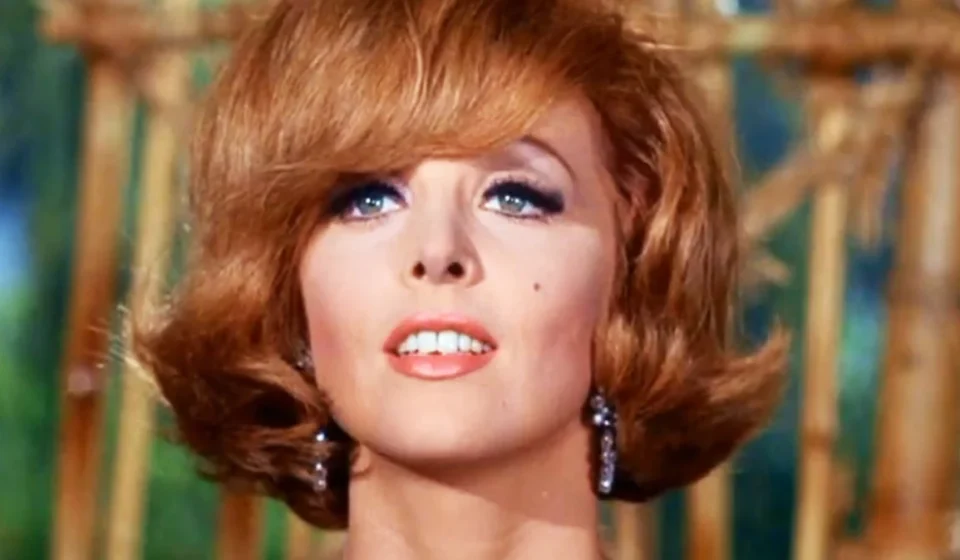
For millions of television viewers, Tina Louise will forever be synonymous with the glamour and wit of Ginger Grant, the movie-star castaway of CBS’s iconic sitcom Gilligan’s Island. However, before she was trading quips with the Skipper and navigating the comedic perils of a deserted tropical paradise, Louise was cutting her teeth in the gritty, high-stakes world of 1950s cinema. Among her early filmography, one title stands out as a stark, haunting departure from the Technicolor cheer of her later career: the 1959 Western Day of the Outlaw.
Directed by the visionary Andre de Toth, Day of the Outlaw is not merely a "Western." It is a claustrophobic psychological thriller disguised as a frontier drama. For genre enthusiasts and film historians alike, it remains a vital, if underappreciated, piece of American cinema—a film that trades the dusty heat of the desert for the suffocating, freezing silence of a Wyoming winter.
The Genesis of a Wintry Western
The late 1950s represented a unique juncture in Hollywood history. The traditional Western was beginning to transition into the "revisionist" era, where morality was no longer binary and the environment itself became an antagonist. Into this landscape stepped Andre de Toth, a Hungarian-born director who had already made a name for himself with the 1953 3D horror classic House of Wax and a series of hard-boiled noir films.
De Toth was a filmmaker who thrived on tension. Having directed legends such as Joel McCrea, Gary Cooper, and Kirk Douglas, he possessed an uncanny ability to strip away the romanticism of the Old West. When he approached Day of the Outlaw, he wasn’t interested in the standard "shoot-’em-up" formula that dominated the era’s television lineups. Instead, he sought to craft, in his own words, "a story of tension and fear, survival in a prison of snow."
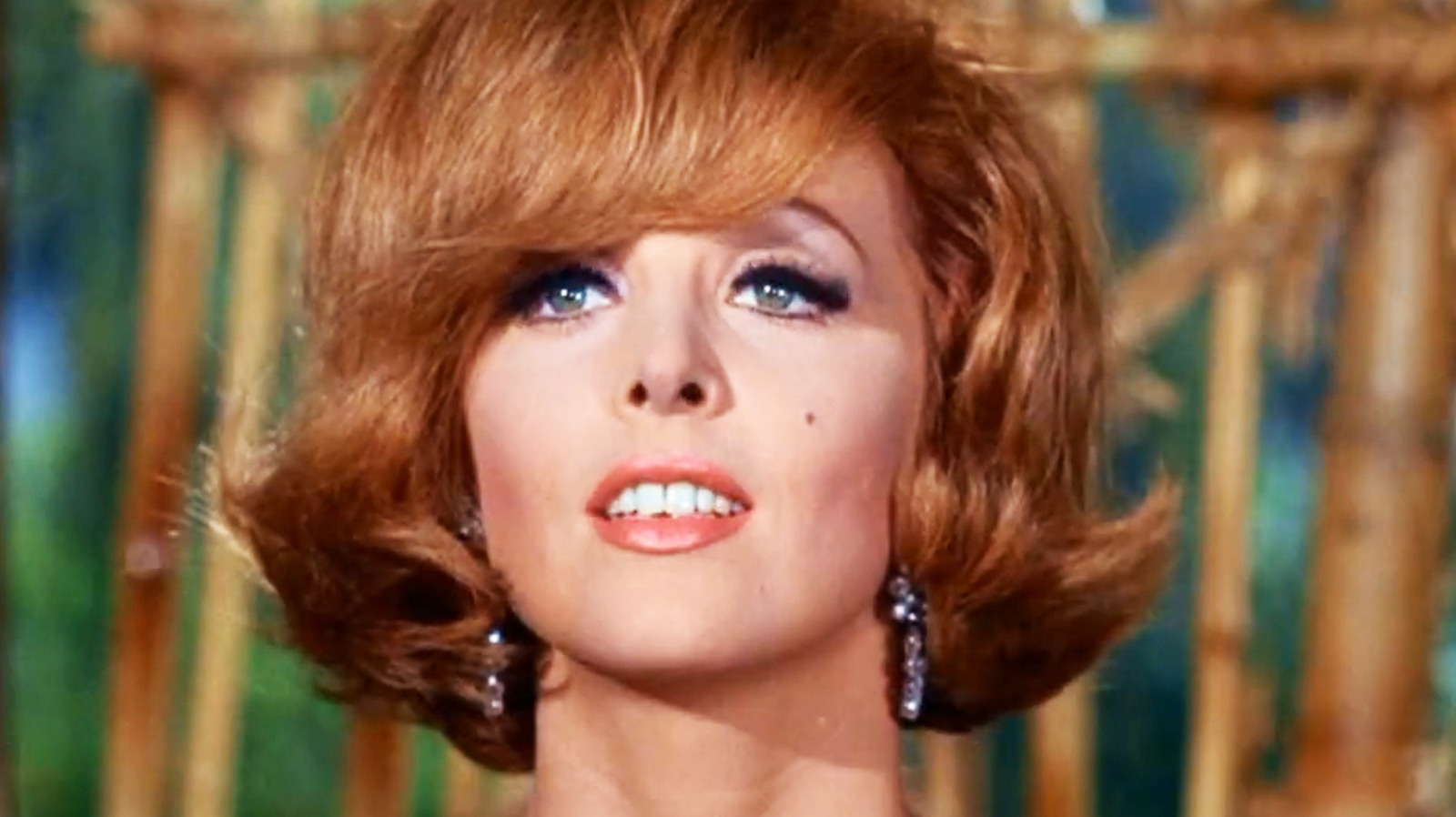
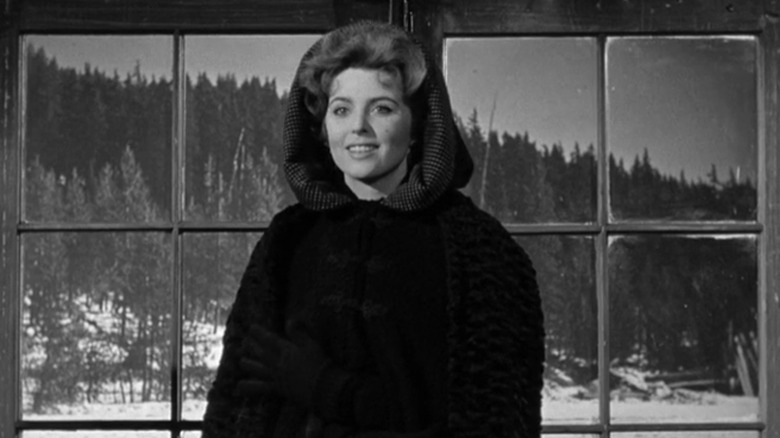
For Tina Louise, who had only recently debuted in 1958’s God’s Little Acre, the production offered a challenging environment far removed from the tropical sunshine she would later call home. The film was shot on location, capturing the harsh, unforgiving beauty of the Oregon wilderness, which doubled for the brutal climate of the fictionalized Wyoming territory.
A Narrative of Moral Ambiguity
The plot of Day of the Outlaw—based on the 1955 novel by Lee Edwin Wells—eschews the typical hero-versus-villain dichotomy. The story centers on Blaise Starrett (played with a simmering, jagged intensity by Robert Ryan), a hardened cattleman who runs his domain with an iron fist. Starrett is an archetypal anti-hero; he is fiercely protective of his territory and holds a deep-seated resentment toward homesteaders, specifically Hal Crane (Alan Marshal), who has begun installing barbed wire to fence off the open range.
The conflict is deeply personal. Adding a layer of psychological complexity is the presence of Helen Crane, played by Tina Louise. Helen is not merely a damsel in distress; she is a woman caught between her past connection to Starrett and her present life with his rival. The love triangle provides the human friction that drives the film’s first act, but the arrival of a gang of outlaws led by the wounded ex-Union captain Jack Bruhn (played by Burl Ives) forces a complete shift in the narrative.
When the outlaws hold the residents of Bitters, Wyoming, hostage, the film transforms into a study of group dynamics under duress. The "prison of snow" acts as a pressure cooker, stripping away the social facades of the townsfolk and exposing the raw, primal instincts of both the captives and their captors.
Chronology of Production and Reception
- 1955: Lee Edwin Wells publishes the novel Day of the Outlaw, providing the blueprint for the film’s tense, character-driven narrative.
- 1958: Tina Louise makes her auspicious screen debut in God’s Little Acre, quickly marking her as a rising star in Hollywood.
- 1959: Day of the Outlaw is released by United Artists. Despite its innovative cinematography and taut pacing, it struggles to find a massive mainstream audience, overshadowed by the more conventional Westerns of the day.
- 1964: Tina Louise secures the role of Ginger Grant in Gilligan’s Island after the original pilot is retooled, cementing her place in pop culture history.
- Post-1990s: Critical re-evaluation of the film begins, with historians identifying it as a precursor to the darker, more psychological Westerns of the 1960s and 70s.
The Director’s Vision: A Study in Isolation
One of the most compelling aspects of the film is the dialogue between the director and the studio. As documented in Anthony Slide’s De Toth on De Toth, the director was frequently at odds with United Artists over the film’s tone. The studio, accustomed to high-action adventures, could not grasp the existential dread de Toth was attempting to capture.
"Is it worse being the jailer, instead of the prisoner?" de Toth famously mused. This philosophical inquiry permeates every frame of the movie. The snowy landscape isn’t just a backdrop; it is a manifestation of the characters’ internal states. The "white silence" of the Wyoming winter forces the characters to confront their own mortality and the thin veneer of civilization that separates them from the savagery of their situation.
The Significance of Tina Louise’s Performance
In the context of Tina Louise’s career, Day of the Outlaw is arguably one of her most significant early performances. It required a level of dramatic restraint that would eventually define her more serious work, yet it is often overlooked in favor of her later comedic success.
Her performance as Helen Crane is understated and deeply empathetic. She manages to convey the exhaustion and fear of a woman caught in the middle of a masculine power struggle without resorting to tropes. It is a testament to her versatility; whereas Ginger Grant required the "movie star" persona to be turned up to eleven, Helen Crane required a grounded, visceral vulnerability that holds its own against titans like Robert Ryan and Burl Ives.
Implications for the Western Genre
Day of the Outlaw occupies a vital space in the evolution of the American Western. It bridges the gap between the traditional, mythic frontier stories of the early 1950s and the nihilistic, revisionist Westerns that would define the late 1960s, such as those by Sam Peckinpah.
The film’s influence can be seen in the way it prioritizes atmosphere over action. By focusing on the psychological erosion of a community, it paved the way for future directors to explore the "adult Western," a genre that treated the frontier not as a place of endless possibility, but as a site of moral complexity and physical endurance.
Why You Should Watch It Today
In an era where streaming services have made classic cinema more accessible than ever, Day of the Outlaw is a mandatory watch for any genre enthusiast. It is a masterclass in tension, featuring a performance from Tina Louise that proves she was always a far more capable dramatic actor than the sitcom format allowed her to show.
The film is currently available to stream for free on platforms like Tubi, offering a rare opportunity to witness a forgotten gem of the 1950s. Whether you are a student of film history, a fan of the Western genre, or simply a viewer interested in the early career of a television icon, Day of the Outlaw remains a cold, sharp, and brilliantly executed piece of art that demands to be seen. It is a reminder that even when the world feels like it is closing in—whether by a tropical island or a wall of snow—the human spirit remains the most unpredictable variable of all.