The Architect of Chaos: Deconstructing Leighton Vance’s Original Vision in ‘Dark Matter’ Season 2

Warning: This article contains major spoilers for "Dark Matter" Season 2, Episode 2, "A Perfect World."
The Apple TV+ hit Dark Matter has never been a series content with simple binary conflicts. Based on Blake Crouch’s celebrated novel, the show thrives on the existential vertigo of the multiverse, forcing its characters—and its audience—to confront the infinite versions of themselves. While Season 1 was defined by the cat-and-mouse game between Jason Dessen and his treacherous doppelgänger, "Jason2," the sophomore season is shifting its focus toward a more complex, nuanced antagonist: Leighton Vance.
In the second episode of the new season, "A Perfect World," the narrative pulls back the curtain on the inception of the "Box," providing a long-awaited explanation for the motivations that drove Leighton Vance to unlock the doorway to infinite realities. What was once viewed as the work of a cold, corporate opportunist is now revealed to be something far more complicated: a project born from a genuine, albeit dangerously misguided, altruism.
The Genesis of the Box: A Noble Pursuit Gone Wrong
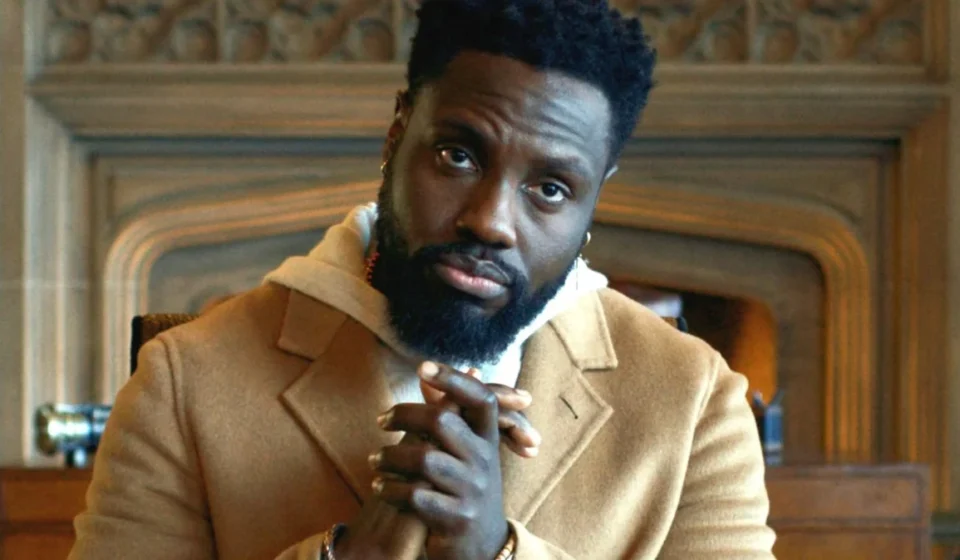
To understand the trajectory of Dark Matter Season 2, one must return to the moment of genesis. The premiere of the new season didn’t just move the plot forward; it demanded a historical reckoning with the character of Leighton Vance, portrayed with chilling intensity by Dayo Okeniyi.
During a pivotal flashback sequence, the audience is transported to the early days of Velocity Labs. Here, we see a younger, perhaps more idealistic version of the CEO. In this iteration, the Box is not merely a tool for corporate dominance or personal ego—it is a beacon of hope. Leighton’s vision, as articulated in his inaugural speech, was to leverage the technology to traverse the multiverse in search of solutions to humanity’s most pressing existential threats. He sought to identify parallel worlds that had successfully eradicated climate change, cured terminal diseases, solved systemic poverty, and ended the scourge of war.
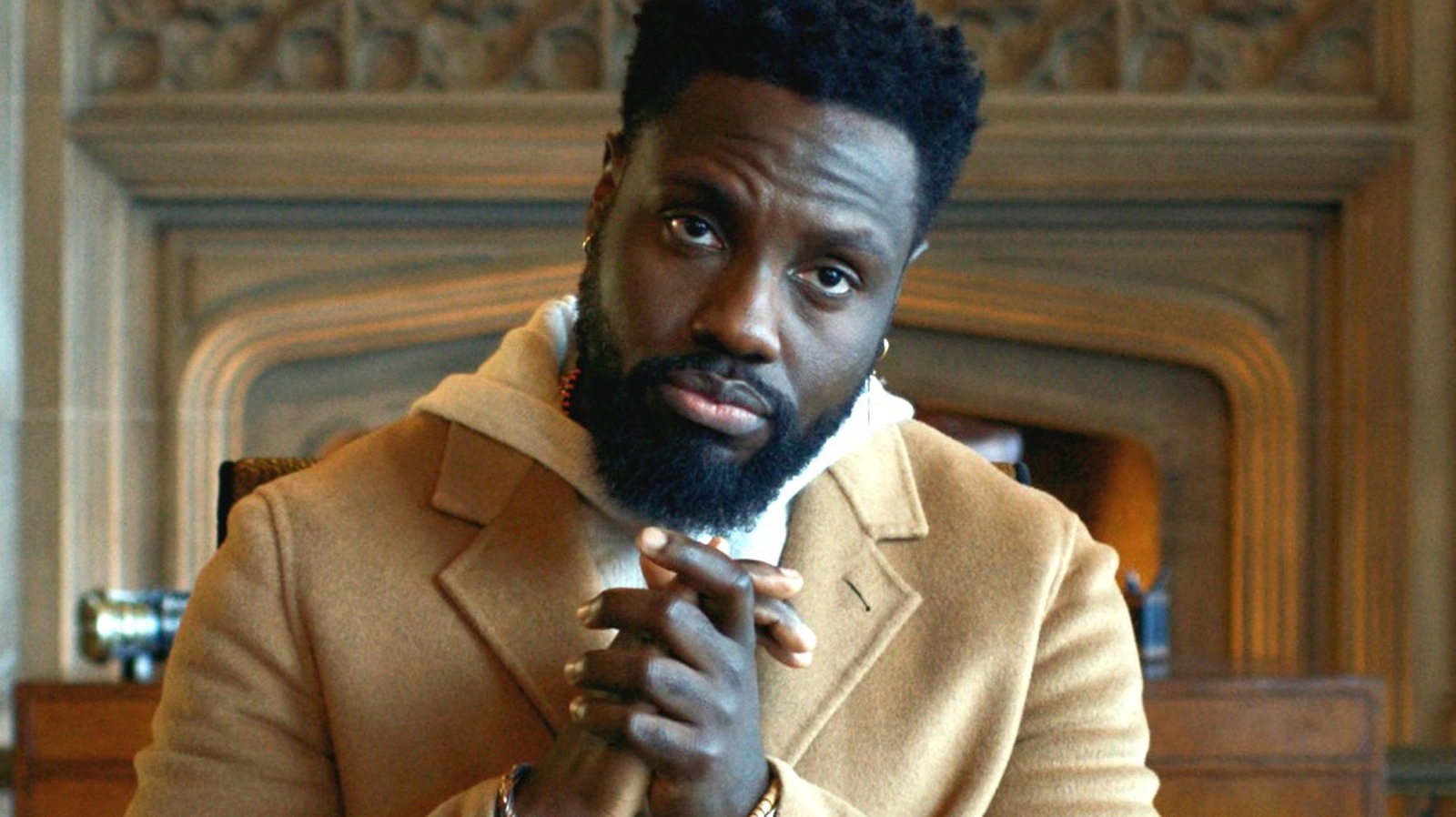
His plan was, in theory, the ultimate humanitarian mission: to harvest the collective wisdom of infinite earths and import those breakthroughs to improve the quality of life in his own reality. It is a sobering, tragic reveal that highlights the central thesis of the series: the road to hell is paved with the best of intentions.
A Chronology of a Downward Spiral
The progression of Leighton Vance’s character arc serves as a microcosm for the dangers of playing god with quantum mechanics.
- The Idealistic Beginning: At the inception of the project, Vance was a visionary leader seeking to solve the "human problem." His focus was on cross-reality data collection for the betterment of society.
- The Ethical Erosion: As the complexity of the Box became apparent, the cost of his ambition began to outweigh the benefits. The isolation of multiverse travel and the inherent corruption of absolute power caused Vance to drift from his original humanitarian goals.
- The Antagonistic Pivot: By the mid-point of Season 1, Vance had transitioned into a primary antagonist. He became obsessed with guarding the secrets of the Box, going so far as to orchestrate the removal of anyone who threatened his control, including the original Jason Dessen and Ryan Holder.
- The Current Re-emergence: In Season 2, we find a multifaceted Vance. He is no longer just a corporate villain but a man attempting to consolidate his influence across dimensions. By recruiting various versions of himself—including a meditation guru known as "Oluko"—he is attempting to institutionalize a technology-trading network that spans the infinite.
Supporting Data: The Complexity of the Multiverse
The expansion of Dark Matter’s lore in Season 2 is significant. By leaning into the "technology-trading network," the show is evolving from a personal drama into a macro-scale exploration of societal architecture.
The introduction of "Oluko" (a name derived from the Yoruba word for "teacher") provides a fascinating counterpoint to the Leighton we know. It suggests that even in a multiverse of infinite Leightons, there is a recurring desire to fix the "original" world. However, this raises a terrifying question: if every version of Leighton is attempting to "save" their version of reality, are they inadvertently contributing to the instability of the Box?
The data suggests that the more Leighton tries to organize the chaos, the more he creates new, unforeseen catastrophes. His past actions—such as abandoning Blair Caplan (Amanda Brugel) to a reality infested with biological horrors—remain a stain on his moral record that no amount of "good intentions" can fully scrub away.
Official Responses and Creative Direction
The shift in Dark Matter’s narrative focus has been a topic of intense debate among the show’s creative team and the fan base. Showrunner Blake Crouch has previously noted that the television adaptation of his novel would provide room for "expansion," allowing for character arcs that the original text could only touch upon.
In recent interviews, members of the production team have hinted that the second season is designed to subvert the expectations of those who view the characters in strict "hero vs. villain" terms. By humanizing Leighton Vance, the show forces the audience to engage in a moral audit. Is he a victim of his own circumstances, or is he a classic tragic figure who lost his way in the pursuit of a utopia that could never exist?
"We wanted to challenge the audience," one writer hinted. "If you saw the potential to end suffering in your world, how far would you go? And at what point does the cost of that transition make you the very thing you sought to destroy?"
Implications: The Potential for Redemption
As we look toward the remainder of Season 2, the most pressing question remains: can Leighton Vance be redeemed?
It is difficult to argue for redemption when one considers the trail of bodies and destroyed lives left in his wake. Yet, Dark Matter has consistently demonstrated a "grey-scale" morality. Even Jason2, who spent the entirety of the first season as a monster, ultimately performed an act of grace that allowed his family to escape his suffocating control. If Jason2 can find a sliver of humanity, is it possible for Leighton to do the same?
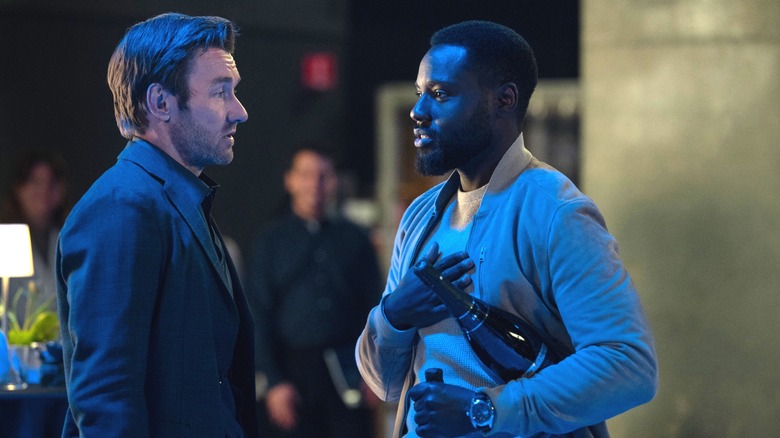
Perhaps the "technology-trading network" is his attempt at atonement. If he can create a collaborative space where versions of himself can share advancements rather than hoarding them, he might be trying to fulfill his original vision, albeit with a much more cynical edge.
However, the implications are dire. If he succeeds, he essentially becomes the master of a pan-dimensional civilization. If he fails, he risks tearing the fabric of the multiverse even further. The tension in Season 2 rests on this uncertainty. Will he continue to be the architect of our heroes’ misery, or will he finally realize that the "perfect world" he seeks is impossible to build on a foundation of control and deception?
Conclusion: Trusting the Process
Dark Matter remains one of the most intellectually demanding shows on streaming television. It requires patience and a willingness to follow the writers down dark, winding paths of quantum philosophy. While it is tempting to demand instant justice for the villains of the story, the show reminds us that human nature is as variable as the infinite realities contained within the Box.
As new episodes continue to arrive every Friday on Apple TV+, the audience is invited to witness the evolution of Leighton Vance. Whether his journey ends in salvation or further destruction, the show has succeeded in turning a secondary villain into one of the most compelling, frustrating, and human figures in modern science fiction. We are no longer just watching a man travel between worlds; we are watching a man grapple with the consequences of playing god, and the outcome remains, like the multiverse itself, beautifully and terrifyingly uncertain.