From Emcee to Auteur: Anna Foglietta’s Bold Directorial Debut Takes Center Stage at Venice

The Transformation on the Lido
The Venice Film Festival, a prestigious bastion of global cinema, often serves as a barometer for the industry’s shifting tides. This year, the spotlight turns to a familiar face in an unfamiliar role. Anna Foglietta, the Italian actress best known to international audiences for her razor-sharp performance in the global phenomenon Perfect Strangers, has returned to the Lido. However, she has traded the role of official emcee—a position she held with poise in 2020—for the director’s chair.
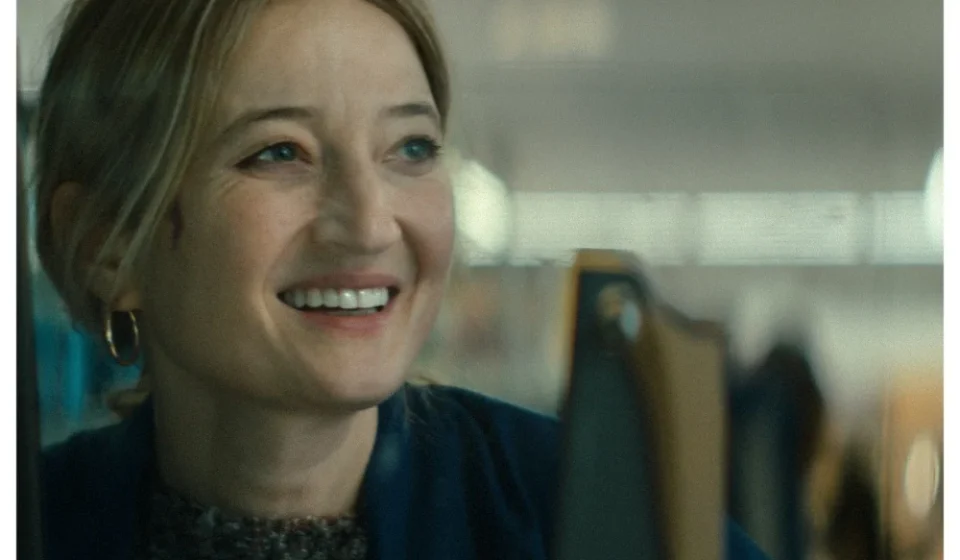
Foglietta’s directorial debut, A Common Story, marks a significant pivot in her career, signaling a transition from being a subject of the lens to its primary architect. The film is a nuanced, intimate marriage drama that explores the fragility of domestic life, anchoring its narrative in the raw, lived-in performances of its leads, most notably Alba Rohrwacher.
The Narrative Arc: A Portrait of Domestic Fissures
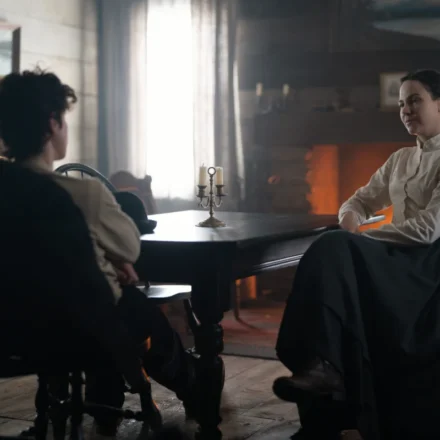
A Common Story centers on the life of Erika, played by Rohrwacher, and her husband, Mauro. The couple inhabits a seemingly idyllic existence in the Italian countryside, characterized by the quiet, predictable rhythm of a life built around their daughter, Irene.
The catalyst for the film’s central conflict is as universal as it is devastating: the departure of a child for university abroad. As the house falls silent, the carefully constructed equilibrium of Erika and Mauro’s relationship begins to splinter. The film eschews the melodramatic for the observational, peeling back the layers of a marriage that has, over the years, become entirely defined by parenthood.
Foglietta’s vision is one of unflinching realism. She captures the quiet desperation of middle age, the physical and emotional toll of the “empty nest,” and the existential crisis that ensues when the primary identity of “parent” is suddenly stripped away.
Production and Industry Backing
The project, which is being handled internationally by the sales agency True Colours, represents a collaborative effort across several key Italian production houses. The film was produced by HT Film, Indigo Film, Tenderstories, and Blu One Lab, with the essential support of Rai Cinema and a strategic collaboration with HBO Max. This robust backing underscores the industry’s confidence in Foglietta’s transition, positioning the film not merely as a passion project but as a significant entry in the European arthouse landscape.
Chronology: From Concept to Competition
The genesis of A Common Story did not happen in a vacuum. It was the result of years of observation, Foglietta explains.
- The Observation Phase (2022–2023): During the post-pandemic recovery, Foglietta spent significant time with the parents of her children’s friends. She began to notice a societal trend: the “child-centric” obsession. She observed how parents often utilized their children’s lives as an “alibi” to avoid the difficult work of self-actualization.
- The Writing Process (2023–2024): Collaborating with screenwriter Matteo Ferri, Foglietta sought to distill these observations into a narrative. They intentionally chose characters who lacked the “cultural tools” of the bourgeoisie to analyze their own emotions, wanting to prove that profound psychological shifts are not the exclusive domain of the educated elite.
- Casting and Principal Photography (2024): With Alba Rohrwacher—a veteran of the Cannes competition jury and frequent collaborator of auteurs like Pablo Larraín—on board, production began. The shoot was characterized by a deeply collaborative, almost visceral, process where Foglietta directed from the camera’s side, often feeding lines to the actors mid-take.
- The Venice Premiere (2025): The film’s arrival at the Venice Film Festival marks the culmination of this two-year trajectory, thrusting Foglietta into the competitive arena of world cinema.
The Craft of Directing: Working with Alba Rohrwacher
The partnership between Foglietta and Rohrwacher is central to the film’s emotional impact. Foglietta describes a process of extreme vulnerability. "She is an actress who loves to be guided," Foglietta notes. During the production, the director remained physically close to the frame, often shouting dialogue to ensure that the emotional delivery remained raw and unfiltered.
The director’s instruction to Rohrwacher was simple yet daunting: to portray a woman undergoing the physical and psychological transitions of menopause—a topic rarely treated with such unflinching honesty in contemporary cinema. "I told her: ‘You have to have the courage to show yourself exactly as you are,’" Foglietta recounts. The film captures the moment when a husband, perhaps out of frustration or a lack of emotional vocabulary, delivers the crushing blow: "No one needs you anymore." It is a scene that encapsulates the central thesis of the film: the cruelty of a culture that dictates a woman’s worth through her utility to others.

The Systemic Crisis: Gender Imbalance in Venice
The arrival of A Common Story at the festival has also provided a platform for a necessary, if uncomfortable, conversation regarding gender representation in the industry. The 2025 Venice selection has faced significant criticism for featuring only one female director in the main competition.
Foglietta, while expressing deep respect for the festival, did not mince words when asked about this disparity. "I think objectively this is a horrible year from that point of view," she stated. "It’s shocking to see just one woman in competition."
Supporting Data and Context
While the competition section remains a bottleneck for female talent, Foglietta points to a more promising trend in the festival’s Horizons (Orizzonti) section. In that experimental category, eight out of 19 films are helmed by women. This discrepancy highlights a critical structural irony: female directors are consistently recognized for their innovation, boldness, and visionary capacity in smaller, experimental sections, yet they are frequently excluded from the most prestigious slots of the main competition.
Implications for the Future
The implications of Foglietta’s critique extend beyond the festival circuit. The systemic failure to support female directors is, in her view, a failure to tap into a massive, underutilized resource of perspectives.
"We are being bold in our gaze, our vision, and our direction," Foglietta argues. "The system doesn’t help support female directors and the female perspective." For the industry to evolve, she suggests, it must move beyond tokenism and begin to recognize that these “new perspectives” are not just a matter of social equity—they are essential for the artistic health of cinema.
Conclusion: A Universal Human Drama
A Common Story is, at its heart, an attempt to bridge the gap between the simple and the universal. By focusing on people who do not have the vocabulary to psychoanalyze their own trauma, Foglietta believes she has tapped into a more authentic, relatable human experience.
Whether the film secures top honors or not, it has already achieved a significant victory: it has established Anna Foglietta as a director with a distinct, uncompromising voice. In a landscape that often prioritizes spectacle, her return to the Lido as a storyteller serves as a reminder that the most profound revolutions—emotional, psychological, and systemic—are often found in the quiet, simple stories that the world frequently overlooks.
As the film moves from the Venice stage to wider distribution, the discourse it has ignited regarding gender, aging, and the nature of the “empty nest” is likely to resonate long after the festival’s final screening. Foglietta’s transition is complete, and her gaze is firmly fixed on the horizon.