Seeking Redemption in the Rubble: Reed Van Dyk’s ‘Atonement’ Challenges the War Drama Genre

By Editorial Staff
September 4, 2026
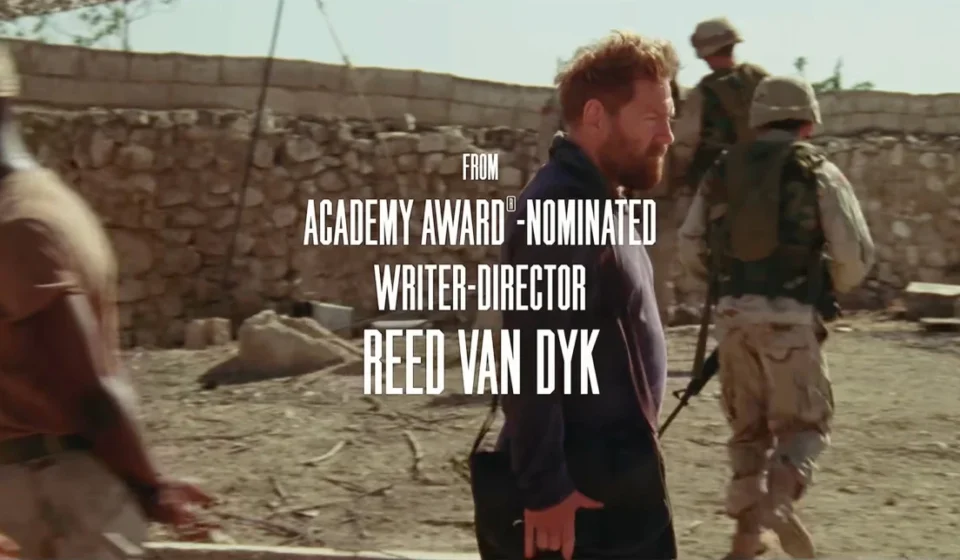
The weight of a soldier’s conscience is a theme that has permeated cinema since the inception of the medium, yet rarely does a film capture the visceral, moral fallout of conflict with the haunting intimacy of Reed Van Dyk’s feature debut, Atonement. Following a highly successful premiere at the 2026 Cannes Film Festival, Kino Lorber has officially unveiled the trailer for this Iraq War drama—a film that promises to be one of the most significant cinematic examinations of post-conflict reconciliation in recent years.
Starring Boyd Holbrook, Kenneth Branagh, and Hiam Abbass, Atonement eschews the traditional spectacle of combat for a slow-burn exploration of guilt, survival, and the impossible search for forgiveness. With a theatrical release slated for October 2, 2026, the film is already positioning itself as a major contender for the upcoming awards season.
The Genesis of a Modern Tragedy: Main Facts
At its core, Atonement tells the story of a troubled U.S. Marine whose life is forever fractured by a split-second decision made during the chaotic early days of the Iraq War in 2003. The narrative centers on his eventual quest, years later, to track down and seek reconciliation with the surviving members of the Khachaturian family—a family whose lives were upended by his unit’s gunfire.

The film is the feature directorial debut of Reed Van Dyk, an American filmmaker best known for his award-winning short film DeKalb Elementary. The screenplay is grounded in reality, adapted from the journalistic reporting of Dexter Filkins, whose deep-dive accounts of the human cost of the Iraq War serve as the film’s structural and emotional foundation.
The production, spearheaded by producers Trevor White, Tim White, David M. Wulf, Reed Van Dyk, and Steven Demmler, represents a departure from standard war-genre tropes. By focusing on the "bullet that moves both ways"—a haunting refrain featured in the film’s trailer—Van Dyk forces the audience to confront the idea that the soldier is as much a casualty of his own actions as those he harmed.
A Chronicle of Conflict: The Narrative Arc
To understand the gravity of Atonement, one must examine the tragedy at its heart. The film’s narrative is non-linear, weaving between the harrowing heat of Baghdad in 2003 and the sterile, muted tension of the modern day.
The 2003 Catalyst
The Khachaturian family, displaced by the initial U.S. military invasion, finds themselves in a precarious state of limbo. After seeking refuge with extended family, the group makes the fateful decision to return to their home across the city as the intensity of the urban conflict spikes. It is during this desperate transit that they become trapped in a brutal firefight between U.S. Marines and local insurgents.

In a moment of catastrophic misjudgment, the protagonist—played with raw, brittle intensity by Boyd Holbrook—fires upon the family. This single, impulsive act of violence destroys three generations of a family, setting the stage for the film’s central conflict: the lifelong burden of a man who cannot return home in spirit, even if he physically survived the war.
The Search for Forgiveness
Years after returning to civilian life, the Marine finds himself unable to cope with the shadows of his past. Aided by a dedicated New York-based journalist, he embarks on a journey to find the family’s matriarch, played by the formidable Hiam Abbass. The film moves away from the adrenaline of the battlefield and into the quiet, often agonizing space of a living room where two people from opposite sides of a war finally meet.
Supporting Data and Critical Reception
Since its debut at the 2026 Cannes Film Festival in the prestigious Directors’ Fortnight sidebar, Atonement has been met with significant critical acclaim. Critics have praised the film for its refusal to rely on the "Hollywood cliches" that often plague war dramas—specifically, the tendency to sanitize the psychological trauma of the soldier or to frame the local victims as mere background props.
- Rotten Tomatoes Consensus: Early reviews highlight the film as an "intelligent and involving" piece of work that draws knowingly on the history of war cinema while subverting expectations.
- Performance Metrics: The ensemble cast has been singled out, with many critics pointing to the chemistry between Holbrook’s tortured veteran and Branagh’s nuanced supporting turn as the film’s anchor.
- The TIFF Trajectory: Following its success at Cannes, the film is set to screen at the Toronto International Film Festival (TIFF) this September, a move designed to build momentum ahead of its October wide release.
Official Responses and Creative Intent
In various press statements, Reed Van Dyk has emphasized that Atonement was not intended to be a political polemic. Instead, he views it as a human story. "War is a structural disaster," Van Dyk noted in a recent interview. "But the aftermath is a personal one. My goal was to investigate whether, after the smoke clears, a perpetrator can ever be fully absolved, or if the act of seeking forgiveness is just another form of self-indulgence."

The inclusion of Kenneth Branagh adds a layer of theatrical gravitas to the project, with insiders suggesting his role as a confidant and catalyst provides the film with its moral heartbeat. By contrast, Hiam Abbass’s portrayal of the grieving matriarch provides the necessary counterweight, grounding the film’s more philosophical questions in the harsh reality of personal loss.
Implications: The Moral Complexity of War
The significance of Atonement extends beyond its technical prowess. It joins a burgeoning canon of films that seek to move past the "heroic" narrative of the Iraq War toward a more complex, honest assessment of what it meant to be there—both as a soldier and as a civilian.
Challenging the Genre
War movies historically fall into two categories: the action-heavy "war is hell" survival story, or the high-level geopolitical thriller. Atonement operates in a third, more difficult space: the post-war domestic drama. By bringing the conflict into the domestic sphere, Van Dyk illustrates how the "war" never truly ends for those involved.
The Question of "Atonement"
The title itself is a provocation. The film asks: Can an apology ever reach the scale of the crime? In the trailer, the line "Do you want forgiveness?" is asked with a tone that suggests the answer may not be the one the protagonist hopes for. The implication is that the film is not interested in providing the audience with a tidy resolution. Instead, it invites the viewer to sit with the discomfort of unresolved trauma.

A Milestone for Independent Cinema
The decision by Kino Lorber to distribute this film on a limited release starting October 2, 2026, signals a commitment to the prestige indie market. In an era dominated by large-scale franchises, Atonement represents a return to the character-driven, mid-budget drama that relies on performances rather than CGI.
As the film prepares for its North American debut at TIFF and subsequent rollout into theaters, the industry is watching closely. If Atonement succeeds at the box office, it could signal a shift in audience appetite for more somber, reflective storytelling.
Ultimately, Atonement is more than just a trailer or a film; it is a mirror held up to a society that has spent two decades processing the Iraq War. By focusing on the individual, Reed Van Dyk has created a piece of art that, while bleak in its subject matter, offers a "hopeful thread"—the idea that, even in the ruins of the past, the act of speaking the truth is the first step toward reclaiming one’s humanity.
For those planning to attend the Toronto International Film Festival, Atonement is currently one of the most anticipated screenings. For the general public, the wait ends on October 2nd. Whether it succeeds in its mission to redefine the war drama will be for history to decide, but for now, it stands as a testament to the power of film to navigate the most difficult of human emotions.