The Decentralized Patriarch: Robert Greene’s ‘Too Much Sugar’ and the Evolution of Collaborative Nonfiction

The landscape of contemporary documentary filmmaking is often defined by a tension between the observer and the observed. In his latest feature, Too Much Sugar, acclaimed director Robert Greene—known for his formalist inquiries into the nature of truth and performance—shatters the traditional boundary of the "subject." Premiering in the Orizzonti sidebar of the Venice Film Festival, the film presents a scrappy, agitated, and spikily entertaining study of an extended family in small-town Missouri. However, what begins as a profile of a charismatic, self-styled patriarch evolves into a radical experiment in communal storytelling, challenging the very notion of who owns a narrative.
Main Facts: A Study in "Main Character Syndrome"
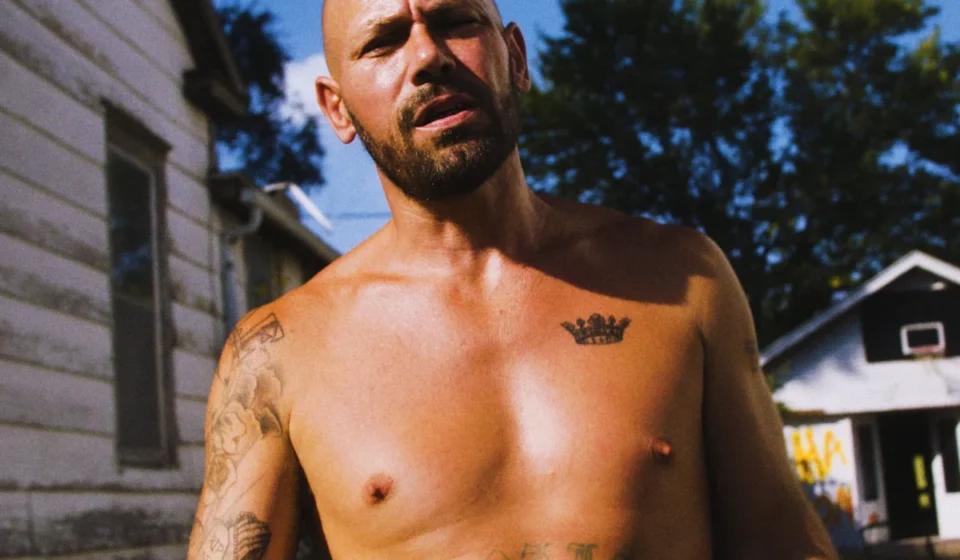
At the heart of Too Much Sugar is Ryan “Holli-wood” Hollinger, a man whose life seems designed for the silver screen—at least in his own estimation. A former amateur MMA fighter and occasional carpenter, Ryan is a force of nature in Moberly, Missouri. His nickname, "Holli-wood," serves as a mission statement, reflecting a perception of himself that stands in stark contrast to the modest, working-class reality of his environment.
The foundational facts of Ryan’s life are as complex as the film’s structure:
- The Family Unit: Ryan is the father of six children by five different women.
- The Protagonist: Ryan views himself as the undisputed patriarch, a font of motivational wisdom who frequently dons T-shirts emblazoned with slogans like “Don’t wait to be great.”
- The Creative Conceit: Director Robert Greene, rather than simply filming Ryan, invited the entire family and their inner circle to participate in the filmmaking process.
- The Methodology: Each participant was given the liberty to write and direct a short film of their choosing, which Greene then edited into a singular, shifting family portrait.
The result is a film that functions as a "movies-within-a-movie" mosaic. While Ryan initially believes the documentary is a celebratory tribute to his fatherhood, the collaborative nature of the project allows his children, partners, and friends to seize the spotlight, often subverting Ryan’s self-aggrandizing narrative with their own lived truths.
Chronology: From Courtside Loathing to Cinematic Collaboration
The genesis of Too Much Sugar was not a calculated casting call, but a chance encounter that underscores Greene’s interest in the friction of everyday life.
The Initial Encounter
The story began several years ago at a middle-school basketball game in Moberly. Robert Greene, who serves as a filmmaker-in-chief at the University of Missouri’s Murray Center for Documentary Journalism, found himself irritated by a loud, invasive spectator. This was Ryan Hollinger, whose aggressive "courtside-coaching" style initially repelled Greene.
The Two-Year Shift
As Greene explains in the film’s voiceover, first impressions eventually gave way to proximity. Two years after that first encounter, Greene’s son and Ryan’s son ended up on the same basketball team. Through the shared rituals of Missouri fatherhood, Greene’s "loathing turned to love," or at least to a deep, cinematic fascination. He saw in Ryan a man who was constantly performing—a "docmaker’s dream" who filled every room with his "alpha" energy.
The Development of the Conceit
Filming began with the premise of exploring fatherhood. However, as Greene embedded himself with the Hollinger clan, the project’s scope shifted. Recognizing that Ryan’s "main character syndrome" threatened to drown out the voices of his six children, Greene introduced the collaborative element. Over the course of production, the film moved from a standard character study to a decentralized production involving Greene’s students from the University of Missouri and the subjects themselves.
Supporting Data: A Multitude of Perspectives
Too Much Sugar derives its power from the "counter-narratives" provided by those in Ryan’s orbit. The film provides a platform for various family members to express their own identities, often through specific cinematic genres.
The Children’s Voices
- Gavin (23): Perhaps the most vocal critic of the project’s initial direction, Gavin openly asks the camera, “Is my dad a narcissist?” He expresses a poignant concern that the documentary might merely "validate" his father’s behavior rather than interrogate it.
- Tray (25): A professional fighter who mirrors his father’s physicality but offers a more nuanced perspective on the pressures of the Hollinger legacy.
- Wayde and Hank: Teenagers navigating the complexities of a "ragtag" family structure. Wayde, described as sensitive and imaginative, finds a kindred spirit in the local community.
- Bonnie (12): The youngest daughter, whose "therapy-fixated" outlook provides a modern, psychological lens through which to view her father’s "old-school" bravado.
The "Chosen Family" and the Moral Center
Beyond the biological children, the film includes:
- Michael: Ryan’s best friend, who is grappling with the profound trauma of his teenage son’s death in a gang-related shooting. His presence grounds the film in the harsh realities of grief.
- Amanda: Ryan’s on-and-off partner of 18 years. Though she is not the biological mother of the children, she is the glue holding the household together. Her arc is perhaps the most significant; she evolves from a sidelined, quiet presence into a defiant voice, speaking openly about Ryan’s history of neglect and infidelity.
Technical Contributions
The film’s aesthetic is a blend of high-end cinematography and raw, subject-shot footage. Robert Kolodny, the Director of Photography, utilizes a kinetically wandering style that captures the restlessness of small-town life. This is complemented by a "see-sawing" score composed by Wilkie Greene (the director’s son), which mirrors the emotional instability of the family dynamics.
Official Responses and Critical Reception
Following its premiere at the Venice Film Festival, Too Much Sugar has been hailed as a "singular conversation piece." Critics have noted that while Ryan Hollinger is a "tough protagonist to warm to," the film’s brilliance lies in how it refuses to let him dominate the frame.
Director’s Intent
Robert Greene has long been fascinated by the "artifice" of nonfiction. In Too Much Sugar, he uses the subjects’ own films to bridge the gap between how they see themselves and how they are seen. Greene’s decision to diminish his own authorial presence—by involving his students and letting the family direct their own segments—is seen as a maturation of his "participatory" style. He describes the film not just as a documentary, but as a communal effort toward healing and liberation.
Critical Analysis
Early reviews suggest the film will be a major "crowdpleaser" on the documentary festival circuit (docfest). Critics have highlighted the "hard-won uplift" found in the film’s final act. Unlike many documentaries that end in stagnation, Too Much Sugar captures unscripted, exhilarating developments in the family’s structure that even Greene could not have anticipated.
Implications: The Future of the Documentary Genre
The release of Too Much Sugar carries significant implications for the documentary industry and the representation of the American Midwest.
Subverting the "Fly-on-the-Wall"
For decades, the "Direct Cinema" or "fly-on-the-wall" approach was the gold standard of documentary. Greene’s work suggests that this method is often voyeuristic and insufficient for capturing complex psychological truths. By giving the "subjects" the camera, Too Much Sugar suggests a more ethical, albeit more chaotic, way forward for the genre. It acknowledges that everyone is the "main character" in their own life.
Distribution and Commercial Potential
In an era where streaming giants like Netflix, Apple TV+, and Hulu are hungry for "character-driven" content, Too Much Sugar occupies a unique position. It has the "pugnacious" energy and "larger-than-life" personality required for mainstream appeal, but its formal experimentation makes it a prime candidate for boutique distributors like A24 or Neon. Its success in Venice’s Orizzonti sidebar—a section known for "cutting-edge" cinema—positions it as a bridge between high-art and populist storytelling.
A New Portrait of the Midwest
The film also serves as a vital piece of Americana. It moves away from the "poverty porn" or political caricatures often associated with rural Missouri. Instead, it presents a community defined by its creativity, its struggle with trauma, and its capacity for change.
Ultimately, Too Much Sugar is a film about the limits of ego. By the end of the journey, even Ryan "Holli-wood" Hollinger is forced to acknowledge perspectives he had previously ignored. It is a testament to the power of the lens—not just as a tool for observation, but as a catalyst for human interest and humility.