Victor Miller, Architect of the Slasher Icon, Dies at 86: A Legacy Beyond Camp Crystal Lake

The horror genre has lost one of its most pivotal architects. Victor Miller, the screenwriter whose vision birthed the cinematic legend of Friday the 13th, passed away this Monday in Alameda, California, at the age of 86. His death was confirmed by his son, Ian Miller. While his name is inextricably linked to the chilling woods of Camp Crystal Lake, Miller’s career was a sprawling tapestry that stretched far beyond the confines of the slasher subgenre, encompassing decades of influence in daytime television and dramatic storytelling.
The Foundation of a Legend
When Friday the 13th hit theaters in 1980, it was not merely another entry in the burgeoning slasher market; it was a cultural phenomenon that fundamentally altered the trajectory of horror cinema. At the time, the industry was still reeling from the massive success of John Carpenter’s Halloween (1978). Producers sought to capture that same lightning in a bottle, and they turned to Miller to draft a narrative that would resonate with the same sense of dread and isolation.
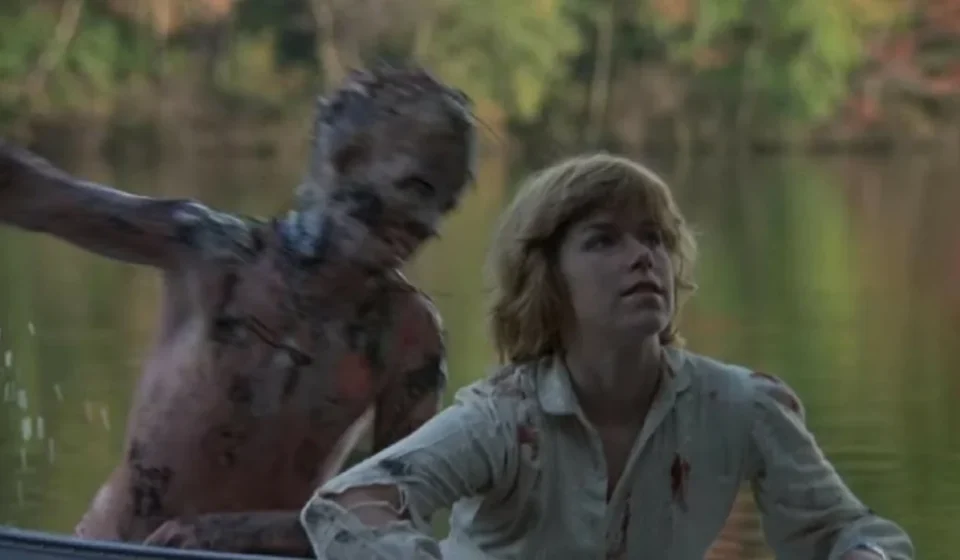
Miller’s genius lay in his restraint and his subversion of expectations. Audiences who return to the 1980 original expecting to see the hulking, machete-wielding Jason Voorhees are often surprised by the reality of the screenplay: Jason is not the killer. Instead, Miller crafted the character of Pamela Voorhees, a grief-stricken mother pushed to the brink of insanity by the tragic, accidental drowning of her son at summer camp. By grounding the horror in a maternal vendetta, Miller provided a psychological depth that elevated the film above the standard "body count" features of the era. Jason’s appearance in the final act—a haunting, surreal emergence from the lake—was intended as a dreamlike punctuation, yet it sparked a firestorm of fan obsession that would span over four decades.
A Chronology of a Career
Born in New Orleans, Louisiana, in 1940, Miller’s path to the screen was as diverse as the characters he wrote. Before he became the primary architect of the Voorhees mythology, Miller spent years honing his craft in the grueling, high-pressure environment of daytime soap operas.
- The Soap Opera Era (1970s–1980s): Miller was a prolific writer for television staples including All My Children, One Life to Live, Another World, Guiding Light, and General Hospital. His work on All My Children was particularly lauded, earning him and his writing team three Daytime Emmy Awards for Outstanding Drama Series Writing. This experience taught him the importance of character motivation and the slow-burn reveal—skills he would eventually deploy to devastating effect in his horror work.
- The 1980 Turning Point: Commissioned to write Friday the 13th, Miller approached the script with the precision of a dramatist. He recognized that the "slasher" required a catalyst. "The idea that Jason had died before the film began also came from the concept in Halloween—that there is a prior evil," Miller reflected in a 2026 interview with a Friday the 13th fan site.
- Post-Friday Success: Following the massive commercial success of his 1980 script, Miller largely stepped away from the franchise. While he did not participate in the subsequent sequels that transformed Jason into a supernatural, unstoppable icon, his fingerprints remained on the series’ DNA.
- Legacy Years: In the final decades of his life, Miller remained a respected figure in the industry, frequently consulted on the evolution of the franchise he helped create. His later years were marked by legal battles and negotiations regarding the rights to the Friday the 13th intellectual property, a testament to the enduring value of his original creation.
Deconstructing the Horror Aesthetic: Miller’s Philosophy
In his later interviews, Miller was remarkably candid about the mechanical nature of horror writing. He famously stated, "The idea for the summer camp came from my instinct that we needed a location where young adults would be cut off from all adult help."

This "isolation principle" became the blueprint for the entire slasher genre. By removing the safety net of society, Miller forced his characters into a crucible where their morality, their past mistakes, and their survival instincts were stripped bare. He believed that horror worked best when the audience could empathize with the victim, but also when the villain had a tangible, human origin story. Even Pamela Voorhees, a murderer, was written with a tragic backstory that allowed audiences to grasp the warped logic behind her vengeance. This nuance is what separated Miller’s work from the mindless "giallo" clones that followed in the early 80s.
The Broader Impact: Beyond the Machete
It is a common misconception that Miller’s career was defined entirely by blood and gore. His success in the world of daytime drama provided a foundation of emotional intelligence that he applied to horror. He understood that a scare is only as effective as the audience’s investment in the person being scared.
When asked about his legacy, colleagues often pointed to his ability to write dialogue that felt lived-in and real, regardless of the genre. Whether it was the complex romantic entanglements of General Hospital or the terror-filled dialogue of a doomed camp counselor, Miller’s ear for rhythm and subtext remained sharp. His transition from the Daytime Emmys to the cult-horror canon is a rare trajectory, highlighting a versatility that is often overlooked in modern screenwriting discourse.
Official Responses and Industry Recognition
The industry reaction to Miller’s passing has been one of profound respect. Horror historians and filmmakers alike have taken to social media to acknowledge that without Miller’s initial draft, the landscape of 1980s pop culture would look entirely different.
"Victor Miller didn’t just write a movie; he wrote a myth," said one industry analyst. "He created a structure that allowed for a thousand different iterations of the same terror, yet he remained the guy who gave it its heart."

The production team behind the upcoming television series Crystal Lake has also issued a statement, acknowledging that the series is built upon the foundational lore Miller established. They noted that the show’s commitment to exploring the Voorhees mythology remains a tribute to the world Miller brought into existence nearly 46 years ago.
Implications for the Future of the Franchise
The death of Victor Miller marks the end of an era for the Friday the 13th franchise. As the IP continues to move into the streaming age with new television projects and potential film reboots, the "Miller touch" serves as the touchstone for all involved.
His passing leaves a void in the creative stewardship of the franchise. For years, Miller was the definitive voice regarding the original intent of the story, particularly in the complex legal landscape that surrounded the rights to the character of Jason Voorhees. As new writers and directors take the mantle to steer the future of Camp Crystal Lake, they do so standing on the shoulders of a man who understood that horror is not just about the monster—it is about the history that created the monster.
Victor Miller is survived by his wife, Tina Thurston Miller, and his two sons, Ian and Josh. He leaves behind a legacy that will continue to frighten, entertain, and inspire writers for generations to come. Every time a character in a horror movie walks alone into a dark room or hears a strange noise in the woods, the spirit of Victor Miller’s storytelling is present. He transformed a summer camp setting into a permanent fixture of our collective nightmare, and in doing so, secured his place in the pantheon of cinema history.