The Analog Resistance: Why James Gray Believes AI Filmmaking Is Doomed to Fail

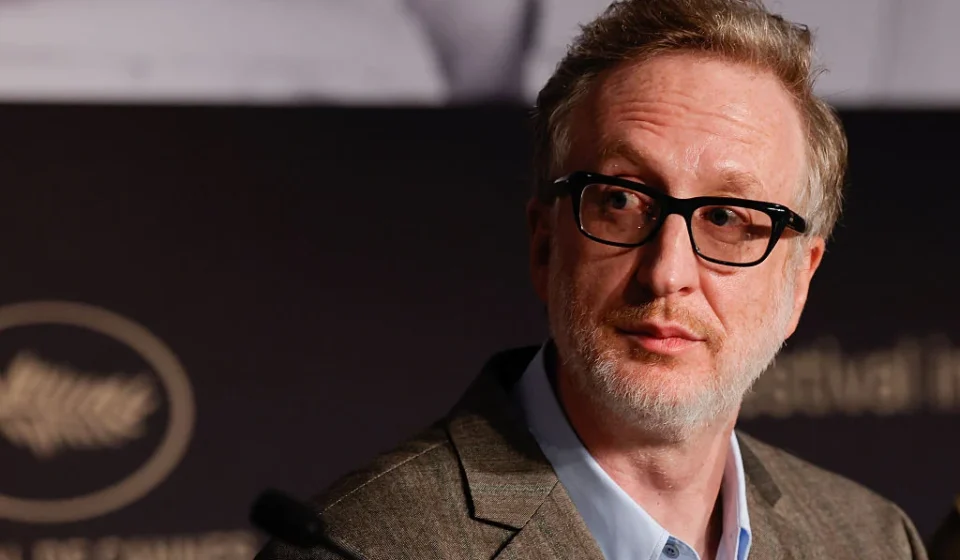
In an era where the boundary between human artistry and algorithmic generation is becoming increasingly porous, few voices in Hollywood are as defiant as that of director James Gray. Known for his deeply personal, textured, and emotionally resonant cinema, Gray has issued a stark warning regarding the industry’s pivot toward artificial intelligence. While the technological surge promises efficiency and spectacle, Gray views the current obsession with AI-driven filmmaking as both "obscene" and, ultimately, a doomed endeavor that ignores the fundamental nature of the human spirit.
The Philosophical Stand Against Algorithmic Art
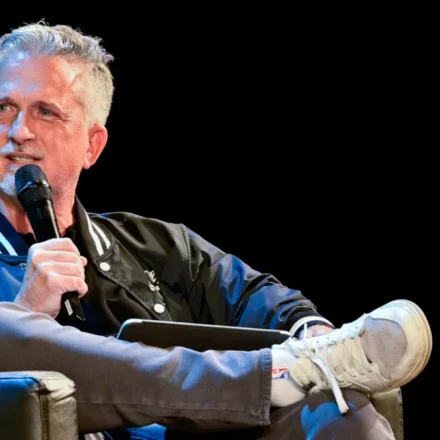
Speaking on an upcoming episode of IndieWire’s Filmmaker Toolkit podcast, Gray laid out a thesis that positions human imperfection not as a flaw, but as the essential ingredient of art. For the auteur, the infinite complexity of the human soul is something that no machine, regardless of its processing power, can ever replicate.
"I have a strange optimism about it," Gray remarked. "I think we will begin to recognize pretty quickly, if we don’t already, that AI is not going to be able to get at all of the infinite layers of the soul."
Gray concedes that AI has its place—specifically in clinical or logistical fields, such as accelerating medical trials. However, he draws a hard line when it comes to creative expression. To him, the goal of a film is to capture the "never-ending mystery" of human existence. Because that mystery is inextricably linked to our own limitations, he argues that machine-perfected imagery is inherently hollow. "What does that mean?" he asked. "It means imperfection is part of the equation."
The Aesthetics of Irretrievability: A Chronological Pivot
Gray’s current stance represents a significant evolution in his own professional journey, one that reflects a broader "analog revival" within the film industry. To understand his current commitment to celluloid, one must look at his recent history.

In 2022, while promoting his acclaimed drama Armageddon Time, Gray famously defended his decision to shoot the film digitally. At the time, he argued that the flexibility afforded by digital cameras was necessary to capture the nuanced performances of his young cast. He needed the freedom to run long, continuous, and repeated takes without the constraints of a film reel.
However, reflecting on that project today, Gray admits to a sense of regret. While he remains immensely proud of Armageddon Time and speaks glowingly of cinematographer Darius Khondji’s work, he acknowledges that the process felt physically and artistically incomplete. "I found myself on the digital fighting and fighting and fighting to get the imperfection, to get the grain, to get the kind of elusiveness of the image, the irretrievability of the image," he admitted.
This realization prompted a radical change in his approach to his latest feature, Paper Tiger. For this project, Gray and cinematographer Joaquín Baca-Asay made a conscious decision to return to the roots of cinema. They opted for traditional celluloid film, paired with vintage lenses and tungsten lighting—tools that provide a warmth and textural quality that Gray believes is vital to conveying humanity.
Supporting Data: The "Vinyl" Parallel
Gray’s theory—that audiences will eventually tire of the "clinical" nature of digital imagery—is supported by broader cultural shifts. He explicitly draws a comparison between the current state of film and the resurgence of vinyl records in the music industry.
"We went all digital in the ’80s and early ’90s," Gray explained, noting how the industry shifted to a format of binary perfection: zeros and ones. "And all of a sudden, people heard a vinyl record and went, ‘Wait a minute, that sounds better.’ Why? Because it’s a continuous signal. The needle goes into the record, and the signal is continuous."

Gray views digital cinema as an interrupted signal—a collection of data points that lacks the "warmth" of the analog process. He believes that the average viewer, even if they cannot articulate the technical reasoning, feels the absence of this warmth. Just as the scratch of a needle on vinyl offers a tactile, human connection to music, the grain of film stock offers a psychological connection to the image on screen.
The Melancholy of the Frozen Moment
A recurring theme in Gray’s critique is the "inherent melancholy" of the image. He argues that photography and film are, at their core, meditations on time.
"There is an inherent melancholy attached to the photograph," Gray stated. "It is a moment frozen in time that you will never get back. Now, people don’t consciously think that, but unconsciously they know it: ‘This is a moment I was really happy. It’s gone.’"
He contrasts this with the "offending" nature of modern, high-frame-rate digital imagery. To Gray, the aesthetic of modern digital film often feels too much like a live broadcast, such as an NFL game. When an image feels too "present" or too "live," it loses the sense of historical distance and artistic mystery. It feels disposable because it lacks the weight of something that has been captured and preserved on a physical medium.
In an era of Instagram feeds where billions of photos are taken but rarely "seen," Gray suggests that digital imagery has become a commodity of convenience rather than a vessel for memory or art.

Official Context and Industry Implications
Gray’s latest project, Paper Tiger, is not just a stylistic exercise; it is a declaration of intent. Selected as the opening night film for the 2026 New York Film Festival, the film has already garnered significant attention for its aesthetic choices. By utilizing older equipment and film stock, Gray is challenging the industry standard, pushing back against the narrative that "newer" and "sharper" always equals "better."
The film, which features performances by Scarlett Johansson, Miles Teller, and Adam Driver, is scheduled for a theatrical release by NEON on November 13, 2026. Its reception will serve as an interesting case study: will audiences, fatigued by the saturation of AI-enhanced content, gravitate toward the deliberate, grain-filled imperfections of Gray’s work?
The Future of the "Human" Element
The implications of Gray’s argument reach far beyond his own filmography. If he is correct, the industry may be headed toward a bifurcated future. On one side, there will be the algorithmic, highly optimized content—the "NFL game" style of entertainment that is fast, efficient, and ultimately disposable. On the other, there will be a burgeoning movement of "human-centric" cinema, defined by the deliberate inclusion of technical limitations and the refusal to outsource creativity to a machine.
For cinephiles, Gray’s message is a call to arms. It suggests that the future of the medium depends not on the advancement of processing power, but on the preservation of the artist’s unique, imperfect perspective. As Gray concludes, the goal of cinema is to reach for the infinite, and that is a pursuit that requires the warmth, the grain, and the undeniable humanity of the artist’s touch.
In a world increasingly built on binary code, James Gray is betting that the audience’s appetite for the "analog soul" will not only survive—it will thrive.

To hear the full, in-depth conversation with James Gray, listeners are encouraged to subscribe to the Filmmaker Toolkit podcast on Apple, Spotify, or their preferred podcasting platform when the episode airs this November.