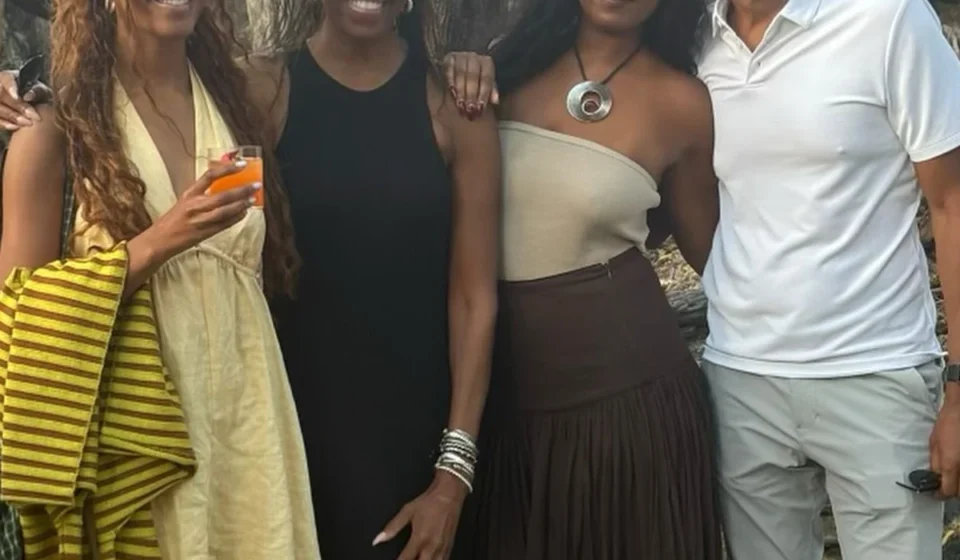

In the years since leaving the White House, Michelle Obama has redefined what it means to transition from one of the most scrutinized public roles in history to a private life defined by autonomy, reflection, and intentionality. Now 60, the former First Lady has been candid about her journey through the "empty nest" phase, her evolving relationship with former President Barack Obama, and her firm stance on why the political spotlight is firmly in her past.
The Reality of the Empty Nest: "I Don’t Miss ‘Em"
For many parents, the departure of children for college marks a period of profound melancholy. For Michelle Obama, however, it has been an opportunity to reclaim her own time and schedule. During a recent appearance on the IMO podcast, hosted alongside her brother Craig Robinson, Obama addressed the transition of her daughters, Malia, 28, and Sasha, 25, into adulthood with her characteristic bluntness.
When host Jon Stewart asked if she missed the "job" of parenting, Obama offered a succinct "No." While she emphasized her deep love for her daughters—noting that she sees them regularly for dinner—she clarified that the "terror and fear" associated with raising children, particularly in the public eye, is a chapter she has successfully closed.
"I love their emancipation and growth," she explained. "Friday nights aren’t wrecked with terror and fear about, ‘Where are you?’"
The contrast between her reaction and that of her husband is striking. Obama shared that while she was ready to cheer them on as they headed to Harvard and the University of Southern California, Barack Obama was visibly emotional. She posits that this difference in perspective stems from the domestic roles they occupied during his presidency. As the primary caregiver—the "Mom-in-Chief"—she was intimately involved in the granular details of their lives, whereas the President’s demanding schedule often limited his presence.
A Life Defined by New Patterns
The transition to an empty nest has allowed Michelle Obama to cultivate a "wonderful pattern" of her own. For decades, her life was structured around the needs of her children and the rigors of the political machine. Today, her schedule is, as she puts it, "all mine."
This sense of agency is a recurring theme in her recent reflections. Whether she is discussing her professional projects, her podcasting endeavors, or her daily routine, there is a palpable sense of relief in no longer being defined by the expectations of others. She remains a devoted mother, but she has successfully transitioned to a relationship with her daughters that is defined by mutual respect rather than daily management.
Chronology: From Chicago to the Global Stage
To understand the woman Michelle Obama is today, one must look at the arc of her life, which has been marked by a series of reluctant but successful pivots.
- 1988: Michelle Robinson meets Barack Obama at a Chicago law firm. While she viewed marriage as an organic progression, Barack—influenced by his own family history—was initially skeptical of formalizing the relationship. They married on October 3, 1992.
- 1997–2008: As Barack’s political career took off in the Illinois state legislature and later the U.S. Senate, the strain on their marriage grew. Michelle has been open about the necessity of marriage counseling during this period, as she balanced raising two young children while her husband was frequently away.
- 2008–2016: The presidential years. Despite her initial resistance to her husband running for the highest office, Michelle served two terms as First Lady. She has since admitted that she was "kicking and screaming" through the process, even harboring quiet doubts that he would actually win.
- 2017–Present: Post-White House life. The Obamas have navigated the transition to civilian life, focusing on their respective memoirs, production companies, and philanthropy, while dealing with the inevitable—and often inaccurate—public speculation regarding their marriage.
The Myth of the Political Marriage
Public fascination with the Obama marriage has not waned even a decade after they left 1600 Pennsylvania Avenue. Rumors regarding the state of their union have occasionally surfaced, usually fueled by the fact that the couple does not document every moment of their private life on social media.
Michelle Obama has addressed these rumors with characteristic dry wit. On the Diary of a CEO podcast, she remarked, "The fact that people don’t see me going out on a date with my husband sparks rumors of the end of our marriage. It’s like, ‘OK, so we don’t Instagram every minute of our lives. We are 60.’"
She further clarified that she is "not a martyr" and would be the first to communicate if there were genuine discord. Her transparency regarding the challenges of marriage—from counseling to the frustrations of a political spouse—has only served to humanize her further, moving her beyond the caricature of the "perfect" political partner.
Implications: Why She Will Never Run
One of the most persistent questions in American politics is whether Michelle Obama would ever consider a run for the presidency. Her answer, however, is an unequivocal "no."
Her reasoning is rooted in the protection of her family. Having seen the toll the spotlight took on Malia and Sasha during their formative years, she is protective of their right to build their own lives. In a 2025 appearance on the Not Gonna Lie podcast, she noted that anyone asking her to run "has absolutely no idea the sacrifice that your kids make."
Beyond the impact on her children, Obama has expressed a desire to protect the remaining time she has. In a poignant moment on the Wild Card podcast, she spoke about her age and her awareness of mortality. "If I am lucky, if I am truly blessed, I have like 25 more summers," she said. This realization has led her to be hyper-intentional about how she spends her time, prioritizing personal fulfillment over public service roles that would require another decade of sacrifice.
Official Responses and Public Legacy
The public perception of Michelle Obama has shifted from the "Mom-in-Chief" of the White House years to an elder stateswoman of American culture. Her speeches, particularly those honoring her daughters at the opening of the Obama Presidential Center, reflect a deep pride in the women they have become.
"You both have grown into such brilliant and beautiful young women," she told them in June. "Thank you for bringing so much joy and spirit and energy to a life you had no voice in choosing."
This sentiment encapsulates her approach to her own life: acknowledging the roles she was placed in, honoring the work she did, and now, gracefully stepping into a phase of life that she has chosen for herself.
Conclusion: A Future of Intentionality
As Michelle Obama navigates her sixties, she stands as a model of someone who has successfully negotiated the transition from public servant to private citizen. By setting firm boundaries—whether it is skipping high-profile events she chooses not to attend, or refusing to entertain political speculation—she is modeling the very "emancipation" she admires in her daughters.
For the former First Lady, the "job" of raising a family and the "job" of being a national figure are behind her. What lies ahead is a life governed by her own schedule, her own interests, and an unwavering commitment to living with mindfulness. As she enters this new decade, Michelle Obama is not looking back at what could have been, but rather savoring the freedom of what currently is: a life that is, finally and entirely, her own.