The Pink-Hued Grunge Revolution: How ‘Elle’ Reinvents the ‘Legally Blonde’ Origin Story

When showrunner Laura Kittrell first sat down to map out the narrative trajectory for Elle, the ambitious Legally Blonde prequel series on Prime Video, she faced a singular, daunting challenge: How do you capture the essence of a cultural icon without simply recreating the cinematic perfection of the 2001 original?
The answer, it turns out, was to look backward. By anchoring the series in 1995—a year defined by the raw, countercultural grit of Seattle’s grunge scene—Kittrell and her team have crafted a visual and thematic masterclass in fish-out-of-water storytelling. The resulting series, which dropped its entire first season on July 1, is not a comedy in the traditional sense, but a character-driven exploration of how a quintessential Bel Air socialite finds her voice when stripped of her familiar, sun-drenched surroundings.
The Genesis of an Icon: From Bel Air to the Pacific Northwest
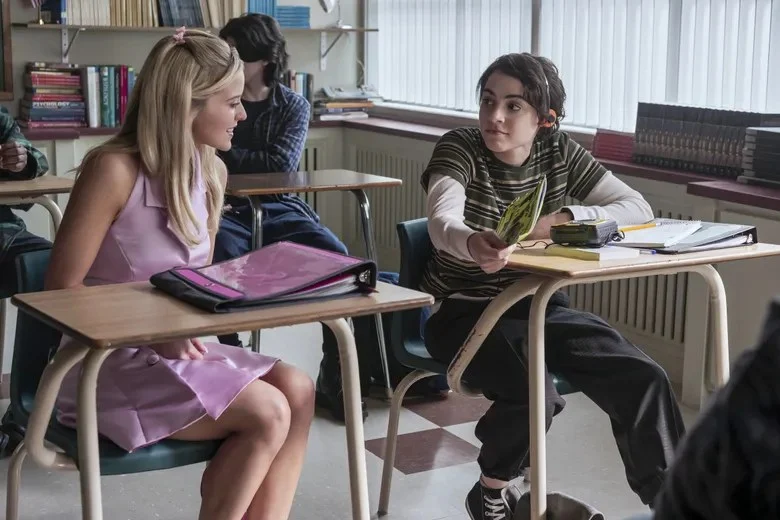
The premise of Elle is deceptively simple. Lexi Minetree, a relative newcomer who delivers a performance that manages to be both a respectful homage to Reese Witherspoon’s original portrayal and entirely her own, stars as the young Elle Woods. The idyllic life of this Bel Air teenager is shattered when her parents—portrayed with sharp comedic timing by June Diane Raphael and Tom Everett Scott—become entangled in a professional scandal that forces the family to relocate to the rain-slicked, flannel-clad landscape of Seattle.
For Kittrell, the choice of setting was deliberate. “If the movie takes place in 2001, it must be 1995,” Kittrell told IndieWire. “Where can we put her that feels the most specific to the time period but also doesn’t feel too similar to Harvard? Grunge-era Seattle felt like the perfect choice.”
The decision to place the vibrant, pink-loving Elle in the epicenter of the anti-fashion, angst-ridden grunge movement provides the series with its central tension. Rather than being a sullen outcast, Elle acts as a "conformist Barbie" at a perpetual countercultural rally. This clash of aesthetics does more than provide visual contrast; it serves as the crucible in which the character’s resilience is forged.

Chronology of a Character: Backing Into the Origin
While the series is heavily inspired by the source material, co-showrunner Caroline Dries emphasizes that the goal was never to remake the original film. Instead, the creative team utilized the movie’s most iconic beats as "anchor points" to understand who Elle was before she became the law student we recognize.
The most prominent example of this narrative strategy is the infamous "bunny costume" incident from the 2001 film, where Elle is pranked into wearing a Playboy bunny outfit to a non-costume party. The showrunners saw this moment of profound public humiliation as a narrative goldmine.
“There was something in her past that allowed her to be comfortable in her skin at that moment,” Dries explained. “What happened? So let’s tell that story. That’s an example of using the movie to back into a foundational moment in Elle’s life.”
This approach creates a sense of inevitability. Every struggle Elle faces in high school—from social exclusion to the systemic gatekeeping of her peers—is framed as a precursor to the challenges she will later face at Harvard Law. By exploring these "foundational moments," the series transforms from a mere prequel into a psychological study of an underdog who is consistently underestimated.
The Aesthetic of the Era: A Collaboration of Style and Sound
The aesthetic success of Elle rests on the shoulders of costume designer Sara Byblow and music supervisor Brienne Rose, who viewed the 1990s as a high-stakes canvas.

Dressing the Part
Byblow’s approach to the wardrobe was rooted in extensive research, including a deep dive into high school yearbooks from both Seattle and Bel Air in 1995. Her goal was to ensure the show felt "unmistakably of its generation." To achieve this, she drew inspiration from pop culture titans of the era, most notably Claudia Schiffer. The pastel mini-skirts and textured sweaters of Schiffer’s 1994 Chanel and Versace campaigns provided a direct stylistic blueprint for Elle’s "Cali girl" evolution.
In a clever nod to fashion history, the season finale features a moment where Elle appears to "invent" a safety-pin dress for a friend, a direct homage to the iconic garment worn by Heather Locklear at the 1995 Golden Globes.
The Soundtrack as a Map
Music serves as the emotional compass of the series. Rose, tasked with selecting a soundscape that reflects both the era and the character’s internal growth, utilized a blend of riot grrrl anthems and mainstream pop.
"Garbage was our perfect happy medium," Rose remarked. "They were a band that appealed to so many people even though stylistically they didn’t come from a poppy place." By using tracks like "I’m Only Happy When It Rains" as Elle’s theme song, the show highlights the character’s ability to bridge the gap between her pop sensibilities and the darker, grittier atmosphere of her new home.
The soundtrack also features "Just a Girl" by No Doubt, which underscores a pivotal karaoke scene where Elle, true to her character, makes a grand entrance at a pool party—this time, in a bikini. As Rose noted, the music acts "almost like a map" to chart Elle’s journey from listening to Madonna and Mariah Carey to developing a more eclectic, self-assured taste.

Behind the Scenes: A Collaborative Effort
The production of Elle has been defined by a highly collaborative spirit, with the creative team actively seeking out authentic touchstones of the 90s.
Beyond the curated soundtrack, the show features original music from Sleater-Kinney, commissioned specifically for the series, and original tracks produced by Anna Waronker of the band That Dog. This commitment to authenticity extended to the wardrobe as well, with Byblow collaborating with Vans to create a custom pink plaid print for a key scene in the finale.
The cast also brought their own unique energy to the project. Notably, the show features James Van Der Beek in his final role, a casting choice that provides a meta-textual layer of nostalgia. "His character is instrumental to our plotline," Dries said. "He loved being this frumpy character with the bad mustache and the bad fashion. He added so much to the role."
Implications and Future Horizons: The Path Forward
The success of Elle—evidenced by its early renewal for a second season—suggests that the appetite for the Legally Blonde universe remains as robust as ever. With the first season covering only a single semester of high school, the series has significant "runway" to explore.
Looking Toward Season 2
While the showrunners remain tight-lipped regarding specific plot points for the second season, they have hinted at the broader cultural shifts of 1996. The arrival of the Spice Girls and the mainstreaming of "girl power" messaging provide a perfect, irony-laden backdrop for Elle’s continued growth. How will a character who has learned to survive the harsh reality of grunge respond to the glittery, commodified feminism that defined the late 90s?

Beyond High School
The long-term potential of the series is even more intriguing. Given that the original film is set in the hallowed halls of Harvard Law, fans have already begun speculating about the possibility of an Elle: The College Years installment. Such a show could bridge the gap between the teenage Elle we see now and the legal force of nature we first met in 2001, chronicling her time as a Delta Nu sorority sister at UCLA and the formative experiences that led her to pursue a law degree.
Conclusion: A Testament to Resilience
At its heart, Elle is a story about the danger of assumptions. Whether it is her classmates in Seattle assuming she is a vacuous airhead because of her love for pink, or the audience assuming a prequel would be a hollow cash-grab, the show constantly defies expectations.
By grounding the narrative in the specificity of 1995—a year of flannel, angst, and shifting cultural tides—Kittrell and her team have proven that the "Legally Blonde" brand is not just about the surface elements of fashion and law. It is about the character of Elle Woods herself: a person who, when faced with adversity and misunderstanding, chooses to remain true to herself, even if it means sticking out like a neon beacon in a sea of gray.
As the first season continues to find its audience on Prime Video, it stands as a reminder that the most enduring stories are those that allow us to revisit our pasts, not to change them, but to better understand the people we eventually became. Elle Woods, it seems, has always been an icon in the making—even when she was just a girl in a bikini at a skateboard pool party.