The Tabloid Trial of the Century: Exploring ‘Trust Me, I’m a Doctor’ and the Tragic Legacy of Anna Nicole Smith

By Editorial Staff
August 27, 2026
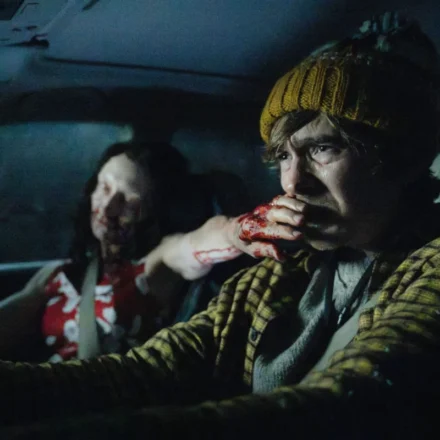
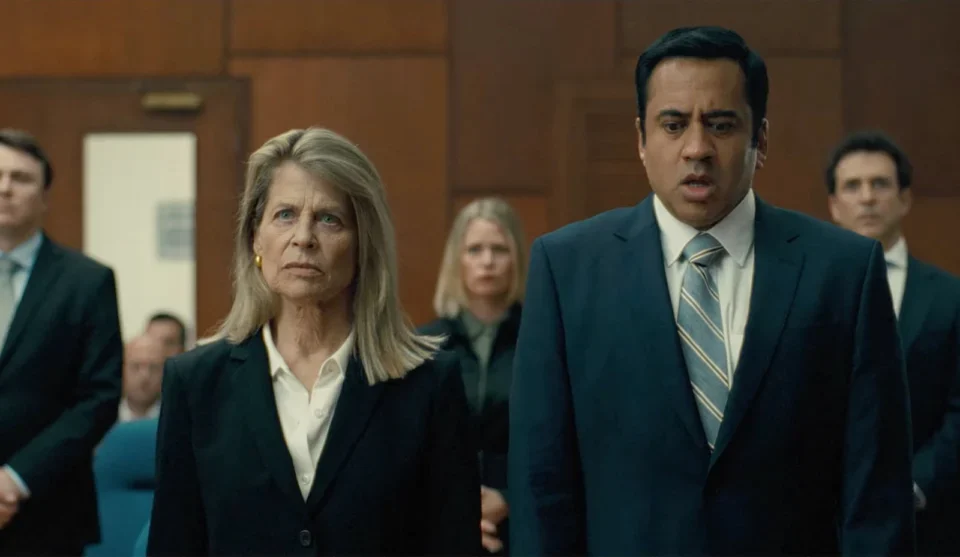
The early 2000s were a volatile era for celebrity culture, defined by the relentless intrusion of the paparazzi, the infancy of the 24-hour news cycle, and the tragic intersection of fame and pharmaceutical dependency. Nearly two decades after the untimely passing of model and television personality Anna Nicole Smith, the legal and ethical fallout of her death is being revisited on the big screen. Briarcliff Entertainment has officially unveiled the trailer for Trust Me, I’m a Doctor, a dark comedy-drama directed by Thane Economou that dramatizes the harrowing experience of Dr. Sandeep Kapoor, the physician caught in the crosshairs of the subsequent media firestorm.
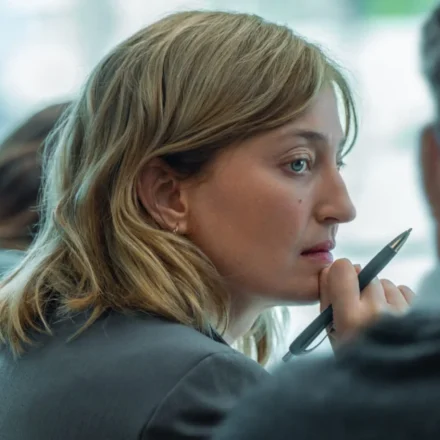
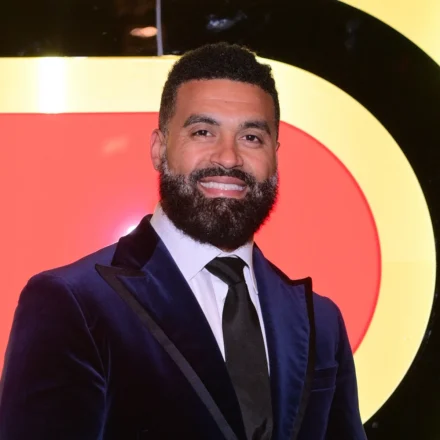
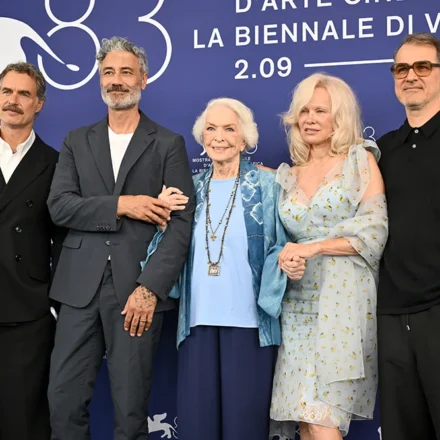
Starring Kal Penn as Dr. Kapoor, Linda Hamilton as high-powered defense attorney Ellyn Garofalo, and Abbie Cornish as the ill-fated Smith, the film promises to dissect the sensationalist fervor that transformed a medical tragedy into a high-stakes criminal conspiracy trial.
The Main Facts: A Physician Under Siege
At the heart of Trust Me, I’m a Doctor is the memoir of Dr. Sandeep Kapoor, a physician whose career and personal life were fundamentally altered by his association with Anna Nicole Smith. Following Smith’s death on February 8, 2007, from combined drug intoxication at the age of 39, the investigation rapidly expanded beyond a simple autopsy. Authorities began to look toward those closest to the star, specifically focusing on the medical professionals who managed her prescriptions.
For Dr. Kapoor, this led to a nightmare scenario: police raids on his office, the public exposure of his private journals, and a relentless pursuit by the media. The film frames his story not merely as a legal defense, but as a survival narrative. As the tagline asks, "Do you honestly think you’d have done anything different?"—the film positions the audience to question the ethics of celebrity medicine and the morality of a legal system that often prioritizes public spectacles over due process.

Chronology of a Tragedy and a Trial
To understand the weight of Trust Me, I’m a Doctor, one must look at the timeline of the events that gripped the American public in the mid-2000s:
- February 8, 2007: Anna Nicole Smith is found unresponsive in her room at the Seminole Hard Rock Hotel & Casino in Hollywood, Florida. She is pronounced dead at a local hospital.
- March 2007: Toxicology reports confirm that Smith died of a lethal combination of chloral hydrate and several benzodiazepines.
- 2008–2009: The investigation into the sources of these medications intensifies. Dr. Sandeep Kapoor, along with Smith’s companion Howard K. Stern and psychiatrist Dr. Khristine Eroshevich, becomes the primary target of criminal prosecution.
- 2009–2010: The criminal trial commences, characterized by intense media scrutiny. Prosecutors argue that the defendants conspired to provide Smith with excessive amounts of prescription drugs.
- October 2010: A jury acquits the defendants of the most serious charges related to trafficking and conspiracy, though some minor charges remain.
- 2011–2012: Appeals and further legal motions clear Dr. Kapoor of wrongdoing, effectively ending his professional ordeal.
Thane Economou’s film focuses on the peak of this timeline, specifically the years between 2007 and 2010, where the lines between objective journalism and tabloid sensationalism blurred.
Supporting Data: The Intersection of Celebrity and Medicine
The narrative of Trust Me, I’m a Doctor is supported by the stark reality of the "concierge medicine" model that became popular among the Hollywood elite during the late 90s and early 2000s. Dr. Kapoor’s memoir, which serves as the film’s primary source material, highlights the pressure doctors faced when treating high-profile patients.
Legal experts have noted that the trial of Dr. Kapoor and his co-defendants was a landmark case regarding the limits of physician liability. Data from the era suggests that over-prescription of controlled substances was an systemic issue, yet the prosecution of physicians was rarely successful without clear evidence of intent to harm. The film explores the "conspiracy" angle—a theory that the legal system needed a villain to blame for the tragic death of a cultural icon, and that Dr. Kapoor was selected as that villain due to the sheer volume of media interest.
Official Responses and Creative Vision
Director Thane Economou, known for his previous work on The Wedding Party, has opted for a "dark comedy" approach to this heavy material. In interviews accompanying the trailer launch, the production team emphasized that the film is intended to be a satire of the celebrity-obsessed culture of the early 2000s.

"The goal wasn’t just to tell a legal procedural," a source close to the production noted. "It was to capture the absurdity of a world where a doctor’s private notes are splashed across magazine covers while the public demands a head on a platter."
Kal Penn’s portrayal of Dr. Kapoor is reportedly the film’s anchor. Penn, known for his versatility, portrays the physician as a man caught between his duty to his patient and the crushing weight of institutional power. Linda Hamilton, portraying the formidable Ellyn Garofalo, brings a sharp, pragmatic energy to the film, representing the voice of reason in a trial that often defied logic. Abbie Cornish’s portrayal of Anna Nicole Smith is expected to be a nuanced take on a woman who was famously misunderstood by the public, focusing on her vulnerability rather than just her public persona.
Implications: Why This Story Matters Now
The release of Trust Me, I’m a Doctor on October 16, 2026, comes at a time when the public is re-evaluating the "Tabloid Era" of the 2000s. With the rise of documentary series investigating the mistreatment of women like Britney Spears and the late Amy Winehouse, the cultural climate is primed for a more empathetic look at Anna Nicole Smith.
However, the film’s focus on the doctor’s perspective offers a unique, if potentially controversial, shift. By centering the narrative on the medical professional, the film raises significant questions:
1. The Erosion of Physician-Patient Privilege
The film highlights how the legal system and the media collectively stripped away the privacy traditionally afforded to medical records. In an era of digital health data, this theme remains incredibly relevant.

2. The Scapegoating of Medical Providers
The film challenges the audience to consider if the criminal justice system is equipped to handle complex medical issues. Is a doctor responsible for the choices of an adult patient, even if that patient is suffering from addiction? Trust Me, I’m a Doctor posits that the rush to judgment—driven by public outcry—can lead to miscarriages of justice that destroy lives before a verdict is even reached.
3. The Psychology of Fame
Ultimately, the film serves as a critique of how society consumes celebrity pain. The "media frenzy" depicted in the trailer—the swarms of photographers, the leaked journals, the public shaming—is a mirror held up to our own historical complicity in the destruction of public figures.
Final Thoughts: A High-Stakes Cinematic Bet
As the film prepares for its October release, critics and audiences alike are wondering if the dark comedy tone is the right choice for such a somber subject. Is it possible to find humor in a tragedy that cost a life? Or does the film’s tone serve as a necessary defense mechanism against the inherent absurdity of the situation?
Briarcliff Entertainment is betting that audiences are ready for this unconventional perspective. With a strong ensemble cast and a script grounded in the lived experience of its subject, Trust Me, I’m a Doctor is shaping up to be one of the most talked-about releases of the fall season. It does not seek to provide easy answers, but rather to ask whether, in the case of Anna Nicole Smith, justice was actually served, or if we simply demanded a performance.
As Dr. Kapoor’s character suggests in the trailer, the truth is often buried under layers of public perception. Whether the film successfully peels back those layers remains to be seen when it hits theaters on October 16, 2026. For those who remember the headlines of 2007, the film will be a trip back to a darker, more intrusive time in American culture—a time we are only now beginning to fully understand.