
By Editorial Staff | August 26, 2026
In the landscape of modern music, few careers have been as meticulously deconstructed, studied, and mythologized as that of Shawn "JAY-Z" Carter. Yet, even with decades of retrospectives, unauthorized biographies, and cultural analyses, the inner workings of his creative process have remained largely guarded. That is set to change this September with the release of JAY-Z in ∞ (pronounced JAY-Z in Infinity), an expansive eight-part documentary series arriving on HBO Max.
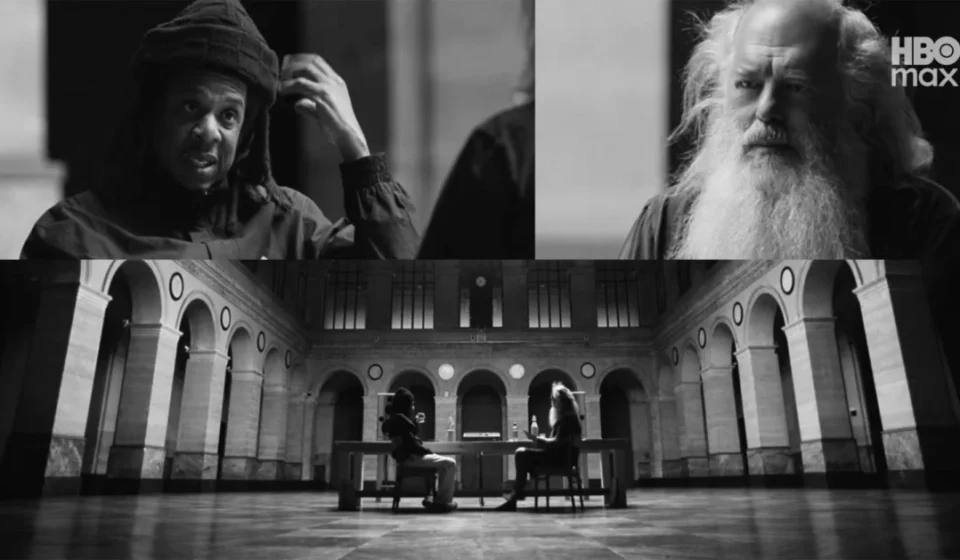
Directed by the legendary music producer Rick Rubin, the series marks a departure from standard music biopics. Rather than relying on archival footage or celebrity talking heads, JAY-Z in ∞ centers on the raw, unfiltered intimacy of a conversation between two of music’s most profound thinkers.
The Genesis of a Masterclass: Main Facts
Set to premiere on September 18, 2026, JAY-Z in ∞ is an eight-episode deep dive into the lyrical architecture and cultural impact of JAY-Z’s discography. The project is notable for its minimalist approach; it is essentially a high-fidelity dialogue between Carter and Rubin, capturing the moments where the rapper breaks down his most iconic verses.
The series is executive produced by Academy Award winner Daniel Kaluuya, whose involvement underscores the prestige and artistic gravity of the production. Perhaps most striking is the visual language of the series, captured by acclaimed cinematographer Bradford Young. Known for his work on Arrival and Selma, Young brings a meditative, cinematic texture to the studio setting, transforming what could have been a standard "talking head" interview into a visual exploration of legacy.
A Career in Context: The Chronology of an Icon
To understand the significance of this series, one must look at the timeline of Shawn Carter’s evolution. It has been 30 years since the 1996 release of Reasonable Doubt, an album that introduced a young, hungry lyricist from the Marcy Projects to the world.

The docuseries follows a thematic rather than strictly linear timeline, focusing on the "infinity" of his influence. The episodes are structured around pivotal moments in his catalog:
- The Foundation (1996): Re-examining the grit of Reasonable Doubt and the cold reality of the streets that informed his early wordplay.
- The Global Expansion (Early 2000s): Analyzing the pivot toward pop culture dominance with The Blueprint and The Black Album.
- The Intellectual Turn (2010s): Breaking down the vulnerability and socio-political commentary found in 4:44.
By revisiting tracks like "99 Problems," "Brooklyn’s Finest," and "4:44," Rubin and Carter peel back the layers of the writing process. They explore how the artist transitioned from a narrator of his environment to an architect of his own corporate and cultural destiny.
The Rubin-Carter Dynamic: Supporting Data and Insight
Rick Rubin is not merely a director here; he is a peer. Rubin’s own career—from the birth of Def Jam to his work with Johnny Cash and Paul McCartney—makes him the ideal foil for Carter. Their rapport is built on decades of mutual respect.
In the trailers released by HBO Max, the chemistry is palpable. Rubin asks the questions that casual observers might miss, focusing on the "how" and "why" of the music.
- Lyrical Ingenuity: The series dedicates significant time to the "math" of JAY-Z’s rhymes—the internal rhyming schemes and the double entendres that set the standard for modern hip-hop.
- The Art-Life Synthesis: The core thesis of the series is the "inextricable connection between art and life." Carter discusses how the lessons learned during his upbringing in Brooklyn were encoded into his lyrics, creating a feedback loop where his life experiences dictated his music, and his music eventually paved the way for his life as a billionaire entrepreneur.
Official Responses and Creative Direction
The production team, including producers Leila Mattimore and David Rohde, alongside executives Nancy Abraham, Lisa Heller, and Sara Rodriguez, have emphasized that this is not a "biopic" in the traditional sense. In an era where audiences are fatigued by sensationalist, dramatic recreations of artists’ lives, JAY-Z in ∞ chooses to focus on the craft.
"You reinvented what was possible to do," Rubin notes in the trailer, a statement that serves as the series’ mission statement. By framing the project through the lens of a "shared listening session," the production allows the music to take center stage. For fans of hip-hop, this is the equivalent of a masterclass. For those interested in the creative process, it provides a rare glimpse into how a legend maintains relevance across three distinct decades of technological and cultural shifts.

Implications: The New Standard for Music Documentaries
The release of JAY-Z in ∞ carries significant implications for the future of streaming content. In the wake of high-profile documentaries about Paul McCartney and other music titans, the industry has seen a pivot toward "prestige music journalism."
The Decline of the "Biopic"
For years, the industry relied on the "rags-to-riches" documentary formula, which often prioritized scandal and narrative arc over musical substance. JAY-Z in ∞ signals a shift toward the "Deep Dive." By limiting the scope to the music itself, HBO Max is banking on the idea that the audience’s appetite for substance—for the "how-it-was-made"—outweighs the desire for superficial drama.
The Role of the Director
Rick Rubin’s transition into directing documentary series—following his work with Paul McCartney—suggests that the industry is moving toward artist-led projects. When the subject is directed by a peer rather than a journalist, the barriers of PR-speak are lowered. The result is a more honest, vulnerable, and ultimately more human portrait of the artist.
The Legacy of the 30-Year Mark
Thirty years is a long time in hip-hop, a genre that was once famously called "a young man’s game." JAY-Z’s ability to remain a cultural touchstone through 4:44 and beyond is a phenomenon in itself. The docuseries serves as a case study in artistic longevity. It raises the question: How does an artist remain "authentic" when their reality has shifted from the streets of Brooklyn to the boardrooms of the world?
A Note on Craft and Production
Beyond the narrative, the series is a technical achievement. With Bradford Young’s cinematography, the show leans into a high-contrast, moody aesthetic. The use of natural light and tight framing creates an atmosphere of privacy, as if the viewer is sitting in the corner of a dimly lit studio. It is a stylistic choice that forces the viewer to focus on the dialogue—the words, the cadence, and the silence between them.
The involvement of Daniel Kaluuya as executive producer also bridges the gap between the music world and the cinematic world. His presence ensures that the series is treated with the same artistic rigor as a feature film, avoiding the "filler" often found in long-form television.

Conclusion: Why This Matters
As the premiere date of September 18, 2026, approaches, the buzz surrounding JAY-Z in ∞ is undeniable. Whether you are a lifelong fan of "Hov" or someone interested in the evolution of American popular music, the series promises a rare, unvarnished look at the man behind the myth.
"Can’t knock the hustle," the saying goes. But in this series, JAY-Z invites us to do more than just observe the hustle; he invites us to understand the mind that built it. By focusing on the lyrics, the influences, and the evolution of his craft, JAY-Z in ∞ is poised to become the definitive document of one of the most important creative lives of the 21st century.
As we prepare to watch, the question remains: Are we ready to hear the secrets behind the music that defined a generation? With Rick Rubin at the helm and JAY-Z at the mic, the answer seems to be a resounding yes.