
By Editorial Staff
August 21, 2026
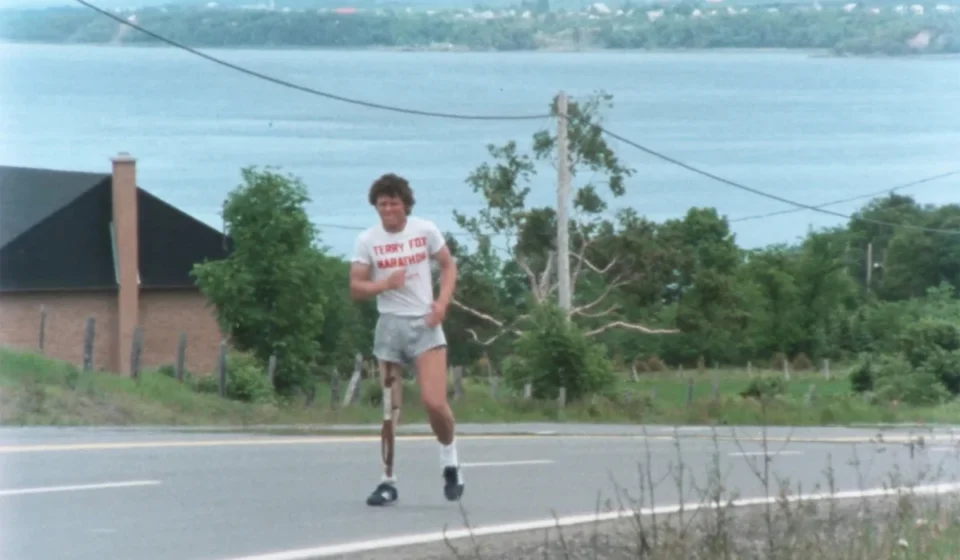
The image of Terry Fox—a young man with a slight frame, a determined gait, and an artificial leg—is etched into the collective consciousness of Canada. For decades, he has been a secular saint, a figure of stoic resilience whose "Marathon of Hope" became the gold standard for philanthropic endurance. Yet, as the years have passed, the man has occasionally been obscured by the monument. A new documentary, Run Terry Run, directed by acclaimed filmmaker Sean Menard, seeks to strip away the marble and reveal the vulnerable, flesh-and-blood human being who changed the world one step at a time.
Premiering as a Centerpiece Gala at the 2026 Toronto International Film Festival (TIFF), Run Terry Run is not merely a biographical summary. It is an intimate, raw, and meticulously researched exploration of the 143 days that defined a legacy. By utilizing previously unseen archival footage and personal testimonies, Menard constructs a narrative that shifts the focus from the icon to the individual.
The Marathon of Hope: A Chronological Retrospective
To understand the weight of Menard’s documentary, one must revisit the sheer impossibility of what Terry Fox attempted in 1980.
The Inception (April 1980)
On April 12, 1980, 21-year-old Terrance Stanley Fox dipped his artificial leg into the Atlantic Ocean in St. John’s, Newfoundland & Labrador. His goal was audacious: to run across Canada to raise money for cancer research. At the time, the infrastructure for such a feat did not exist. Fox was not a professional athlete; he was a cancer survivor who had lost his right leg to osteosarcoma. His prosthetic was rudimentary, ill-fitting, and prone to causing agony with every stride.
The Grinding Reality (Spring–Summer 1980)
For 143 days, Fox maintained a pace that would break most healthy marathoners. He averaged 42 kilometers (26 miles) a day. The documentary captures the grueling physical toll this took on his body—the blisters, the bleeding stumps, and the sheer exhaustion. However, the film emphasizes that the physical pain was secondary to the mental fortification required to keep moving forward.

The Tragic Conclusion (September 1980)
The journey came to an abrupt, heart-wrenching halt on September 1, 1980, near Thunder Bay, Ontario. Fox, who had captured the heart of the nation, discovered that his cancer had returned and spread to his lungs. He was forced to end his run after 5,373 kilometers. His death ten months later, in June 1981, transformed his unfinished journey into a permanent, living mission.
Supporting Data: The Magnitude of a Movement
While the emotional narrative of Run Terry Run is its core, the film provides critical context regarding the scale of the impact Fox had—and continues to have—on medical science.
The Marathon of Hope was not just a public relations success; it was a watershed moment for oncology. Before 1980, cancer research in Canada lacked the visibility and public funding necessary to make significant strides. Fox’s goal was to raise one dollar for every Canadian; by the time he stopped, he had raised over $24 million.
Today, the "Terry Fox Run" has evolved into a global phenomenon. It is held in over 60 countries annually, and the Terry Fox Foundation has raised over $900 million for cancer research. The documentary highlights the technological evolution of cancer treatment, noting that the advancements in osteosarcoma survival rates are directly linked to the funding streams initiated by that 1980 run. The film argues that Fox’s legacy is not just the memory of his run, but the thousands of lives saved by the research that his journey catalyzed.
The Filmmaker’s Perspective: Sean Menard’s Vision
Sean Menard, known for his incisive documentary work on sports and culture—including The Carter Effect and 299 Queen Street West—approached Run Terry Run with a clear mandate: to humanize the myth.
"We have seen the highlight reels," Menard stated in early press junkets leading up to the TIFF premiere. "We have seen the archival photos of him smiling in his iconic t-shirt. But what we haven’t seen is the silent moments. The moments where he was alone, where he was frustrated, where he questioned if he could go another mile. The goal was to reveal the vulnerable human being behind the great Canadian icon."

Menard’s stylistic choice to focus on never-before-seen footage provides the film with a visceral, "you-are-there" quality. By stripping away the polished, nostalgic veneer, Menard allows the audience to witness the logistical nightmare of the run—the lack of support vehicles, the primitive medical care, and the sheer grit required to navigate a country that was not yet prepared for a one-legged marathoner.
Official Responses and Industry Anticipation
The industry buzz surrounding Run Terry Run has been intense. As a Centerpiece Gala selection at TIFF 2026, the film is positioned as one of the festival’s most anticipated entries. Critics have noted that while the story is distinctly Canadian, its themes of perseverance, bodily autonomy, and the power of individual agency have universal resonance.
Elevation Pictures, which holds the Canadian distribution rights, has scheduled the film for a wide theatrical release on October 9, 2026. This date is symbolic, falling in the same season when many Terry Fox Runs take place across the country.
"This isn’t just a film for those who remember 1980," said an Elevation Pictures spokesperson. "This is a film for a new generation. We are living in an era of digital disconnection and social fragmentation. Terry’s message of ‘hope’ and ‘unity’ is perhaps more relevant now than it was forty-six years ago. The film reminds us that one person, acting with pure intent, can indeed change the trajectory of an entire nation."
Implications: Why Terry Fox Still Matters
The cultural implications of Run Terry Run go beyond the box office. By revisiting Fox’s life, the film forces a dialogue about the nature of heroism in the 21st century.
The Cost of Advocacy
The film does not shy away from the darker side of Fox’s journey. It explores the pressures placed on a 21-year-old by a public that demanded he be a hero, often at the expense of his own well-being. It raises difficult questions: How much should we ask of those who suffer? Is it fair to turn an individual’s trauma into a national symbol?

A Template for Modern Activism
In an age where "activism" is often reduced to social media trends and hashtag campaigns, Run Terry Run serves as a sobering reminder of what deep-rooted, physical commitment looks like. The film posits that true change requires a sacrifice of the self, a theme that resonates with current movements in health advocacy and environmentalism.
Preserving the Memory
As the original generation of people who watched the Marathon of Hope unfold in real-time begins to age, the challenge of preserving the authenticity of the story becomes paramount. Run Terry Run functions as a historical document, ensuring that the nuances of Fox’s personality—his dry humor, his occasional stubbornness, and his profound empathy—are not lost to time.
Conclusion: A Must-Watch Cinematic Experience
Run Terry Run arrives at a time when audiences are increasingly craving stories of genuine human struggle. It is a testament to the fact that while the technology of running has advanced, and the medical landscape of cancer research has shifted, the human spirit’s capacity for endurance remains constant.
Whether you are a Canadian who grew up with the Terry Fox story as a cornerstone of your education or a viewer from halfway across the world looking for an inspiring portrait of resilience, Menard’s documentary offers a compelling, emotional, and necessary look at a man who ran until he could run no more.
As the film prepares for its October release, the question posed by the filmmakers remains: "Who wants to watch this?" If the early reactions from the festival circuit are any indication, the answer is: everyone. Run Terry Run is not just a film about a marathon; it is a film about the indomitable nature of hope in the face of inevitable adversity. It is a reminder that while the run may have ended in 1980, the race is one that we are all still running today.