The Imperfection of the Soul: Why James Gray is Betting Against the AI Revolution in Cinema

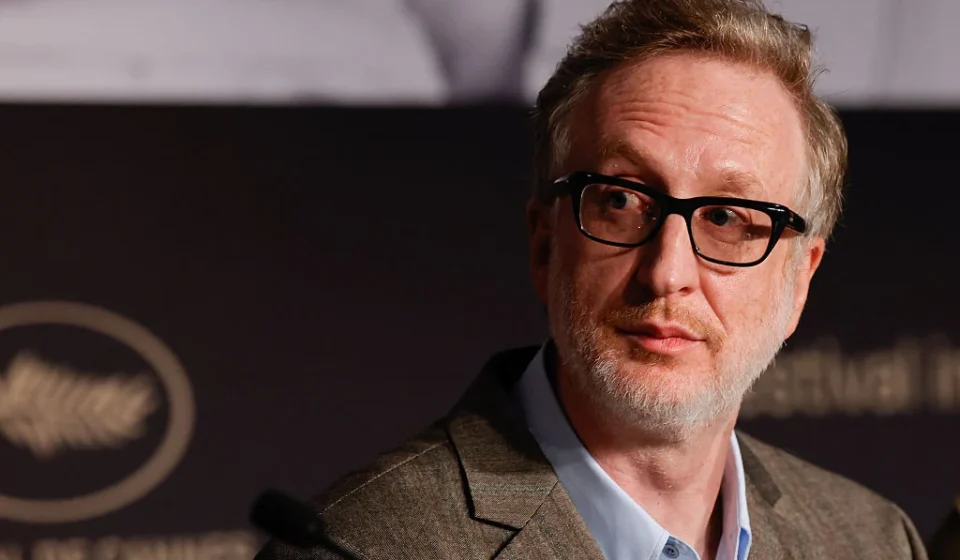
In an era defined by the rapid encroachment of artificial intelligence into the creative arts, few voices in Hollywood are as defiant or as philosophically grounded as director James Gray. Known for his intimate, deeply personal epics, the auteur behind The Lost City of Z and Ad Astra has issued a stark warning regarding the industry’s current obsession with AI-driven filmmaking. While some see the technology as the inevitable future of production, Gray describes the push as “obscene,” offering a contrarian perspective that suggests this technological pivot is not merely misguided, but destined to fail.
In a wide-ranging, exclusive interview for an upcoming episode of the Filmmaker Toolkit podcast, Gray articulates a vision of cinema that centers on the human experience—a territory he believes is fundamentally inaccessible to algorithms.
The Irretrievable Human Element: A Philosophical Stance
Gray’s skepticism toward AI is rooted in a belief that art requires a level of metaphysical depth that machines cannot replicate. For the director, the “soul” of a creative endeavor lies in its layers of mystery—layers that are inherently tied to human existence.
“I have a strange optimism about it because I think we will begin to recognize pretty quickly, if we don’t already, that AI is not going to be able to get at all of the infinite layers of the soul,” Gray stated. He acknowledges that AI may have utility in technical fields—such as accelerating medical clinical trials—but he draws a firm line at the creative arts.
“Our souls are the only true infinite,” he continued. “You’re trying to reach for in movies, and any creative endeavor, really, to represent the never-ending mystery, the unending layers that exist. And so what does that mean? It means imperfection is part of the equation.”

This focus on “imperfection” is the cornerstone of Gray’s artistic philosophy. He argues that the polish and seamlessness offered by modern digital tools, and by extension AI, often strip away the very “magic” that defines the cinematic medium.
Chronology of a Filmmaker’s Pivot: From Digital Regret to Analog Redemption
Gray’s current stance on the necessity of celluloid and tangible, imperfect imagery represents a significant evolution in his career. To understand his current conviction, one must look back at his recent work, specifically his 2022 film, Armageddon Time.
The 2022 Digital Experiment
At the time of Armageddon Time’s release, Gray defended his choice to shoot digitally. He believed the format provided the technical flexibility required to capture the performances of his young cast, allowing for longer, continuous takes without the physical constraints of film magazines. However, in his latest comments, Gray expresses a candid regret regarding that decision.
“I found myself on the digital [format] fighting and fighting and fighting to get the imperfection, to get the grain, to get the kind of elusiveness of the image, the irretrievability of the image,” he admitted. While he remains proud of the film and praises the work of cinematographer Darius Khondji, he views the process as a struggle against the medium’s own inherent clarity.
The Return to Celluloid: Paper Tiger
With his upcoming crime drama Paper Tiger, which has been selected as the opening night film for the 2026 New York Film Festival, Gray has made a definitive return to celluloid. Working with cinematographer Joaquín Baca-Asay, the production eschewed modern digital workflows in favor of vintage lenses and traditional tungsten lighting. For Gray, this was not just an aesthetic choice, but a moral and creative imperative to re-inject “humanity” into the frame.

Supporting Data: The Case for Analog in a Digital Age
Gray’s argument is bolstered by a broader cultural shift that he compares to the resurgence of vinyl records in the music industry. He suggests that audiences are experiencing a “digital fatigue,” a subconscious reaction to the cold, clinical precision of modern technology.
The Vinyl Analogy
“We went all digital in the ’80s and early ’90s, and all of a sudden people heard a vinyl record and went, ‘Wait a minute, that sounds better,’” Gray explained. He notes that vinyl offers a “continuous signal,” whereas digital technology breaks sound into a series of zeros and ones. Similarly, he believes that the grain of film stock provides a sensory texture that digital sensors often lack.
The Psychology of the Image
Gray posits that there is an “inherent melancholy” attached to a photograph or a film frame. It is, by definition, a moment frozen in time—a moment that can never be retrieved. He contrasts this with the “disposable” nature of modern digital imagery.
“We take more photographs than ever; people are constantly photographing, but we don’t really look at them,” Gray observed. He notes that the immediacy of digital, which mimics the look of live television or sports broadcasting, feels “too present” for narrative cinema. “If a movie looked like you were watching an NFL game, it would offend you. It would look terrible because it feels so live. It doesn’t have that beauty of the past.”
Official Responses and Industry Context
Gray’s comments arrive at a pivotal moment for the film industry. As studios race to implement AI for screenwriting, visual effects, and even performance synthesis, the discourse surrounding the role of the “auteur” has intensified.

While Gray is one of the most vocal critics, he is part of a growing movement of filmmakers—including veterans like Christopher Nolan and Martin Scorsese—who continue to advocate for the primacy of physical film and the irreplaceable nature of human labor. The industry remains divided: one camp views AI as a democratizing force that lowers costs and removes technical barriers, while the other, represented by Gray, fears that the loss of human struggle in the creative process will lead to a homogenization of art.
Gray’s upcoming film, Paper Tiger, serves as the practical manifestation of his beliefs. By choosing to embrace the limitations of traditional equipment, he is effectively creating a litmus test for the audience: can they feel the difference between an algorithmically polished image and one forged through the “imperfect” human process?
Implications: The Future of the Cinematic Experience
If Gray is correct, the industry may be heading toward a bifurcated future. In one lane, there will be the “content” market—AI-generated, hyper-efficient, and increasingly disposable. In the other, there will be a “boutique” or “prestige” market where the premium is placed on the human touch, the grain of the film, and the intentional imperfection of the artist.
The implications for the next generation of filmmakers are profound. If the “magic of the silver screen” is indeed dependent on the very things that AI seeks to “correct”—soft focus, grain, and the withholding of visual information—then the pursuit of technological perfection may actually be a pursuit of artistic irrelevance.
As the industry prepares for the release of Paper Tiger on November 13, 2026, through NEON, the conversation surrounding Gray’s work will likely dominate the fall festival circuit. It is not merely a debate about lenses or light; it is a debate about what it means to be human in a world that is becoming increasingly automated.

For Gray, the answer is clear: “That imperfection, the warmth, is what reminds us of who we are.”
To hear James Gray’s full, wide-ranging interview, subscribe to the Filmmaker Toolkit podcast on Apple, Spotify, or your preferred podcast platform. The episode will be available for streaming this November.