Reclaiming the Frontier: How Netflix’s ‘Little House on the Prairie’ Bridges a Historical Divide

Editor’s note: The following article contains spoilers for the first season of the Netflix adaptation of "Little House on the Prairie."
For decades, the name Laura Ingalls Wilder has been synonymous with the idealized American frontier experience. Her "Little House" novels, and the subsequent iconic 1974–1983 NBC television series, framed the westward expansion as a story of grit, family, and rugged individualism. However, those narratives were famously—and controversially—silent on the perspectives of the Indigenous peoples whose displacement enabled that very expansion.
In 2026, Netflix has released a bold, reimagined adaptation of Little House on the Prairie that aims to rectify these historical erasures. Showrunner Rebecca Sonnenshine has expanded the narrative scope far beyond the original source material, positioning the Ingalls family’s illegal settlement in Kansas against the backdrop of the Osage Nation’s fight for survival. The result is a series that is as much about the complexities of land rights as it is about the bonds of family.

A Dual Perspective: The Ingalls and the Mitchells
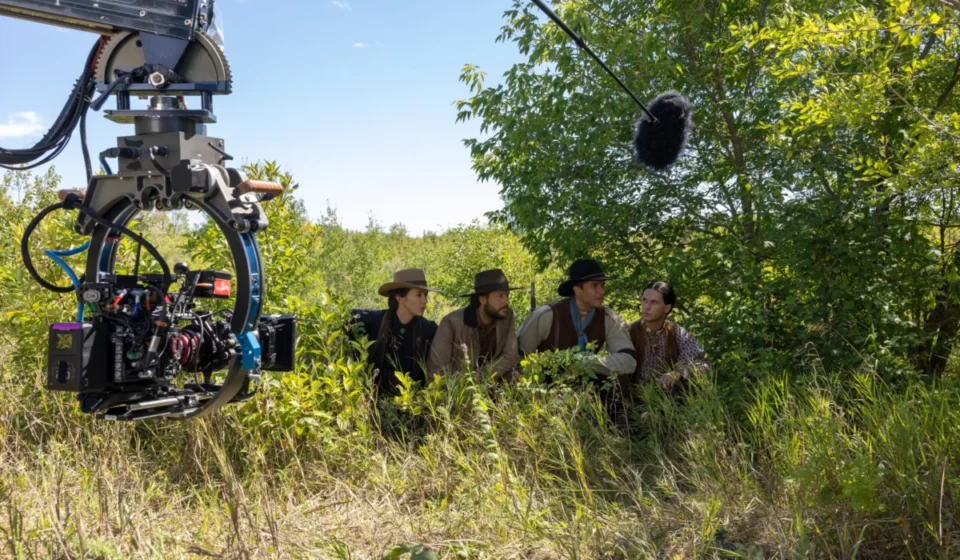
The series centers on the familiar faces of the Ingalls clan: patriarch Charles (Luke Bracey), matriarch Caroline (Crosby Fitzgerald), and their daughters Laura (Alice Halsey) and Mary (Skywalker Hughes). However, the narrative is anchored by their interaction with a neighboring Osage family, the Mitchells. Patriarch William Mitchell (Meegwun Fairbrother) and his family serve as the narrative mirror to the Ingalls, with their daughter, Good Eagle (Wren Zhawenim Gotts), forming a pivotal friendship with Laura.
"The reason to tell this story in 2026 is that we get the opportunity to tell the Osage point of view," Sonnenshine told IndieWire. "They were in the book, but we saw them from afar. We never got to know them or characterize them. This show gives us the opportunity to portray them as parents, children, brothers, and sisters. The most exciting thing about this season is that we see two families trying to figure out what the best future is in this country for them."
Chronology of a Shifting Narrative
The production’s commitment to historical accuracy and cultural representation represents a departure from previous iterations of the franchise. Following years of criticism from Indigenous groups and scholars—culminating in the American Library Association’s 2018 decision to remove Wilder’s name from a prestigious award due to the "dated cultural attitudes" in her work—the new production took a proactive approach to research and collaboration.

The creative team recruited Osage Nation citizens to guide the script. P. Carter Kristensen wrote the fourth episode, and University of Kansas professor Robert Warrior provided the historical framework for the Osage Diminished Reserve. Furthermore, the production enlisted Julie O’Keefe—a cultural consultant known for her work on Martin Scorsese’s Killers of the Flower Moon and Netflix’s American Primeval—to oversee the authenticity of the cultural artifacts and historical representation.
O’Keefe, who grew up on the Osage reservation in northeastern Oklahoma, utilized the Osage Museum’s collections to source or recreate more than 3,000 cultural items. "I’m always wanting to achieve a feeling of a community project from any nation that I work with," O’Keefe noted. "That way, they get to see their work, and they get to understand the story and how it’s being told."
Authenticity as a Performance Metric
For actor Meegwun Fairbrother, the commitment to authenticity was a transformative experience. As a mixed-blood Ojibwe citizen from Treaty 3 territory, Fairbrother drew immediate parallels between the historical displacement of the Osage and the painful legacy of residential schools in Canada.

"I had to bring my own experience and find the universal truths across all Nations, but to get specific, it was all about the language for me," Fairbrother said. He credited Osage language consultant Talee Redcorn for shaping his performance. The stakes were high; when actual Osage chiefs visited the set and heard Fairbrother speaking the language, their validation of his efforts served as, in his words, "the biggest compliment."
The series depicts the tension between the two families through the lens of land ownership. In Episode 3, a group of Osage, including White Sun’s younger brother Little Puma (Xander Cole), reclaim items from the Ingalls’ home as a form of protest against the family’s squatting on reservation land. Sonnenshine emphasizes that Caroline’s initial suspicion was born of fear, yet the show subverts history by having her ultimately form a friendship with White Sun (Alyssa Wapanatâhk). This evolution, Sonnenshine explains, is grounded in their shared experience as mothers.
The Drum Creek Treaty: A Historical Turning Point
The series’ penultimate episode, "A Softer Note in the Sound of the Wind," directed by Navajo filmmaker Sydney Freeland and written by Cherokee writer Tom Hanada, serves as the season’s emotional climax. It dramatizes the 1870 Drum Creek Treaty, which forced the Osage out of Kansas.

The production team went to great lengths to ensure the depiction of this tribal council meeting was historically grounded. Using archival photos from the U.S. Department of the Interior and the Osage Museum, they constructed a period-accurate village and lodge. The inclusion of actual tribal citizens in the scene created a powerful atmosphere that left members of the Osage Nation "gobsmacked" by the attention to detail.
"In a lot of ways, Little House on the Prairie is a hopeful show," Fairbrother said. "But bringing this show to a new generation, I don’t think you can cover up what happened historically and tell a hopeful story. It has to be almost bittersweet."
Implications: The Legacy of Land and Agency
A critical element of the show is the depiction of the Osage Nation’s strategic preservation of their resources. Fairbrother highlights that the Osage refused to break their land into individual allotments, maintaining communal ownership and holding onto their mineral rights—a decision that would later lead to the Osage becoming one of the wealthiest populations in the world by the early 20th century.

In the final episodes, the Ingalls prepare to head to Walnut Grove, while the Mitchells face the heartbreaking reality of forced removal. Their choice to leave is complicated by the fact that they must leave behind the graves of their loved ones, a poignant reminder of the permanence of the ties between Indigenous people and their land.
"White Sun and Mitchell’s daughter [Julia] died and is buried on the land, and White Sun is like, ‘If we leave, we’re going to be leaving a part of ourselves here in the ground,’" Fairbrother explained. "That’s why it’s such a hard choice for us to leave. But in order to survive, we have to move on."
Future Directions and Cultural Impact
While the first season concludes with the two families parting ways, the door remains open for future installments. Sonnenshine hinted that while the show will maintain the spirit of the Ingalls’ nomadic nature, their encounters with Indigenous communities will remain a central theme.

"Every inch of this land that we are all living on right now was inhabited by Indigenous peoples," Sonnenshine said. "So, of course, anywhere they go, there is a story to be told about the Indigenous peoples who lived there."
Fairbrother is equally committed to the project’s future, expressing an interest in moving behind the camera to take on directing roles as the series continues. By integrating the lived experiences of Native Americans into one of the most recognizable stories in American literature, the new Little House on the Prairie does more than just reboot a franchise; it challenges the audience to confront the "myths" of the frontier and recognize the resilience and agency of the people who were there long before the covered wagons arrived.
The first season of Little House on the Prairie is currently streaming on Netflix and has already been renewed for a second season, signaling that this more inclusive, historically rigorous approach to the American story has found a receptive audience. As the series moves forward, it promises to continue untangling the complex web of history, empathy, and land, proving that the "little house" is, and always has been, part of a much larger, more diverse landscape.