The Enchanted Resurgence: How ‘The Magic Faraway Tree’ is Reclaiming Enid Blyton’s Legacy for a New Generation

The literary ghost of Enid Blyton, once the undisputed queen of British children’s fiction, has long haunted the peripheries of modern education and librarianship. For decades, her vast bibliography was sidelined, criticized for its dated social hierarchies, regressive gender roles, and problematic racial undertones. However, the 2020s have signaled a massive cultural pivot. Through a series of high-profile, "modernized" adaptations, the Blyton brand is undergoing a radical rehabilitation. The most significant milestone in this revival arrived this year with the theatrical release of The Magic Faraway Tree.
Directed by Ben Gregor and penned by the architect of modern British whimsy, Simon Farnaby, the film has not only bridged the gap between nostalgia and contemporary values but has also proven to be a commercial juggernaut. Having already outperformed major Hollywood animation in the United Kingdom, the film now sets its sights on the North American market, carrying with it the weight of a franchise that has already secured two future sequels.
Main Facts: A Box Office Triumph and a Star-Studded Ensemble
At the heart of the film’s success is its ability to blend "old-fashioned" storytelling with a glossy, high-budget aesthetic. The Magic Faraway Tree centers on the Thompson family—Tim (Andrew Garfield) and Polly (Claire Foy)—a middle-class London couple who find themselves financially and emotionally adrift in the corporate rat race. Seeking a reset, they relocate their three children to a dilapidated, electricity-free cottage in the British countryside.
The children—the vocal teenager Beth (Delilah Bennett-Cardy), the gaming-addicted Joe (Phoenix Laroche), and the youngest, Fran (Billie Gadsdon), who has mysteriously stopped speaking—initially struggle with the lack of digital connectivity. Their lives change when Fran discovers a colossal, iridescent tree in the nearby woods that serves as a portal to various fantastical realms.
Commercial Performance
The film’s performance in the United Kingdom was nothing short of a "David vs. Goliath" story. Upon its release in March, The Magic Faraway Tree outgrossed Pixar’s highly anticipated Hoppers. This domestic victory served as a proof-of-concept for the "Blyton Cinematic Universe," signaling to distributors that there is a massive, underserved market for earnest, live-action family entertainment that eschews the "edginess" of modern animation.
Key Creative Personnel
- Director: Ben Gregor (known for his work on high-end television).
- Screenwriter: Simon Farnaby (the writer behind the critically acclaimed Paddington 2 and Wonka).
- Cast: Andrew Garfield, Claire Foy, Nicola Coughlan (as Silky), Nonso Anozie (as Moonface), Jessica Gunning (as Dame Washalot), and Rebecca Ferguson (as the primary antagonist).
- Production Design: Alexandra Walker, who crafted the vivid, candy-colored landscapes of the magical lands.
Chronology: From Controversial Canon to Cinematic Franchise
The journey of The Magic Faraway Tree from the printed page to the silver screen is a decades-long saga of cultural shifts and creative reimagining.
The Original Era (1939–1951)
Enid Blyton published the four books in the Faraway Tree series between 1939 and 1951. They were immediate hits, defined by their episodic nature and the sheer imaginative scale of the "lands" at the top of the tree (such as the Land of Topsy-Turvy or the Land of Take-What-You-Want). However, as the 20th century progressed, the books—like much of Blyton’s work—faced bans in libraries for being "intellectually thin" and socially regressive.
The BBC Renaissance (2020–2023)
The path for the film was paved by the BBC’s recent successes. Starting in 2020, Malory Towers brought Blyton’s boarding school stories back to life over seven series, carefully stripping away the more exclusionary elements of the source material. This was followed in 2023 by a "glossy" reimagining of The Famous Five, executive produced by the unlikely noir director Nicolas Winding Refn. These projects proved that Blyton’s core concepts—adventure, mystery, and childhood autonomy—remained potent if the "packaging" was updated.
Production and Release (2023–2024)
Filming for The Magic Faraway Tree took place throughout 2023, with a heavy emphasis on practical sets supplemented by modern visual effects. The UK release in March 2024 acted as a litmus test for the global market. The overwhelming positive reception led to the immediate greenlighting of two sequels before the film even crossed the Atlantic. This weekend marks the film’s North American debut, a critical juncture that will determine if Blyton’s specifically British brand of "folksiness" can translate to a global audience.
Supporting Data: The Creative DNA and Technical Craft
The film’s success can be attributed to its "Creative DNA," which borrows heavily from the most successful family franchises of the last two decades.
The Farnaby Touch
Simon Farnaby has become the "secret weapon" of British family cinema. His scripts for Paddington 2 and Wonka are noted for their "radical kindness"—a tone that prioritizes empathy over irony. In The Magic Faraway Tree, Farnaby attempts to "punch up" Blyton’s notoriously flat prose. While critics have noted that the film lacks the laugh-out-loud humor of Paddington, it maintains a consistent "gaiety of tone."
Technical Execution
The film’s visual language is a collaboration between Director of Photography Zac Nicholson and Production Designer Alexandra Walker.
- The Tree: Described as a "gnarled specimen dripping in iridescent flowers," the tree was designed to feel like a living, breathing character.
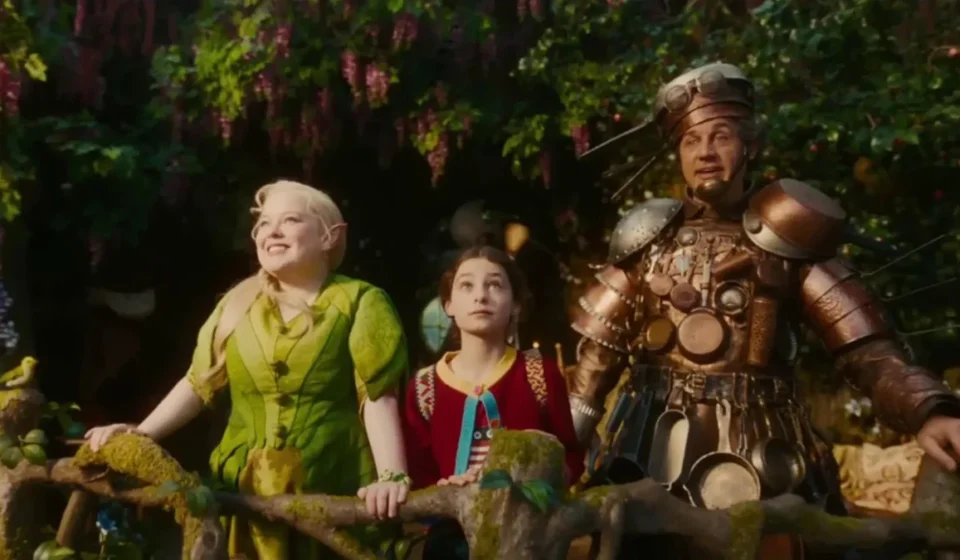
- Costume Design: Ann Maskrey (who worked on The Hobbit trilogy) was tasked with creating the looks for the "elfin oddballs." This includes the Saucepan Man (Dustin Demri-Burns), whose costume consists of a literal suit of kitchenware, and Silky (Nicola Coughlan), whose look blends traditional fairy aesthetics with a modern, high-fashion edge.
Character Archetypes
The film makes a conscious effort to ground the fantasy in "real-world" stakes. Unlike the original books, where the parents were often background figures, Garfield and Foy’s characters are central to the narrative.
- Tim Thompson: An "art-school romantic" who represents the struggle to maintain creativity in an adult world.
- Polly Thompson: A "gifted inventor" whose refusal to compromise her principles leads to the family’s financial struggle, providing the impetus for the move.
Official Responses: Critical Reception and Creative Intent
The response to the film has been a mixture of commercial enthusiasm and critical nuance.
The Filmmakers’ Intent
Ben Gregor and Simon Farnaby have been vocal about their desire to create a "safe space" for children’s imagination. In promotional interviews, the team emphasized that the film is an "anti-tech" manifesto. By portraying the children’s withdrawal from devices as a necessary step toward self-discovery, the filmmakers positioned the movie as a tonic for the "iPad generation."
The Critical Consensus
Professional reviews have generally lauded the film’s "politeness" and high production values, though some critics have pointed out the inherent limitations of the source material.
- Variety’s Assessment: The film is described as "sweet, even a bit twee, and unfailingly nice." However, the review notes a "shortage of outright laughs," suggesting that Blyton’s "mirthless" writing style is difficult to fully transform into a modern comedy.
- The Aesthetic Critique: Critics have compared the film’s visual style to a "gilded mark of quality," noting that it feels like a hybrid of The Secret Garden and The Chronicles of Narnia.
Audience Feedback
In the UK, exit polls indicated that parents were "jaded by more obnoxious family fare" and found the film’s earnestness refreshing. The casting of Nicola Coughlan (fresh off the success of Bridgerton) and Jessica Gunning (Baby Reindeer) also helped attract a wider demographic beyond just young children.
Implications: The Future of the "Blyton-verse"
The success of The Magic Faraway Tree carries significant implications for the film industry and the preservation of literary history.
The Rehabilitation Model
This film serves as a blueprint for how to handle "problematic" classic IPs. Rather than discarding the works of authors like Blyton, studios are opting for a "rehabilitation through adaptation" strategy. By hiring diverse casts (such as Nonso Anozie as Moonface) and rewriting the scripts to reflect modern sensibilities, they can retain the valuable brand recognition while shedding the historical baggage.
The Live-Action Family Genre
For years, the family film market has been dominated by CGI animation. The Magic Faraway Tree proves that there is still a massive appetite for live-action fantasy. This may lead to a surge in adaptations of other mid-century children’s classics that were previously deemed "too dated" for the screen.
Franchise Expansion
With two sequels already greenlit, the "Faraway Tree" is set to become a multi-year franchise. The upcoming films will likely explore the remaining lands from Blyton’s books—such as the Land of Toys and the Land of Goodies—potentially introducing even more high-profile cameos.
The "Back to Nature" Narrative
Culturally, the film taps into a growing parental anxiety regarding screen time. By framing the "Magic Faraway Tree" as a superior alternative to video games and social media, the film aligns itself with a broader "rewilding" movement in childhood education.
In conclusion, while The Magic Faraway Tree may not achieve the "classic" status of the films it emulates, its commercial success is a testament to the enduring power of Blyton’s concepts. It is a film that "trots along like an obliging corgi pup"—polite, cheerful, and meticulously crafted to ensure that the next generation of children continues to look toward the treetops for a sense of wonder.