Toho’s Global Renaissance: How ‘Godzilla Minus One’ Redefined the Studio’s International Strategy

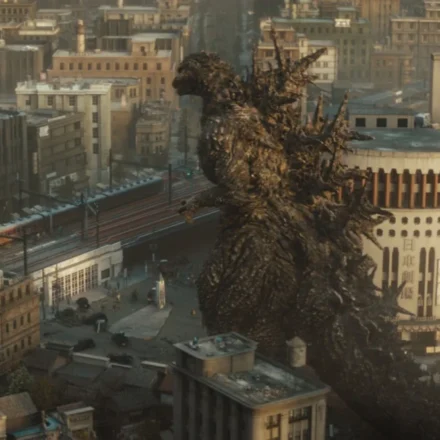
The Japanese entertainment landscape is undergoing a profound structural shift. For decades, the industry’s giant, Toho, operated with a domestic-first mandate, viewing international expansion as a secondary, often elusive, objective. However, the resounding success of the 2023 phenomenon Godzilla Minus One has acted as a catalyst for a new era of globalization for the studio. At the Tokyo International Film Festival this week, Toho CEO Matsuoka Hiro revealed that the film’s North American triumph was not merely a box-office win—it was a strategic turning point that has fundamentally altered how the company views its place on the world stage.
A Chance Encounter and the Power of Local Demand
The genesis of Godzilla Minus One’s North American release was, by Matsuoka’s own admission, less a product of rigid corporate forecasting and more a result of organic observation. During a business trip to the United States, Matsuoka engaged in direct dialogue with American exhibitors. During these conversations, he identified a startling gap in the marketplace: Hollywood studios, preoccupied with their own production cycles, were failing to satisfy the sheer volume of audience demand for blockbuster cinema.
Exhibitors suggested that Toho pivot toward its strengths in anime—a sector where Japanese content has already established a fervent, built-in audience in the West. While the suggestion to prioritize anime was noted, Matsuoka realized that the solution was already in his studio’s back pocket: Godzilla. By deciding to self-distribute the franchise rather than licensing it out, Toho took a calculated risk that would eventually yield $57.1 million in the North American market alone.
"It was all a coincidence," Matsuoka told an audience at an "Academy in Tokyo" session, sharing the stage with Bill Kramer, CEO of the Academy of Motion Picture Arts and Sciences. "It wasn’t a strategy; we just tried."
Chronology of a Turnaround
The road to this success was paved with institutional hesitation. Within the halls of Toho, the proposal to self-distribute in the U.S. was met with significant skepticism. The studio carried the scars of previous, unsuccessful attempts to penetrate international markets, leading many executives to believe that the risk of failure outweighed the potential for gain.
- Pre-2023: Toho maintains a traditional distribution model, relying on third-party international partners, often resulting in inconsistent branding and profit-sharing structures.
- The U.S. Insight: Matsuoka identifies a vacuum in the U.S. theatrical landscape, recognizing that audiences are hungrier for content than current domestic studio outputs allow.
- The Launch: Godzilla Minus One is greenlit for a direct North American push. The film defies historical trends, performing well above expectations and, crucially, returning the revenue directly to Toho’s balance sheet.
- The Strategic Pivot (2024): Recognizing the efficiency of its new model, Toho acquires GKIDS, a specialized U.S. distributor. This move institutionalizes the lesson learned from Godzilla, ensuring that future titles—such as the upcoming Godzilla Minus Zero—have a dedicated, sophisticated pipeline into the North American market.
Supporting Data: The Shifting Global Cinema Landscape
The success of Godzilla Minus One is not an isolated incident but a symptom of a broader shift in consumer behavior. Bill Kramer, representing the Academy, highlighted the impact of films like Bong Joon-ho’s Parasite, which effectively broke the "one-inch barrier" of subtitles for mainstream Western audiences.
Data from the industry suggests that the audience for non-English language films has never been larger. The Academy itself is reflecting this trend; currently, 25% of the Academy’s voting members are based outside the United States. This demographic shift is why the Academy has invested so heavily in its "Academy in Tokyo" presence.
Furthermore, the domestic Japanese market has provided its own blueprint for survival. Even in a post-pandemic world, Japanese theaters have maintained high engagement through repertory screenings and retrospectives, such as those dedicated to the works of Miyazaki Hayao. This proves that theatrical exhibition remains a viable, if not essential, pillar of the entertainment ecosystem when managed with a respect for film culture.
Official Responses: Coexistence Over Conflict
A central theme of the conversation between Matsuoka and Kramer was the tension between streaming and the theatrical experience. While many industry analysts have spent the last five years predicting the "death" of cinema at the hands of digital platforms, the executives offered a more nuanced view.
Matsuoka asserted that theatrical exhibition and streaming are "more like coexisting than enemies." He argued that streaming provides a long-tail life for films, while the cinema provides the cultural event necessary to launch them. Kramer bolstered this by noting that theaters play a vital role in introducing younger generations to film history, a function that digital algorithms—which often prioritize recency—struggle to replicate.
Addressing the AI Frontier
The conversation inevitably turned to the role of artificial intelligence in filmmaking. Both executives maintained a balanced, cautious perspective:
- Matsuoka’s Stance: He framed AI as a productivity tool capable of maximizing workflow efficiency, though he urged the industry to remain vigilant regarding its long-term societal and creative impact.
- Kramer’s Stance: The Academy remains staunch in its commitment to human-led creativity. Kramer emphasized that as the industry undergoes technological evolution, the Academy’s core mission remains the rewarding of human authorship and the preservation of the "soul" of the filmmaking process.
Implications for the Future of Toho
The acquisition of GKIDS is perhaps the most tangible evidence of Toho’s long-term commitment to this new strategy. With the upcoming release of Godzilla Minus Zero on November 6, the studio is no longer "just trying." It is now operating with a deliberate, infrastructure-heavy approach to international distribution.
This shift has deep implications for the global film market. Toho, as a major studio giant, possesses a massive library of IP that has historically been underutilized in the West. By taking control of its own distribution, the company is positioning itself to be a primary competitor to Hollywood rather than a peripheral provider.
Moreover, the Academy’s presence in Tokyo signals that the center of gravity in the film world is moving. By fostering deeper ties with Japanese studios and festivals, the Academy is acknowledging that the future of cinema is inherently polycentric.
"The Academy’s work," Kramer added, "extends beyond the Oscars. It is about educating, engaging, and inviting the world to participate in the film industry."
As Toho moves forward, the success of Godzilla Minus One serves as a case study for legacy studios everywhere: in an era of global connectivity, the biggest risks are often not the films themselves, but the failure to control their journey to the audience. Toho has learned that lesson, and in doing so, has opened the door for a new, more interconnected era of Japanese cinema on the global stage.