The Surrealist Evolution: León and Cociña’s ‘Donkey Princess’ and the New Frontier of Hybrid Cinema

The landscape of contemporary Latin American cinema is often defined by its gritty realism or its biting social commentary. However, within this milieu, the Chilean duo of Cristóbal León and Joaquín Cociña has carved out a niche that is entirely their own—a space where the tactile and the digital, the juvenile and the horrific, and the historical and the hallucinatory collide. Their latest feature, Donkey Princess (2024), which recently premiered in the international competition at the Locarno Film Festival, marks a pivotal moment in their career. It is a film that attempts to bridge the gap between the raw, claustrophobic intensity of their debut and the dense, intellectual experimentation of their sophomore effort.
Main Facts: A Bold Reimagining of a Forbidden Tale
Donkey Princess is the third feature film from León and Cociña, a creative partnership that has become synonymous with a "handmade" aesthetic that defies traditional cinematic boundaries. The film is a loose, dark adaptation of Charles Perrault’s 17th-century fairytale Donkeyskin (Peau d’Âne). Unlike the more sanitized versions of folklore popularized by Western animation giants, Donkey Princess leans into the discomfiting core of Perrault’s story: a king’s obsessive, incestuous desire for his own daughter following the death of his queen.
Written by the directors in collaboration with novelist Alejandra Moffat—who also co-wrote their acclaimed debut The Wolf House—the film stars Antonia Giesen as Princess Diana. Giesen, who previously anchored the duo’s The Hyperboreans, delivers a performance that must navigate multiple dimensions and personas. The cast is rounded out by Francisco Melo as the tyrannical King and Andrew Bargsted as Lalo, the commoner who offers Diana a glimpse of a life beyond her father’s suffocating grip.
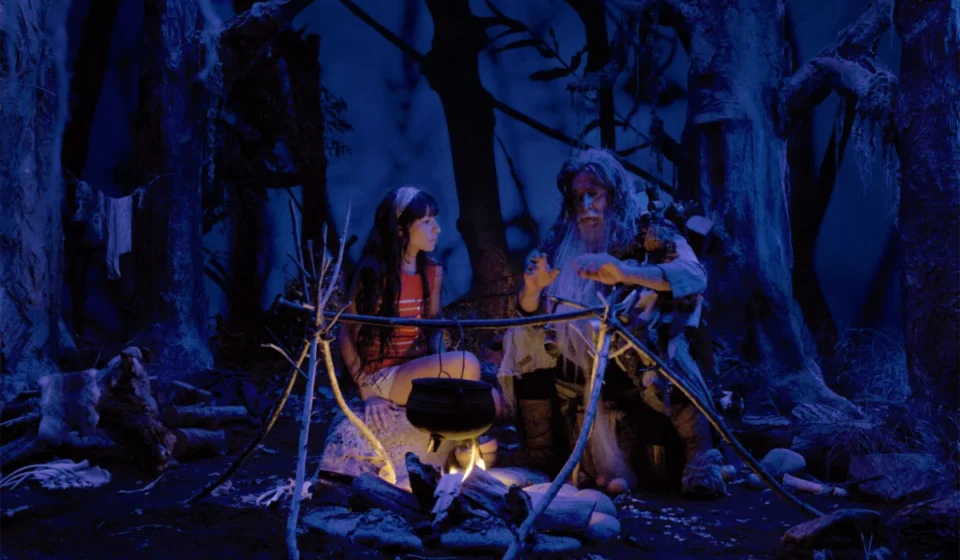
The film’s aesthetic is a "visual quiltwork," blending live-action cinematography with the stop-motion, papier-mâché, and claymation techniques that have become the directors’ signature. Produced under the watchful eye of a production team that understands the duo’s penchant for the avant-garde, Donkey Princess is both a return to form and a leap into new, more realistic registers of storytelling.
Chronology: From the "Wolf House" to the World Stage
To understand the significance of Donkey Princess, one must trace the meteoric and unconventional rise of León and Cociña.
2018: The Nightmare of ‘The Wolf House’
The duo made their feature debut with The Wolf House (La Casa Lobo), a film that took five years to complete and was partially animated in various art galleries around the world. The film used a single, continuous-shot aesthetic to tell the story of a young woman escaping a German colony in southern Chile (a clear allegory for the real-life horror of Colonia Dignidad). Its use of life-sized puppets and charcoal wall drawings that morphed in real-time created a "dream nightmare" that remains one of the most visually arresting works of the 21st century.
2023: The Hollywood Intersection
Their unique style caught the attention of American auteur Ari Aster. The duo was commissioned to create a pivotal stop-motion sequence for Aster’s 2023 film Beau Is Afraid. This collaboration introduced their "ramshackle" yet sophisticated textures—forests of dry branches and surreal, shifting landscapes—to a much broader global audience.
2024: ‘The Hyperboreans’ and the Pivot to Live-Action
Earlier in 2024, the duo released The Hyperboreans, a film that pushed their experimental tendencies to the limit. It was a narratively dense melange that incorporated political theory, Chilean history, and psychological drama. While it dazzled critics with its technique, it was seen by some as being too "abstruse" for general audiences. It served, however, as a crucial stepping stone in integrating live-action actors into their animated worlds.
August 2024: The Locarno Premiere
Donkey Princess arrived at Locarno as a synthesis of these previous eras. It retained the fairytale darkness of The Wolf House and the technical hybridity of The Hyperboreans, but with a more focused narrative drive that sought to balance the avant-garde with the accessible.
Supporting Data: The Architecture of the "Handmade" World
The technical execution of Donkey Princess is what distinguishes it from contemporary fantasy cinema. Under the production design of Natalia Geisse, the film’s world feels palpably physical, as if it were constructed from the detritus of a forgotten attic.
Visual Components
The "Kingdom" in the film is not a CGI construct but a mixture of:
- Papier-Mâché and Clay: Used for character masks and environmental details.
- Edible Aesthetics: Castle turrets are rendered to look like they were sculpted from cake frosting, creating a "queasy" sense of domesticity.
- Found Materials: Forests are forged from stray, dry branches, and mountains are shaped from fiberglass.
- 2D Interludes: Occasional flurries of 2D cartoon birds and butterflies provide a jarring contrast to the heavy, tactile sets.
The Palette of Trauma
The film utilizes a color palette described as "queasy shades of turquoise and puce." These choices are intentional, reflecting the "tortured daddy issues" and the decaying nature of the King’s patriarchal rule. The transition from the fairytale kingdom to the "urban bustle of contemporary Chile" is marked by a shift in visual texture, moving from the cluttered, hallucinatory sets to a more grounded, though still stylized, realism.
Structural Mechanics
The narrative utilizes "dimensional shifts." When Diana escapes, she is transported to a modern-day pest control business in Chile. This leap across space and time is facilitated by a magical bracelet, a trope common in fairytales but used here to explore the "naïve yet despairing" mechanics of trauma and displacement.
Official Responses: Critical Reception and Comparative Analysis
The reception at Locarno has been largely positive, though critics have noted that Donkey Princess occupies a middle ground in the directors’ filmography.
The "Auteur" Status: Critics agree that this third feature consolidates León and Cociña as master auteurs. By revisiting the "adult fairytale" terrain, they have found a way to make their complex visual language more digestible without sacrificing their artistic integrity.
Comparisons to Jacques Demy: Any adaptation of Donkeyskin inevitably invites comparison to Jacques Demy’s 1970 masterpiece starring Catherine Deneuve. While Demy’s version was celebrated for its "offbeat whimsy" and vibrant pop-art colors, León and Cociña’s version is noted for being "more downbeat." Where Demy used artifice to create a dream, the Chilean duo uses it to explore a nightmare.
Narrative Clarity: Some early reviews have pointed out that the film’s opening is "hurried and scrambled," reflecting the directors’ struggle to move from the purely visual to the purely narrative. However, the "concluding shift toward near-total realism" has been hailed as a major surprise, proving that the filmmakers are capable of emotional resonance beyond their technical wizardry.
The "Wolf House" Benchmark: Most critics still hold The Wolf House as the duo’s high-water mark for "intensity of vision." Donkey Princess is seen not as a replacement, but as an "intriguingly transitional work" that suggests the directors are preparing for even more ambitious cross-genre projects.
Implications: The Future of Latin American Animation and Beyond
The success and evolution of León and Cociña have significant implications for the film industry, particularly in the realms of animation and independent cinema.
1. The Death of the "Disney" Monolith
The choice of Donkeyskin as a source material is a direct challenge to the "Disney-fication" of folklore. By tackling themes of incest, patriarchal rot, and the "pest control" of one’s own past, the filmmakers are reclaiming the dark, instructional roots of the Brothers Grimm and Perrault. This signals a growing market for "adult fairytales" that use fantasy to process real-world trauma.
2. The Hybrid Cinema Movement
León and Cociña are at the forefront of a movement that refuses to categorize film as either "live-action" or "animated." As digital de-aging and CGI become more prevalent in Hollywood, the duo’s insistence on "tactile set construction" and "palpably handmade" effects offers a refreshing alternative. It suggests that the future of cinema may lie in the "varied visual quiltwork" of hybridity rather than the seamlessness of digital perfection.
3. Chilean Identity and Global Narrative
While their work is deeply rooted in the Chilean experience—referencing the country’s geography and its history of political and domestic enclosure—Donkey Princess proves that their themes are universal. The "aging invalid" father, stripped of his royal powers but still "plenty burdensome," serves as a potent metaphor for the lingering shadows of authoritarianism and patriarchy in any society.
4. A Career in Transition
As the duo moves forward, the "open-ended possibility of freedom" seen at the end of Donkey Princess mirrors their own career trajectory. Having mastered the art of the "dream nightmare," they are now exploring the boundaries of realism. Whether their next project leans into the "total realism" hinted at in this film’s climax or returns to the "feverishly world-building" animation of their youth, they have ensured that their voice is one of the most essential and unpredictable in modern cinema.
In conclusion, Donkey Princess is more than just a film; it is a testament to the power of the "remarkable presentation" to elevate a familiar story into something transcendent. It confirms that Cristóbal León and Joaquín Cociña are not merely animators or directors, but architects of a new kind of cinematic language—one that is as fragile as papier-mâché and as enduring as a recurring dream.