
After a decade-long hiatus from the director’s chair, Indonesian filmmaker Ariani Darmawan has returned to the cinematic landscape with a poignant exploration of domestic life. Her debut feature, Jani Be Good, currently competing in the Asian Future section of the Tokyo International Film Festival, serves as both a homecoming for the director and a meticulous excavation of the complex, often invisible, power dynamics within a multi-generational household.
For Darmawan, the film is deeply personal. Having stepped away from her career to prioritize raising her child, her return to the medium is not merely a professional pivot but a profound reckoning with the realities of motherhood—a role that she admits she only truly began to understand after stepping into it herself.
A Portrait of Three Generations
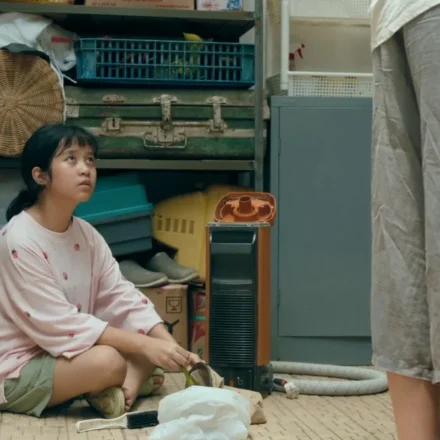
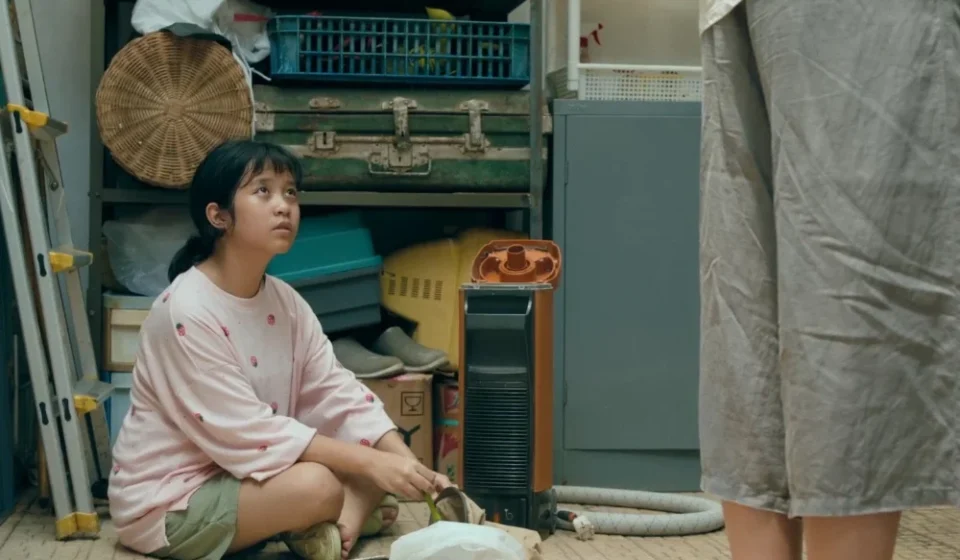
Set against the backdrop of four days in December leading up to Christmas, Jani Be Good centers on the fracturing of a Chinese-Catholic family. The narrative catalyst is a heated argument between the matriarch, Winnie, and her eldest daughter, 18-year-old Julia. Following the confrontation, Julia leaves home, leaving the younger daughter, 13-year-old Jani, to navigate the resulting emotional vacuum.
The household is one defined by routine, obligation, and the quiet, crushing weight of expectations. Winnie, a single mother juggling a career as an accountant with the side hustle of assembling fruit hampers, becomes increasingly frayed. Jani, meanwhile, finds herself caught in the middle, secretly communicating with her sister while seeking solace in her grandmother, Oma, who spends her days crafting spring rolls to fund her own future cremation.
The film, which features performances by Chempa Puteri, Sigi Wimala, Tutie Kirana, and Hyori Mika, offers a nuanced look at how silence—often used as a tool for peace—can instead become a festering wound within a family.
Chronology of a Creative Return
Darmawan’s path back to the director’s chair began in 2022, when producer Meiske Taurisia—a long-time associate—approached her with a proposal to direct a family drama. For Darmawan, the timing was serendipitous.
“I stopped making films for over 10 years because I was having a kid and looking after my family, so getting back to it was all I really wanted,” Darmawan tells Variety.
The development process was as intimate as the film’s subject matter. Darmawan co-wrote the screenplay with Cyntha Hariadi, a process she describes as the film’s biggest creative hurdle. Having primarily worked as a solo writer on her previous shorts—such as the critically acclaimed Sugiharti Halim and Silenced—Darmawan had to learn to translate Hariadi’s literary prose into visual language that maintained the integrity of the original voice.
The production itself was a model of efficiency. In a first for Palari Films, the team shot the feature in just 13 days in a house in Bandung. The preparation was rigorous; two months before production, the director, writer, and cast gathered at the location for script readings. This was followed by intensive rehearsals in Jakarta and a final two-week prep period with cinematographer Teoh Gay Hian and production designer Suherina. Because the four lead actors were strangers before the project, the casting process involved extensive chemistry tests centered on the lead, Chempa Puteri.
The Geography of Care
At the heart of Jani Be Good is a critique of the "unseen care work" that defines domestic life. Darmawan reflects on how her own perception of her mother shifted as she moved through her thirties.
"As a kid, I watched her keep the family running, rummaging through things at her desk, making phone calls, cooking dinner, but I never wondered how she felt," she says. "It took having my own family to understand how exhausting and all-consuming it is."
This realization informs the portrayal of Winnie. Despite her short temper and the stream of instructions she directs at her daughters, Darmawan was adamant that Winnie not be cast as a villain. "I know how easy it is to feel like the one who has the right to speak the loudest. So I didn’t want to judge her," the director explains.
The film also explores the unique friction of an all-female household. While cultural tropes might suggest that such a home would be inherently harmonious, Darmawan argues that power dynamics remain indifferent to gender. In the film, these tensions are manifested in the physical environment of the house: the gates remain locked, the windows are barred, and the characters protect themselves behind a facade of normalcy.
Institutional Hurdles: The Palari Films Perspective
The production of Jani Be Good highlights both the triumphs and the structural fragility of the Indonesian film industry. Palari Films, founded in 2016 by Taurisia and Muhammad Zaidy, has earned a reputation for high-quality, auteur-driven cinema, including the Golden Leopard-winning Vengeance Is Mine, All Others Pay Cash.
However, commercial success remains a complex equation. Taurisia notes that while international festival recognition builds prestige, it can occasionally brand a film as "too artistic" for local audiences, making domestic investors wary of the perceived risk.
The primary obstacle, however, is distribution. Indonesia lacks a unified distribution network that can bridge the gap between major cities and the rest of the archipelago. Films are often subjected to a brutal "survival of the fittest" cycle, where a disappointing performance in the first four days of release can lead to immediate removal from theaters.
To combat this, Palari Films has launched the "Palari Community Class," a workshop series designed to empower regional film communities to organize their own screenings and watch parties. Jani Be Good serves as the inaugural pilot for this initiative, aiming to cultivate a sustainable audience outside the traditional multiplex system.
Implications for the Future
The industry-wide implications of Jani Be Good extend beyond the screen. As Taurisia points out, the "film value chain" in Indonesia currently fails to support directors between their first and second features. By fostering community-led distribution, Palari hopes to create a more resilient ecosystem that values long-term career growth over immediate box-office spikes.
For Darmawan, the future is balanced between her artistic pursuits and her life as a bookstore owner at the independent library Kineruku. She remains committed to directing, provided the projects allow her to explore the "sad and sweet" complexities of human relationships.
"You could say you can only see the constellation when you’re standing outside it," Darmawan says, reflecting on her upbringing as the youngest sibling, a position that allowed her the "freedom to watch things from a distance."
With Jani Be Good, she has brought that observational clarity to the screen, offering a film that doesn’t just depict a household—it dissects the silent, generational sacrifices that keep a home together. As the film prepares for its December 10 release in Indonesian cinemas, it stands as a testament to the fact that the most profound stories are often found within the four walls of one’s own living room, provided one is willing to look closely enough.