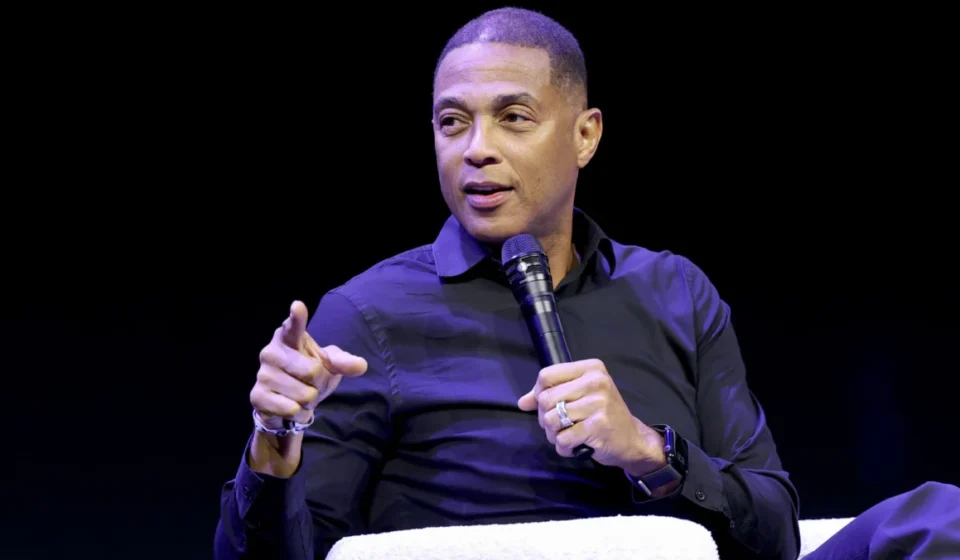
Don Lemon Signs Major Three-Year Deal with Libsyn, Signaling Expansion for Independent Media Venture

In a significant move that underscores the shifting landscape of modern journalism, former CNN anchor Don Lemon has announced a comprehensive three-year hosting and advertising partnership with podcast giant Libsyn. The deal marks a major milestone for Lemon, who transitioned to independent broadcasting in 2024. By aligning with a major network, Lemon aims to professionalize his infrastructure, scale his audience, and eventually launch a broader multi-creator network that transcends political commentary.
The Partnership: A Strategic Pivot to Scale
Under the terms of the agreement, Libsyn will take over the hosting and monetization responsibilities for Lemon’s primary audio and video podcast, The Don Lemon Show. Furthermore, the deal encompasses his companion programming, including Lemon Live at 5, Hot Topics, and Lemon Drop.
For Lemon, this partnership is less about the content itself and more about the "plumbing" of the digital media industry. Managing a staff of four while juggling a rapidly growing audience requires robust ad-tech infrastructure, something Lemon’s previous, more rudimentary setup struggled to sustain. By leveraging Libsyn’s established ad-insertion technology and distribution network, Lemon intends to transition from a single-creator operation to a more sophisticated media entity.
"The main hurdle is getting people to support you, which means advertisers and sponsors," Lemon noted in an interview with The Hollywood Reporter. "Once you have accomplished that, I cannot tell you how much weight that takes off of independent journalists."
Chronology: From Cable News to Independent Creator
The trajectory of Don Lemon’s career over the last eighteen months serves as a case study in the volatility and potential of the creator economy.
- 2023: Following his departure from CNN, Lemon spent months evaluating his next steps in a media environment increasingly skeptical of legacy cable news.
- Early 2024: Lemon launched The Don Lemon Show as an independent platform, initially seeking a partnership with Elon Musk’s X (formerly Twitter).
- March 2024: After conducting a high-profile, challenging interview with Musk for his inaugural episode, the planned debut on X was abruptly canceled by the platform’s owner, forcing Lemon to rely exclusively on YouTube and audio platforms.
- Mid-2024: Lemon expanded his footprint through a Substack newsletter and live-streaming sessions that allowed for direct audience interaction.
- January 2025: Lemon made headlines for an arrest during an anti-ICE protest in Minneapolis, an event he was documenting for his show.
- Current Date: The signing of the Libsyn deal marks his first major institutional partnership since leaving corporate media.
Supporting Data: The Economics of Independent News
Lemon’s pivot to independent media has been buoyed by significant audience engagement. His YouTube channel has climbed to 1.41 million subscribers, a testament to his established brand equity. However, Lemon is candid about the disparity in the independent landscape.
He argues that the creator space is currently tilted in favor of conservative voices, who often find it easier to cultivate "cult-like" followings and secure niche sponsorships. By contrast, those operating from a center-left or progressive perspective often face steeper challenges in convincing major advertisers to join their ecosystems.
"The folks who are maybe center-right, center-left, left, or a little bit more progressive don’t get the big advertisers, and they don’t have the cult following as the right," Lemon explained. Through the Libsyn deal, he hopes to bridge this gap, proving that independent journalists with diverse viewpoints can command the same level of institutional financial support as their ideological counterparts.
Official Responses and Legal Context
The path to independence has not been without its legal hurdles. In January, while covering an anti-ICE protest in Minneapolis, Lemon was arrested and charged with federal civil rights violations for allegedly interrupting a church service.
Lemon has maintained his innocence, pleading not guilty and characterizing the arrest as a direct assault on the freedom of the press. He suggests that the slow movement in his case is partly due to bureaucratic delays within the Department of Justice, but he remains adamant that the case carries implications far beyond his personal career.
"This is much bigger than me," Lemon stated. "This is about the First Amendment of the Constitution. It’s about freedom of the press, and if folks don’t understand how serious that is, then we are lost."
Implications for the Future of Legacy Media
The Libsyn deal arrives at a time of immense uncertainty for traditional cable news, particularly for CNN, where Lemon spent nearly two decades. Recent industry speculation regarding potential mergers and leadership changes at the network—specifically rumors involving journalist Bari Weiss—has drawn sharp criticism from Lemon.
When asked about the prospect of a management shift that might push the network toward a more ideological, right-leaning focus, Lemon did not mince words. He characterized such a move as a strategy that would "destroy a crown jewel" of the news industry.
"If Bari Weiss becomes the head of CNN, then it will have an objective," Lemon said. "It will have a political objective, an ideological bend, and that’s not what news is about. News is about facts and reality. It’s not about a political ideology. It’s not about moving a network to the right or to the left."
Expanding the Network
Looking forward, the Libsyn agreement provides the foundation for Lemon’s long-term vision: a diversified network of creators. Lemon envisions moving beyond the "politics-first" model that currently defines much of his output. He aims to recruit creators focusing on lifestyle, culture, and other non-political subjects to build a multi-channel network.
Additionally, the deal allows for broader distribution, with plans to syndicate his shows across FAST (Free Ad-supported Streaming TV) channels and online platforms like MSN. This move represents a strategic effort to reclaim the "mass reach" of television without the constraints of a traditional corporate newsroom.
Conclusion: The Trust Quotient
For Lemon, the ultimate metric of success is not just revenue, but the relationship he has fostered with his audience. As he continues to allow paid subscribers to call into his shows, he is fostering a level of transparency that he believes is missing from corporate media.
"People are tuning in, or subscribing, or watching us because they trust us," Lemon said. "They have become disenchanted with corporate media, and so we have that."
By moving his operation to a professionalized network infrastructure while maintaining his independence, Don Lemon is positioning himself as a test case for whether the future of journalism lies in the hands of agile, audience-funded creators rather than monolithic, ad-reliant cable networks. Whether he can replicate the institutional success of his former employers while maintaining the authenticity of his new independent platform remains the defining question of his post-CNN career.